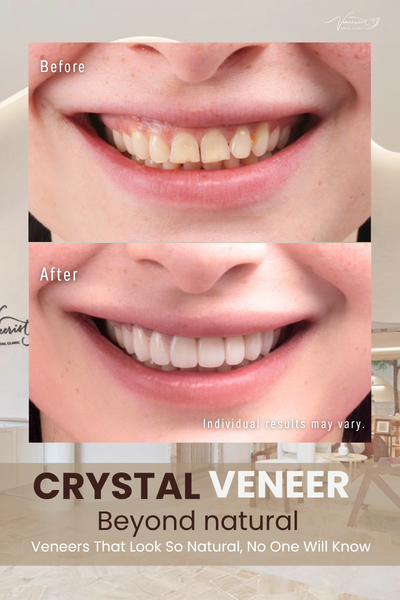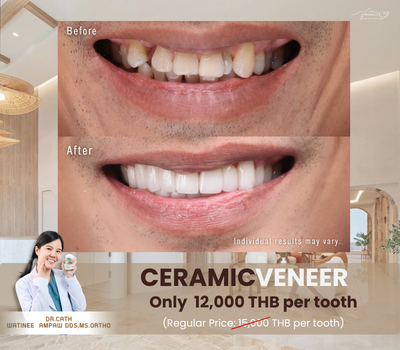
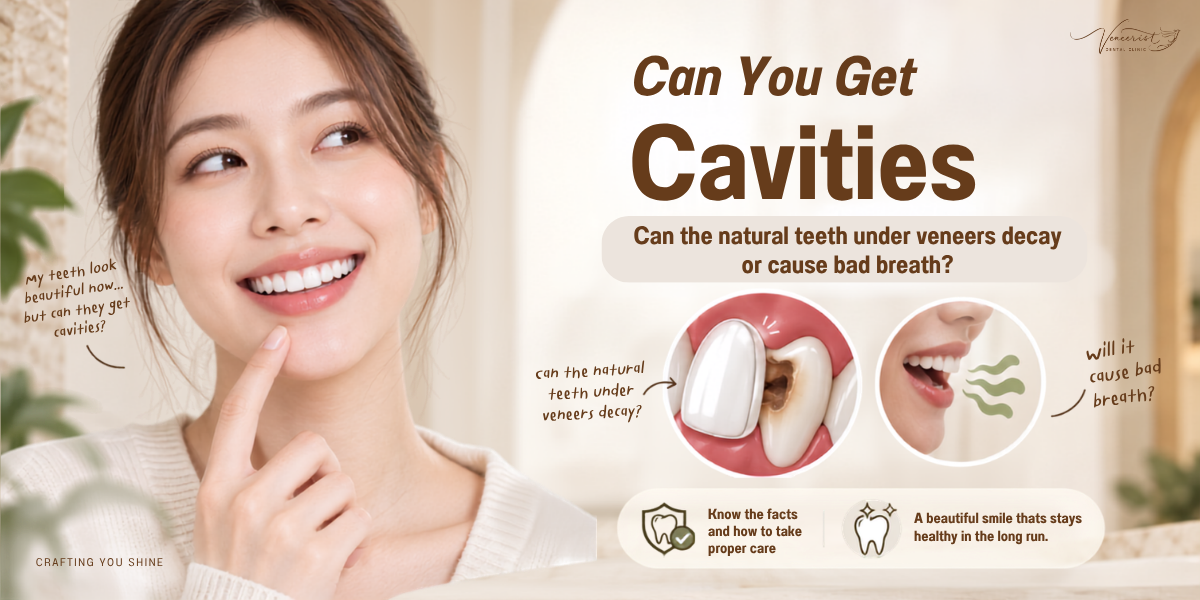
Can your natural teeth still develop cavities after getting veneers? The answer is yes. Your teeth underneath Ceramic Veneers are still natural teeth and can still develop decay. Good oral hygiene — especially around the edges of the veneers and between the teeth — together with regular dental check-ups remains important even after your smile makeover is complete.
Can You Still Get Cavities After Getting Veneers?
Yes.
Having Ceramic Veneers does not make your natural teeth immune to tooth decay.
A veneer is a thin ceramic restoration bonded to the surface of a tooth, while the tooth underneath and around it remains your natural tooth structure.
This means that if plaque accumulates, oral hygiene is inadequate, or other risk factors for tooth decay are present, a tooth with a veneer can still develop a cavity.
So after getting veneers, it is important to care not only for the veneers themselves but also for the natural teeth supporting them.
How Can a Tooth Decay Under a Veneer?
The Ceramic Veneer itself cannot develop a cavity because ceramic is not natural tooth structure.
However, the natural tooth surrounding and supporting the veneer can still decay, particularly around the margin where the veneer meets the tooth.
This is one reason why keeping this area clean is so important.
Plaque accumulation over time, frequent consumption of sugary foods or drinks, inadequate oral hygiene, and individual risk factors can all contribute to tooth decay.
Do Veneers Make Your Teeth More Likely to Decay?
Not necessarily.
It would not be accurate to say that getting veneers automatically makes your teeth more prone to cavities.
The risk of tooth decay depends on several factors, including your existing oral health, daily hygiene, diet, individual cavity risk, and how well you maintain your teeth after treatment.
The quality and fit of the restoration are also important, from tooth preparation and veneer design to the final bonding and finishing of the margins.
After treatment, you should therefore continue caring for your teeth rather than assuming:
“My teeth are covered with veneers, so they can no longer decay.”
How Would I Know If There Is Decay Under a Veneer?
Decay associated with a veneered tooth may not always be easy to see, particularly in its early stages.
Signs that should be evaluated by a dentist may include:
- New or unusual sensitivity
- Toothache or discomfort
- Red, swollen, or bleeding gums around the tooth
- An unusual smell or taste from a particular area
- Changes in colour around the veneer margin
- A veneer that feels loose, chipped, cracked, or different from before
However, you should not wait until symptoms appear before seeing a dentist.
Some dental problems can develop without obvious symptoms, which is why regular dental examinations remain important after getting veneers.
Do Veneers Cause Bad Breath?
Another common concern is:
“Will veneers give me bad breath?”
Ceramic Veneers themselves should not be the direct cause of bad breath.
Bad breath can have many oral causes, including plaque accumulation, trapped food debris, gum inflammation, tooth decay, inadequate cleaning between the teeth, or other oral health conditions.
If persistent bad breath develops after veneer treatment, it is better to have the cause evaluated rather than assuming the ceramic itself is responsible.
Why Are Veneer Margins Important?
The margin — where the Ceramic Veneer meets the natural tooth — is an important area both during treatment and for long-term maintenance.
The restoration should be appropriately designed, fitted, bonded, and finished so that the surrounding area can be maintained effectively.
After treatment, the patient’s daily oral hygiene is equally important.
Even a well-made veneer still has natural tooth structure and gum tissue around it. If plaque is allowed to accumulate for long periods, problems can still develop around the teeth and gums surrounding the veneers.
This is why veneer treatment does not simply end on the day the final restorations are bonded.
How Should You Clean Teeth With Veneers?
Caring for Ceramic Veneers is generally similar to caring for your natural teeth.
Important habits include:
- Brush your teeth at least twice a day
- Use an appropriate fluoride toothpaste
- Clean between your teeth every day with dental floss or another suitable interdental cleaning method
- Pay particular attention to the gumline and areas between the teeth
- Avoid frequent snacking or sipping on sugary foods and drinks throughout the day
- Attend regular dental examinations and professional cleaning as recommended by your dentist
Having Ceramic Veneers does not mean you can stop flossing. Keeping the spaces between the teeth and around the gumline clean remains an important part of long-term maintenance.
Can Ceramic Veneers Stain or Absorb Odours?
Dental ceramic has good colour stability and surface properties and is generally resistant to staining compared with some other restorative materials.
However, the important areas to maintain are still the natural teeth, gums, and margins around the restorations.
Even when the ceramic itself continues to look good, the health of the surrounding natural teeth and gums still requires ongoing care.
Should Dental Problems Be Treated Before Getting Veneers?
Yes.
Before starting Ceramic Veneer treatment, the dentist should first assess your overall oral health.
If there are existing problems such as tooth decay, gum inflammation, calculus build-up, or other conditions requiring treatment, these should be appropriately managed before proceeding with the veneers.
At Veneerist, the process before Ceramic Veneer treatment therefore involves more than simply selecting the shape and shade of the new teeth.
Depending on the individual case, preliminary treatment may include fillings, professional cleaning, Root Canal Treatment, gum treatment, or other necessary dental procedures.
A beautiful smile should begin with an appropriate foundation of good oral health.
Do I Still Need Dental Check-Ups After Getting Veneers?
Yes.
Even if your veneers feel completely normal, regular dental examinations are still recommended.
These visits allow the dentist to evaluate the Ceramic Veneers, natural teeth, gums, bite, and overall oral health.
Regular monitoring can also help identify changes at an earlier stage, before they potentially develop into more complicated problems.
Long-term care is therefore just as important as the veneer treatment itself.
Summary — Can Natural Teeth Still Decay Under Veneers?
Yes. The teeth underneath Ceramic Veneers are still your natural teeth and can still develop tooth decay.
The ceramic itself does not develop cavities, but the natural tooth around and supporting the restoration can still be affected if plaque accumulates or other risk factors are present.
As for bad breath, Ceramic Veneers themselves should not be the direct cause. If persistent odour develops, the underlying cause should be evaluated, including the teeth, gums, oral hygiene, and areas around the restorations.
Successful long-term veneer care therefore involves more than maintaining the appearance of the ceramic. It also means protecting the natural teeth and gums around your veneers through good daily hygiene and regular dental care.
Ceramic Veneers at Veneerist Dental Clinic, Krabi, Thailand 🤍