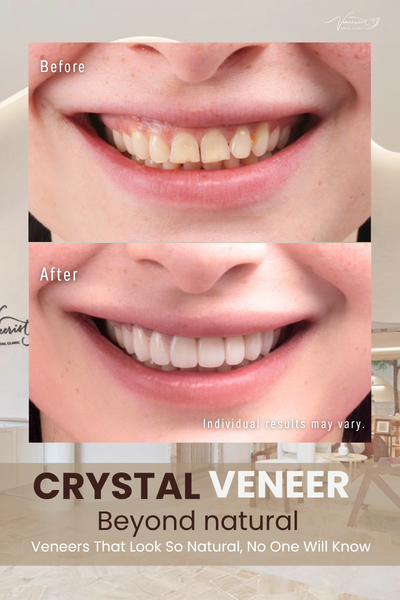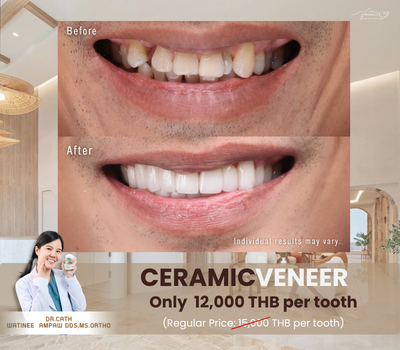
Many people think of veneers mainly as a way to make their teeth look whiter. However, Ceramic Veneers can improve much more than tooth color.
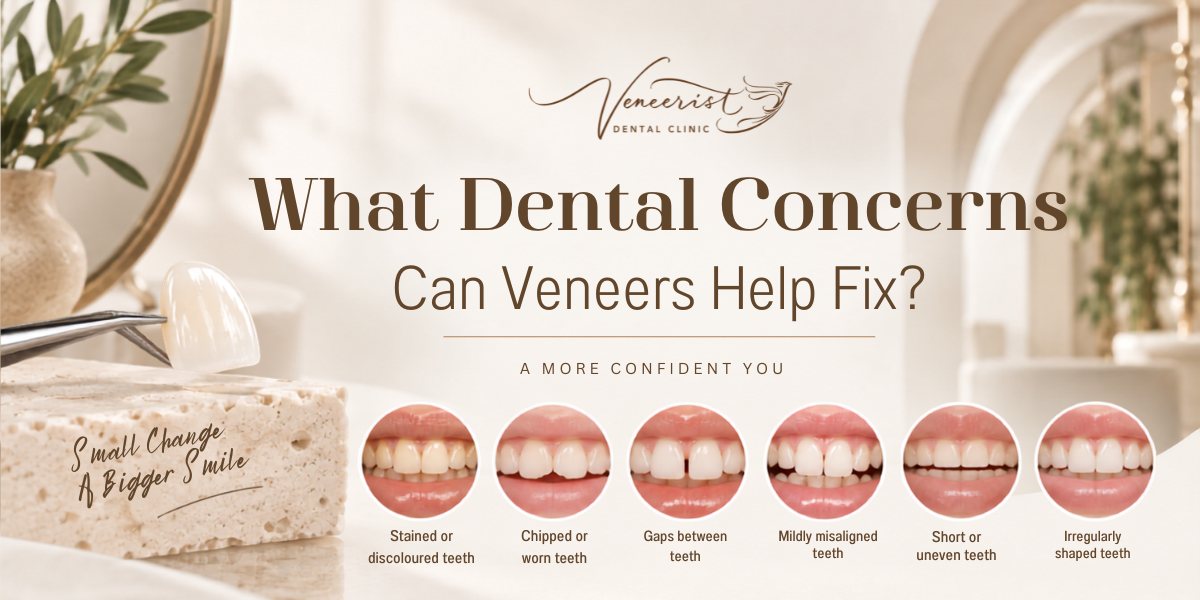
Veneers can be designed to improve the color, shape, size, proportions, and appearance of the front teeth, creating a smile that looks more balanced and harmonious.
However, veneers are not the right solution for every dental problem. In some cases, other treatments such as orthodontics, root canal treatment, gum treatment, or dental crowns may be recommended before or instead of veneers.
Here are 7 common dental concerns that veneers may be able to improve, as well as situations where another treatment may be more appropriate.
1. Dark, Yellow, or Uneven Tooth Color
One of the most common reasons people consider veneers is to achieve a brighter and more even tooth color.
Ceramic Veneers can be individually designed in a shade that complements your smile, facial features, skin tone, and surrounding teeth.
They may be considered for concerns such as:
- Dark or yellow teeth
- Uneven tooth color
- One or more teeth that are noticeably different in color
- A desire for a brighter shade than tooth whitening alone can achieve
However, if tooth color is your only concern, professional teeth whitening may be worth considering first, as it can improve the color of natural teeth without placing restorations over them.
2. Chipped, Worn, or Uneven Tooth Edges
Veneers can help restore the appearance of teeth with small chips, worn edges, or uneven shapes.
For example:
- Chipped front teeth
- Worn incisal edges
- Uneven tooth edges
- One or more teeth that appear shorter than the surrounding teeth
The dentist will also evaluate your bite and the forces placed on your front teeth.
If you grind or clench your teeth, or if your upper and lower front teeth make heavy contact, veneers may be exposed to greater forces and may have an increased risk of chipping or damage over time.
3. Small Teeth or Uneven Tooth Proportions
Some people naturally have smaller teeth, while others have teeth with proportions that do not appear balanced within their smile.
Veneers can be used to adjust aspects such as:
- Tooth width
- Tooth length
- Edge shape
- Symmetry between the left and right sides of the smile
At Veneerist, we do not look at each tooth in isolation. Tooth proportions are considered together with the face, lips, smile line, and surrounding teeth to avoid creating teeth that look too large or unnatural.
The goal is a smile that looks balanced while still maintaining its individual character.
4. Gaps Between Teeth
Veneers can sometimes be used to close small spaces between teeth by carefully adjusting the width and shape of the teeth.
They may be considered when:
- There is a small gap between the front teeth
- Tooth shape contributes to visible spacing
- The teeth are relatively small compared with the available space
However, not every gap should be closed with veneers.
If the spaces are large or primarily caused by tooth position or bite problems, orthodontic treatment may be more appropriate. In some cases, orthodontics and veneers can also be used together as part of a comprehensive smile plan.
5. Mildly Uneven or Misaligned Teeth
Veneers may help improve the appearance of mild irregularities in tooth position.
Examples can include:
- A slightly tilted tooth
- Uneven front tooth edges
- Minor asymmetry
- Small differences in the position of individual teeth
Veneers change the visible shape and contour of the teeth, which can make the smile appear more aligned.
However, veneers do not physically move the teeth or their roots in the way orthodontic treatment does.
For significantly crowded, rotated, or protruding teeth, or when there is a substantial bite problem, orthodontic treatment may be a more appropriate option.
6. Teeth With Uneven or Unbalanced Shapes
Sometimes the teeth are healthy but their shapes do not look harmonious together.
For example:
- One tooth may appear wider than the others
- Some teeth may have rounded edges while others appear more square
- The left and right sides of the smile may look asymmetrical
- One or more teeth may be unusually small or differently shaped
Ceramic Veneers can be individually designed to improve these proportions so that the teeth work together visually as one balanced smile.
This does not mean every tooth has to look identical.
Small variations in shape, surface texture, translucency, and edge detail can be incorporated into the design to create a more natural appearance.
7. Surface Cracks, Lines, or Irregular Tooth Texture
In selected cases, veneers may help improve the appearance of teeth with surface lines, minor cracks, or uneven texture.
By covering the front surface of the tooth, a veneer can create a smoother and more consistent appearance.
However, the dentist must first determine whether the concern is simply a superficial enamel line or a deeper crack that affects the strength of the tooth.
If a tooth has lost a significant amount of structure or has a more extensive fracture, another restoration such as a dental crown may be more appropriate than a veneer.
When Might Veneers Not Be the First Choice?
Although veneers can improve many cosmetic concerns, they are not a solution for every dental condition.
Certain problems may need to be treated before veneers are considered.
Tooth Decay
Any active decay should be treated first. The dentist will also need to assess whether enough healthy tooth structure remains for a veneer to be an appropriate restoration.
Gum Disease or Inflamed Gums
Healthy gums are important before cosmetic dental treatment. Gum inflammation or periodontal problems should be managed before veneers are placed.
Significant Crowding or Protruding Teeth
When teeth are severely crowded, rotated, or protruding, trying to correct their appearance with veneers alone may require more tooth preparation.
In some cases, orthodontic treatment before veneers may allow the teeth to be moved into more favorable positions first.
Teeth With Significant Structural Damage
If a tooth has a large filling, extensive fracture, or substantial loss of natural tooth structure, a dental crown may provide a more appropriate form of restoration.
Teeth With Pulp or Nerve Problems
If the dental pulp is damaged or infected, root canal treatment may be necessary before the final restorative treatment.
Can You Get Veneers if Your Teeth Are Crowded or Crooked?
In some cases, yes — but the degree of crowding needs to be assessed first.
Mild irregularities may sometimes be improved by carefully changing the visible shape and contour of the teeth with veneers.
However, if a tooth is significantly rotated, crowded, or positioned too far forward or backward, more tooth preparation may be required to create the planned shape.
In the Ceramic Veneer cases treated at Veneerist, tooth preparation is part of the treatment process in every case, although the amount of preparation varies from tooth to tooth and from patient to patient.
For teeth that are significantly out of position, some teeth may require greater preparation. In certain cases, root canal treatment may also need to be considered if clinically necessary.
Alternatively, orthodontic treatment may be recommended first to move the teeth into more favorable positions before veneers are placed.
The important question is therefore not simply:
“Can I get veneers?”
but also:
“What treatment approach can achieve the desired result while preserving as much healthy natural tooth structure as reasonably possible?”
Can Veneers Fix Everything?
No.
Ceramic Veneers are one treatment option for improving a smile, but they cannot replace orthodontics, gum treatment, root canal treatment, or dental crowns in every situation.
The appropriate treatment depends on the actual problem.
Some people may only need teeth whitening.
Some may benefit more from orthodontic treatment.
Some may need veneers on only a few teeth.
Others may require a combination of treatments to achieve an appropriate result.
The goal is not simply to “do veneers,” but to choose the right treatment for the teeth and the smile.
What Do We Evaluate Before Ceramic Veneers at Veneerist?
Before starting Ceramic Veneer treatment, we assess both smile aesthetics and oral health.
Depending on the individual case, the assessment may include:
- Smile and dental photographs
- Examination of the teeth and gums
- X-rays when appropriate
- Dental impressions or an intraoral scan
- Bite assessment
- Shape and position of individual teeth
- The number of teeth visible when smiling
If problems such as tooth decay, calculus, gum inflammation, or teeth requiring additional treatment are identified, these should be addressed as appropriate before proceeding with veneers.
How Does Smile Design Help With Veneer Treatment?
Before Ceramic Veneer treatment at Veneerist, the necessary clinical information is collected. This may include photographs, appropriate X-rays, and dental impressions or an intraoral scan.
This information is then used in coordination with the Dental Laboratory to create a 3D Smile Design.
The design helps determine important details before treatment begins, including:
- Tooth shape
- Tooth size
- Tooth proportions
- Tooth alignment
- Overall smile appearance
- Details of the planned Ceramic Veneers
It also allows the dentist to visualize the intended result and assess how much each individual tooth needs to change from its existing position and shape.
This information helps guide the amount of tooth preparation required for the planned restorations.
For this reason, veneer treatment is not simply about choosing “how white” the teeth should be.
Color, shape, size, position, proportions, bite, and the overall smile all need to be considered together.
How Many Veneers Do You Need?
There is no single number that is right for everyone.
Some people may need only a few veneers to improve specific teeth, while others may consider 6, 8, 10, or more teeth to create a more consistent transition across the visible smile.
The appropriate number depends on factors such as:
- How many teeth show when you smile
- Smile width
- Natural tooth color
- The condition of individual teeth
- Tooth proportions
- Your desired result
Therefore, more veneers do not automatically mean a better smile.
The aim is to choose the number of veneers that creates an appropriate and harmonious result for each individual smile.
Summary: What Problems Can Veneers Fix?
Ceramic Veneers can help improve several aspects of a smile, including tooth color, shape, size, proportions, small gaps, chipped or worn edges, and selected cases of mild tooth misalignment.
However, a successful treatment plan involves more than simply covering the front of the teeth.
The dentist should also assess tooth health, gum health, bite, tooth position, and the amount of healthy tooth structure available to determine whether veneers are appropriate or whether another treatment should be considered first.
At Veneerist Dental Clinic in Krabi, Thailand, our approach to smile design is individualized. Rather than simply making every tooth whiter or creating identical-looking teeth, we consider the relationship between the teeth, face, lips, and natural characteristics of the smile.
The goal is to create a result that looks harmonious, natural, and still feels like your smile.