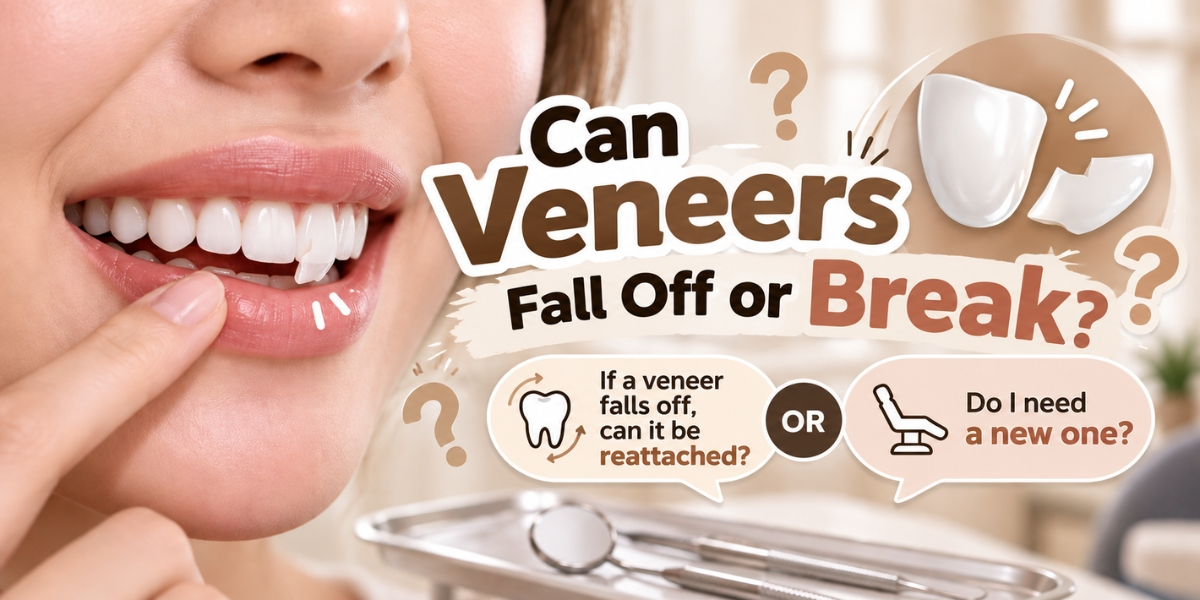
If your veneer fell off, does that mean you need a completely new veneer? Or can your dentist simply reattach the original one?
Ceramic Veneers are bonded to the tooth surface using dental adhesive materials. When properly planned, prepared, and bonded, they are designed to function as part of your smile during everyday activities such as eating and speaking.
However, being securely bonded does not mean that a veneer can never come off, chip, or break.
If this happens, don’t panic—and most importantly, do not try to glue the veneer back on yourself.
In some cases, the original veneer may still be suitable for reattachment. In others, it may need to be repaired or replaced. The right solution depends on the condition of the veneer, the natural tooth underneath, and why the veneer came off in the first place.
Can a Veneer Fall Off?
Yes, it can.
Although Ceramic Veneers are bonded securely to the teeth, they are still exposed to biting and chewing forces every day.
A veneer may come off for several reasons, including excessive biting forces, biting very hard objects, trauma, teeth grinding or clenching, as well as factors involving the underlying tooth, the restoration, or the bonding interface.
For this reason, if a veneer falls off, it should not automatically be assumed that the problem was simply caused by “bad glue.”
A dentist should examine the veneer, the natural tooth, and the bite before deciding why it happened and what should be done next.
What to Do If a Veneer Falls Off
If your veneer comes off in one piece and you can find it, do not throw it away.
Keep the veneer in a clean container and bring it with you to your dental appointment. In some cases, the original restoration may still be suitable for reuse.
The exposed tooth may feel different after the veneer comes off, and some people may experience sensitivity. Until the tooth has been examined, it is sensible to avoid biting hard foods or placing unnecessary pressure on that tooth.
There is also one important thing you should never try to do yourself.
Do Not Use Household Glue to Reattach a Veneer
Super glue, multipurpose adhesives, or other household glues should never be used to reattach a veneer inside your mouth.
These products are not dental bonding materials and are not intended for this purpose.
Trying to glue the veneer back yourself may also position it incorrectly or leave adhesive residue on the veneer and tooth, making professional treatment more complicated.
If your veneer falls off, keep the restoration and have it examined by a dentist instead.
Can a Veneer Be Reattached After It Falls Off?
Sometimes—but not in every case.
Before reattaching the original veneer, the dentist needs to evaluate several factors.
The veneer should be examined for cracks, fractures, or other damage. The natural tooth underneath also needs to be checked for decay or structural changes, and the dentist must determine whether the original veneer still fits the tooth properly.
Just as importantly, the dentist should investigate why the veneer came off.
For example, if there is excessive contact or pressure on that tooth when biting, simply rebonding the veneer without addressing the underlying issue may allow the same problem to happen again.
So the question is not only:
“Is the veneer still intact?”
It is also:
“Are the veneer, natural tooth, and bite still suitable for reusing the original restoration?”
Veneer Fell Off vs. Broken Veneer: What’s the Difference?
These are two different situations.
A veneer that has fallen off has separated from the tooth, but the restoration itself may still be intact.
A broken or chipped veneer means that the restoration itself has been damaged. This may range from a small chip to a larger fracture.
The treatment therefore depends on what has actually happened.
With a Ceramic Veneer, the dentist will assess the location and extent of the damage to determine whether the restoration can be adjusted or repaired appropriately, or whether a new veneer would provide a more suitable result.
Composite Veneers behave differently from Ceramic Veneers. Depending on the type and extent of damage, Composite may sometimes be repaired directly by adding new composite material.
However, whether a repair is appropriate can only be determined after examining the actual restoration and tooth.
Why Do Veneers Fall Off or Break?
There is no single cause that explains every case.
Sometimes a veneer may be damaged by an accident or direct impact. In other cases, repeated forces over time may contribute to the problem.
Habits such as chewing ice, biting very hard objects, biting pens, tearing packaging with your teeth, or using your teeth as tools can place unnecessary forces on both natural teeth and dental restorations.
Teeth grinding or clenching can also expose the teeth and veneers to repeated forces, sometimes without the person even realizing it.
However, if a veneer comes off or breaks, the cause should not be diagnosed based on symptoms alone. The dentist should examine the veneer, natural tooth, and bite before determining what happened.
Can Teeth Grinding Cause Veneers to Come Off?
Teeth grinding and clenching are important factors to consider when planning Ceramic Veneers because repeated forces can affect both natural teeth and dental restorations.
At Veneerist, the dentist evaluates the bite and looks for signs that may be associated with grinding or clenching during the initial examination and treatment-planning stage.
These may include patterns of tooth wear, chipped or fractured teeth, and certain bite characteristics, together with the patient’s history.
When appropriate, the dentist may recommend an Occlusal Splint or Night Guard to be worn during sleep after veneer treatment.
This recommendation depends on the individual patient and their clinical findings.
Does a Veneer Need to Be Replaced Every Time It Falls Off?
Not necessarily.
If the veneer has come off in one piece, remains in suitable condition, the natural tooth has not been damaged, and the dentist determines that the restoration can still be used appropriately, reattachment may be possible.
However, if the veneer is cracked or fractured, no longer fits the tooth correctly, the natural tooth underneath has developed a problem, or another factor makes the original restoration unsuitable for reuse, the veneer may need to be repaired or replaced.
So if your veneer fell off, do not immediately assume that you will need a completely new one.
Keep the original restoration and let your dentist examine it first.
Summary: Can a Veneer That Fell Off Be Reattached?
A veneer can fall off, chip, or break, even when it was originally bonded appropriately.
If your veneer falls off, keep the restoration, avoid placing excessive pressure on the affected tooth, and arrange a dental examination.
Most importantly, do not use household glue to put it back yourself.
A veneer that falls off does not automatically need to be replaced, but it also cannot always be reattached.
The dentist needs to evaluate the veneer, the natural tooth, the bite, and the possible reason the restoration came off before deciding whether it should be reattached, repaired, or replaced.
FAQ: Veneer Fell Off
What should I do if my veneer falls off?
Keep the veneer in a clean container and bring it to your dentist. Avoid biting hard foods with the affected tooth until it has been examined.
Can I use super glue to put my veneer back on?
No. Household adhesives are not dental bonding materials and should not be used inside the mouth to reattach a veneer.
Can a veneer that fell off always be reattached?
No. Reattachment depends on the condition of the veneer, the natural tooth, how well the restoration still fits, and the reason it came off.
Does a broken veneer always need to be replaced?
Not necessarily. The treatment depends on the veneer material and the location and extent of the damage. Some cases may be repairable, while others may require a new restoration.
If your Ceramic Veneer has fallen off, chipped, or broken, keep the original restoration if possible and have it examined by a dentist.
The veneer, natural tooth, and bite should be assessed before deciding whether the original veneer can be reattached, repaired, or needs to be replaced.