Can You Get Veneers After Root Canal Treatment? Should You Choose a Veneer or a Crown?
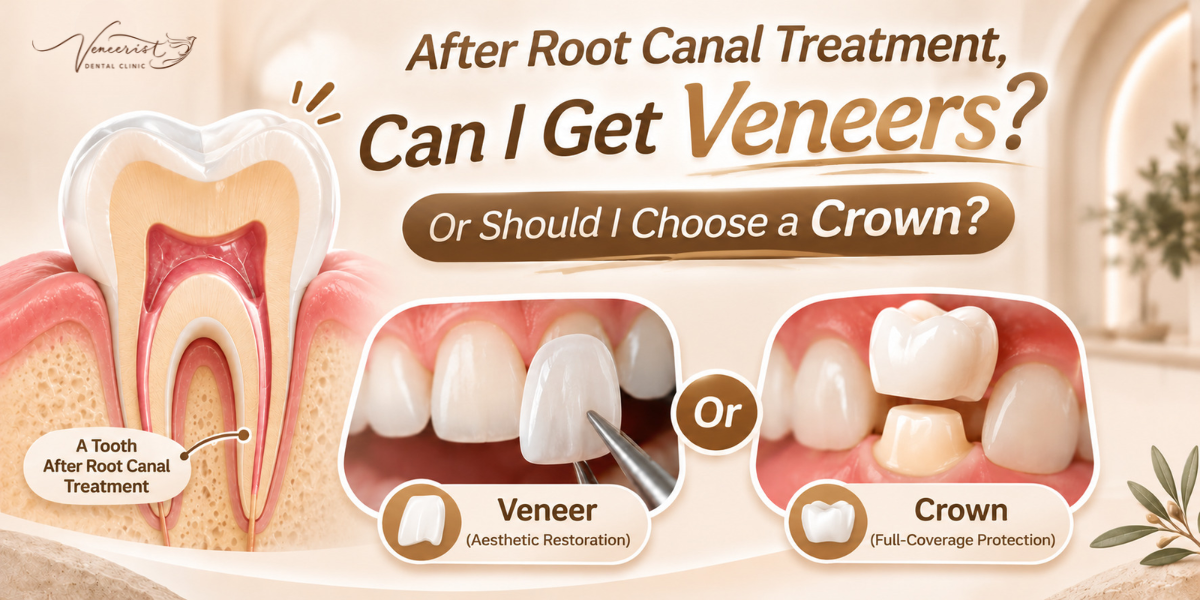
Veneers may be suitable for some teeth that have undergone root canal treatment. However, not every root-filled tooth is suitable for a veneer, as the health, structural integrity and amount of remaining natural tooth structure vary between patients and individual teeth.
Before recommending veneers, a dentist must carefully assess each tooth. This includes evaluating the previous root canal treatment, the quantity and quality of remaining natural tooth structure, the integrity of the tooth walls, the available bonding surfaces and the patient’s bite.
If sufficient healthy tooth structure remains and the tooth provides a suitable foundation for adhesive bonding, a veneer may be considered. However, if significant tooth structure has been lost or the tooth requires additional structural protection, the dentist may recommend a crown or another type of restoration instead.
A history of root canal treatment alone is therefore not enough to determine whether a tooth should receive a veneer or a crown. The most appropriate treatment must be established through an individual clinical assessment.
What Is Root Canal Treatment?
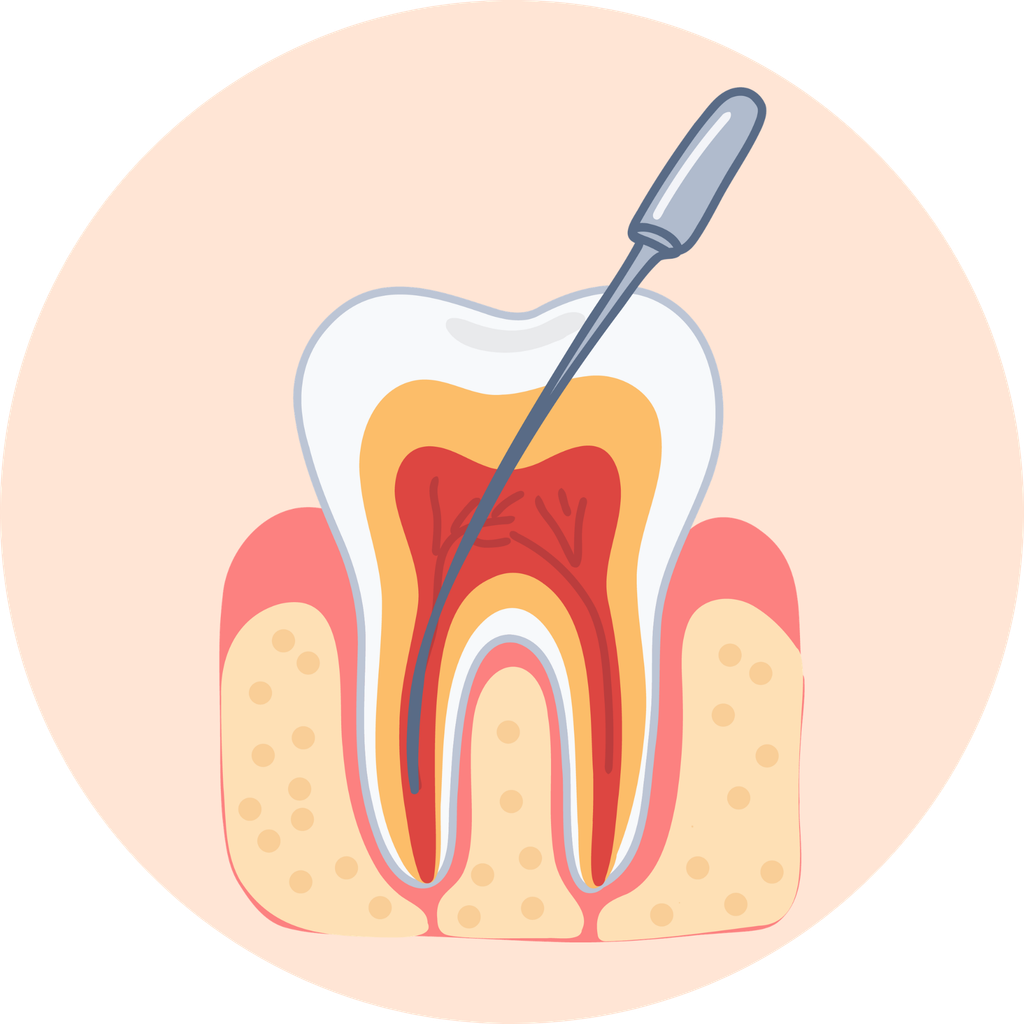
Root canal treatment is a dental procedure designed to preserve a natural tooth when the tissue inside its pulp chamber becomes irreversibly inflamed, infected or non-vital.
During treatment, the affected pulp tissue is removed, and the root canal system is cleaned, disinfected and filled with a suitable dental material. The visible portion of the tooth is then restored according to its structural and functional requirements.
Common reasons why a tooth may require root canal treatment include:
- Deep dental decay affecting the dental pulp
- Cracks or fractures involving the internal tooth tissues
- Dental trauma or injury
- Irreversible inflammation of the dental pulp
- Infection within the root canal system or surrounding the root tip
Following root canal treatment, a tooth may continue to function successfully if it remains restorable and receives appropriate restorative treatment and ongoing care.
Restoring the tooth after root canal treatment is particularly important for establishing an effective coronal seal, reducing the risk of bacterial contamination and protecting the remaining tooth structure where necessary.
Why Do Some Teeth Become Darker After Root Canal Treatment?
Some teeth may develop a darker appearance following root canal treatment, particularly front teeth that have previously experienced dental trauma or pulp necrosis.
However, discolouration does not occur in every root-filled tooth, and several factors may contribute to changes in tooth colour.
1. Changes Within the Dental Pulp
Following dental trauma or pulp necrosis, blood products and internal tissues may undergo breakdown.
Substances released during this process can penetrate the dentinal tubules, causing intrinsic discolouration.
The affected tooth may develop a grey, brown or dark yellow appearance that differs noticeably from the surrounding natural teeth.
2. Materials Used During Root Canal Treatment
Certain materials used during root canal treatment may contribute to changes in tooth colour, particularly when they come into contact with the dentine within the visible portion of the tooth.
The type of material, its location and the length of time it remains within the tooth may influence the extent of discolouration.
3. Existing Restorations or Dental Posts
Some root-filled teeth may have previously been restored using materials that affect their underlying colour, such as metal posts or certain restorative materials.
Where the natural tooth structure is relatively thin, the colour of these materials may influence the appearance of the tooth from the outside.
4. Recurrent Decay or Deteriorating Restorations
A root-filled tooth can still develop dental decay or problems associated with existing restorations.
If a tooth becomes noticeably darker, the underlying cause should be investigated before cosmetic treatment is considered.
Discolouration alone does not necessarily indicate that previous root canal treatment has failed or that further endodontic treatment is required.
Are Root-Filled Teeth More Fragile Than Other Natural Teeth?
The structural strength of a root-filled tooth is not determined solely by the absence of living pulp tissue.
One of the most important considerations is the quantity and quality of remaining natural tooth structure, together with the pattern of structural loss and the forces placed on the tooth during function.
Teeth requiring root canal treatment have often already lost some natural tooth structure due to decay, fractures, trauma or previous restorations. Additional tooth structure may also be removed to gain access to the root canal system.
For example, a front tooth that required root canal treatment following dental trauma may still retain most of its natural enamel and tooth walls.
Another tooth may have undergone root canal treatment because of extensive decay, leaving several weakened walls and a large existing restoration.
Although both teeth have received the same type of endodontic treatment, their structural condition and restorative requirements may be very different.
This is why a dentist cannot determine the most appropriate restoration based solely on a patient’s history of root canal treatment.
What Does a Dentist Assess Before Recommending Veneers on Root-Filled Teeth?
A comprehensive clinical assessment is essential when deciding whether a previously root-treated tooth is suitable for a veneer, a crown or another restoration.
Several factors must be considered together.
1. Tooth Health and Previous Root Canal Treatment
The dentist will review the patient’s dental history, previous root canal treatment, any existing symptoms and the condition of the tissues surrounding the root.
Dental radiographs may be taken where clinically indicated to assess the previous treatment and identify any concerns requiring further management or monitoring.
A tooth without pain or discomfort does not necessarily have healthy surrounding tissues.
2. The Amount of Remaining Natural Tooth Structure
The amount of remaining natural tooth structure is one of the key factors influencing restorative treatment decisions.
The dentist must determine whether sufficient sound tooth structure remains to support the proposed restoration and withstand the forces associated with normal dental function.
If substantial tooth structure has been lost, particularly in structurally important areas, a veneer may not provide the coverage or protection required.
3. The Quantity and Quality of Remaining Enamel
Natural enamel provides a particularly favourable surface for adhesive bonding, especially when planning ceramic veneers.
A root-filled tooth with sufficient healthy enamel on its front surface may be considered for veneer treatment, provided that other clinical requirements are also met.
Where extensive enamel loss has occurred, the dentist must carefully assess the available bonding surfaces and the suitability of alternative restorative options.
4. The Integrity of the Tooth Walls and the Presence of Cracks
Thin tooth walls, cracks and extensive structural damage may increase the risk of fracture during function.
The location, extent and severity of any damage must be assessed to determine whether the tooth remains restorable and which form of restoration is most appropriate.
In some cases, neither a veneer nor a crown may be sufficient to predictably preserve a severely compromised tooth.
5. The Size and Condition of Existing Restorations
Previously root-treated teeth may contain restorations of varying sizes.
Having an existing filling does not automatically make a tooth unsuitable for a veneer. However, the dentist must evaluate the proportion of remaining natural tooth structure, the integrity of the existing restoration and the available bonding surfaces.
Certain existing restorations may require replacement or modification before definitive treatment.
6. The Underlying Tooth Colour
A significantly discoloured tooth requires careful assessment of whether the proposed restorative material can mask the underlying colour without unnecessarily removing healthy tooth structure.
Underlying tooth colour is important when designing a veneer, but it should not be the sole reason for choosing between a veneer and a crown.
7. Tooth Position and Bite
Front teeth, premolars and molars have different functional roles and are exposed to different patterns of force.
The dentist must assess the patient’s bite, jaw movements, functional contacts and any history of teeth grinding or clenching.
These factors may influence both the choice of restoration and its long-term performance.
8. Overall Oral Health
Gum health, susceptibility to dental decay, oral hygiene and the condition of neighbouring teeth must also be considered.
Even if the root-filled tooth has sufficient remaining structure, other oral health problems may need to be addressed before veneer treatment.
There is no single percentage of remaining tooth structure that can determine whether veneers are suitable for every patient.
The decision must be based on the combined findings of an individual clinical assessment.
When Might a Root-Filled Tooth Be Suitable for a Veneer?
Veneers may be considered for selected root-filled teeth, particularly front teeth with concerns relating to colour or shape that retain sufficient sound natural tooth structure.
Clinical factors that may support veneer treatment include:
- Previous root canal treatment considered satisfactory following assessment
- Sufficient remaining natural tooth structure
- Suitable enamel and bonding surfaces
- No significant cracks or structural damage requiring additional coverage
- A suitable bite and manageable functional forces
- Concerns relating to tooth colour, shape or smile harmony
- The ability to restore the tooth without unnecessarily removing healthy tooth structure
Meeting some of these criteria does not automatically establish suitability for veneer treatment. A dentist must assess the tooth as a whole before recommending the most appropriate restoration.
Patients considering cosmetic dental treatment can learn more about ceramic and composite veneers at Veneerist Dental Clinic Krabi.
When Might a Dentist Recommend a Crown Instead of a Veneer?
If the clinical assessment indicates that a root-filled tooth is structurally unsuitable for a veneer, a dental crown or another restoration providing greater coverage may be more appropriate.
A crown may be considered when:
- A substantial amount of natural tooth structure has been lost.
- The tooth contains extensive restorations involving several surfaces.
- The remaining tooth walls are thin or structurally compromised.
- A restorable crack or fracture requires additional protection.
- There are insufficient suitable bonding surfaces for a veneer.
- Functional forces indicate a need for greater restorative coverage.
- The tooth has previously been prepared for a full-coverage crown.
A dental crown is designed to cover the visible portion of the prepared tooth circumferentially. Where clinically indicated, this can help protect and restore the remaining tooth structure.
However, a crown does not guarantee that the tooth will never fracture or develop further problems.
If the remaining tooth or root structure is severely compromised, a crown alone may not provide an appropriate solution.
Do Front Teeth and Back Teeth Require the Same Restoration After Root Canal Treatment?
Different teeth have different anatomical characteristics and functional requirements. Their restorative needs following root canal treatment may therefore differ.
Root-Filled Front Teeth
Front teeth contribute to biting, speech and the appearance of the smile.
Where a front tooth has undergone root canal treatment with relatively limited structural loss, the dentist may consider a direct composite restoration, composite bonding or a veneer, depending on the clinical findings.
However, if significant tooth structure has been lost, a crown and, where indicated, a core build-up may be more appropriate.
Root-Filled Premolars and Molars
Premolars and molars play an important role in chewing and are exposed to different patterns of functional loading.
Where a posterior tooth has lost important structural walls or has weakened cusps, a restoration providing cuspal coverage, such as an onlay or crown, may help reduce the risk of fracture.
Nevertheless, not every root-filled posterior tooth requires the same restoration. The remaining tooth structure and functional requirements must be assessed individually.
A conventional veneer, which primarily covers the front surface of a tooth, is not a substitute for cuspal coverage when such protection is clinically necessary.
Veneers vs Crowns After Root Canal Treatment: What Is the Difference?
| Feature | Veneers | Dental Crowns |
|---|---|---|
| Coverage | Primarily the front surface, with additional coverage depending on the design | Circumferential coverage of the prepared tooth |
| Primary purpose | Improving colour, shape and appearance | Restoring and protecting tooth structure while improving appearance |
| Tooth preparation | Generally requires less tooth preparation | Generally requires more extensive tooth preparation |
| Suitable tooth structure | Sufficient sound natural tooth structure and suitable bonding surfaces | Teeth requiring greater restorative coverage |
| Colour masking | Depends on material, thickness and underlying tooth colour | Can be designed to mask underlying discolouration |
| Suitability after root canal treatment | Selected teeth, particularly structurally suitable front teeth | Teeth with clinical indications for greater structural coverage |
| Dental posts | Not routinely required for veneers | May be considered when additional retention for a core is required |
Both veneers and crowns can be designed to resemble natural teeth.
The important differences relate to their restorative purpose, the amount of tooth preparation required and their suitability for the remaining natural tooth structure.
A crown should not be regarded as an inferior cosmetic option simply because it differs from a veneer. Each restoration serves a different clinical purpose.
Can a Discoloured Root-Filled Tooth Be Whitened?
If the primary concern is discolouration and the tooth remains structurally suitable, alternatives to veneers and crowns may be considered.
External Tooth Whitening
Conventional tooth whitening involves applying bleaching agents to the external surfaces of natural teeth.
Although external whitening may improve the appearance of some root-filled teeth, it may not sufficiently address pronounced intrinsic discolouration.
Internal Tooth Bleaching
Internal bleaching is an established dental treatment option for selected root-filled teeth with intrinsic discolouration, particularly structurally suitable front teeth.
Before considering this procedure, the dentist must assess the previous root canal treatment, the remaining tooth structure and the suitability of placing an appropriate protective barrier above the root filling.
One potential advantage is that internal bleaching may improve tooth colour without requiring preparation of the front surface for a veneer or crown.
However, there are limitations and potential risks, including:
- Variable whitening results between patients
- Difficulty achieving an exact colour match with neighbouring teeth
- Possible recurrence of discolouration over time
- The potential need for more than one treatment session
- A risk of external cervical resorption, an uncommon but clinically significant complication
Internal bleaching should only be performed by a dentist after appropriate clinical assessment.
If the tooth is structurally compromised, improving its colour alone may not address its restorative or protective requirements.
Can Ceramic Veneers Mask a Severely Discoloured Root-Filled Tooth?
Ceramic veneers may help improve the appearance of discoloured teeth in suitable cases. However, masking a particularly dark underlying tooth requires careful restorative planning.
Several optical and structural considerations influence the final result.
1. Underlying Tooth Colour
Ceramic veneers have varying levels of translucency, which means the colour of the underlying natural tooth can influence their final appearance.
If a root-filled tooth is significantly darker than its neighbours, selecting the same ceramic material and shade as the adjacent teeth may not necessarily produce the same visual result.
2. Ceramic Translucency and Opacity
Highly translucent ceramics can help reproduce the optical characteristics of natural enamel, but they may have limitations when masking a very dark tooth.
More opaque ceramics may provide greater masking ability. However, excessive opacity can make a restoration appear unusually flat or lacking in natural depth.
The dentist must balance colour masking with the optical characteristics of neighbouring teeth.
3. Ceramic Thickness
The thickness of a ceramic restoration influences its ability to mask underlying discolouration.
In selected cases, additional space may be required for a restoration with suitable masking properties.
However, healthy tooth structure should not be removed unnecessarily to compensate for a dark underlying colour.
If adequate masking would require excessive tooth preparation, alternative treatments should be considered. A crown may be recommended where additional structural indications are also present.
4. Resin Cement Shade
The shade of the resin cement used to bond a ceramic veneer can influence its final appearance, particularly when the ceramic is relatively thin and translucent.
Nevertheless, resin cement alone may not be sufficient to mask severe underlying discolouration.
Successful restorative planning must consider the interaction between underlying tooth colour, ceramic properties, restoration thickness and bonding materials.
Can Composite Veneers Be Used on Root-Filled Teeth?
Composite veneers may be suitable for selected root-filled teeth with sufficient natural tooth structure and appropriate bonding surfaces.
Composite resin is available in different shades and levels of opacity, allowing dentists to modify tooth colour and shape while masking underlying discolouration where possible.
Direct composite restorations can often be repaired or modified locally when required.
However, composite materials may become stained, worn or lose their surface gloss over time. Periodic polishing, maintenance or repair may therefore be necessary.
If substantial natural tooth structure has been lost, covering only the front surface with composite or ceramic veneers may not provide an appropriate restoration.
The choice between composite and ceramic veneers should be made only after establishing that the tooth itself is suitable for veneer treatment.
Can You Have a Veneer on Just One Root-Filled Tooth?
If the dentist determines that the tooth is structurally suitable for a veneer, it may be possible to restore that individual tooth without treating the neighbouring natural teeth.
However, matching a single veneer to surrounding natural teeth, particularly an upper central incisor, requires careful attention to aesthetic details.
These include:
- Tooth shade and brightness
- Colour intensity, or chroma
- Translucency at the incisal edge
- Colour transitions from the gumline towards the incisal edge
- Surface texture and light reflection
- Tooth shape, length and proportions
- Harmony with neighbouring natural teeth
Where patients are satisfied with the colour and shape of their other teeth, restoring only the affected tooth may help preserve the surrounding natural tooth structure.
If the root-filled tooth is unsuitable for a veneer, a single ceramic crown may instead be considered and designed to harmonise with the neighbouring teeth.
Is a Dental Post Necessary Before Having a Veneer or Crown on a Root-Filled Tooth?
Not every tooth that has undergone root canal treatment requires a dental post.
The primary function of a dental post is to provide retention for a core build-up when the remaining natural tooth structure is insufficient to retain that core.
A post does not directly strengthen the root. Preparing space within the root canal for a post may also require additional removal of natural tooth structure.
Where sufficient natural tooth structure remains for an appropriate filling or veneer, a dental post may not be necessary.
If significant coronal tooth structure has been lost and a core is required to support a crown, the dentist may consider a post according to the clinical indications.
Similarly, an existing metal post should not automatically be removed simply because it contributes to tooth discolouration. Post removal may carry risks to the remaining root structure and must be carefully assessed.
Can an Existing Crown Be Replaced With a Veneer After Root Canal Treatment?
Generally, replacing a conventional full-coverage crown with a traditional veneer is unlikely to be suitable.
This is because the natural tooth has already been prepared circumferentially to accommodate a crown, whereas a conventional veneer primarily restores the front surface of a tooth.
If the colour or shape of an existing crown is unsatisfactory, replacing it with a new ceramic crown may be a more appropriate option.
The replacement crown can be designed with consideration of colour, shape, surface characteristics and harmony with neighbouring natural teeth.
Before replacing an existing crown, the dentist must assess the underlying tooth structure and the condition of the previous root canal treatment.
Can Ceramic Veneers and Crowns Be Combined in the Same Smile?
Yes. Ceramic veneers and ceramic crowns may be combined within the same treatment plan, depending on the clinical requirements of each individual tooth.
For example, a patient may wish to improve the colour and shape of several front teeth but have one previously root-treated tooth that has lost a significant amount of natural structure.
If that tooth is unsuitable for a veneer, the dentist may recommend a crown for the compromised tooth while using veneers on neighbouring teeth that remain structurally suitable.
Although the restorations may differ in thickness and design, their colour, shape, proportions, surface texture and optical properties can be planned to create a harmonious appearance.
A history of root canal treatment does not necessarily prevent a patient from considering veneers as part of a broader smile improvement treatment plan.
Equally, it is not necessary to use veneers on every tooth when individual teeth have different restorative requirements.
The most appropriate restoration should be selected based on the condition of each tooth rather than using the same type of restoration throughout the smile solely for aesthetic consistency.
How Does Veneerist Dental Clinic Krabi Plan Treatment for Patients With Root-Filled Teeth?
At Veneerist Dental Clinic Krabi, treatment planning for patients with a history of root canal treatment is guided by their individual oral health requirements and the clinical suitability of each tooth.
Even when a patient wishes to have veneers for cosmetic reasons, the dentist may recommend a crown or another restoration for teeth that are not structurally suitable for veneers.
Treatment planning may involve the following stages.
Step 1: Reviewing the Patient’s Dental History
The dentist will review the reason for previous root canal treatment, any history of dental trauma, the timing of previous treatment and any symptoms experienced.
Existing dental records and radiographs may also assist the assessment.
Step 2: Assessing Tooth Health and Remaining Natural Tooth Structure
The dentist evaluates the previous root canal treatment, the amount of remaining natural tooth structure, enamel, tooth walls, existing restorations, possible cracks, gum health and bite.
Additional radiographs may be considered where clinically indicated.
Step 3: Identifying Any Additional Treatment Requirements
If recurrent decay, infection, deteriorating restorations or concerns relating to previous root canal treatment are identified, these may need to be addressed before definitive restorative treatment.
Step 4: Selecting the Appropriate Restoration for Each Tooth
The dentist determines whether the tooth is suitable for a veneer, crown or another type of restoration.
The potential benefits, limitations and risks of the available options are discussed with the patient.
As a result, patients seeking similar aesthetic improvements may receive different treatment recommendations depending on their individual dental condition.
Step 5: Planning Tooth Colour and Smile Design
Once the appropriate restorative approach has been established, the colour, shape, proportions and details of the restorations can be planned in relation to neighbouring natural teeth and the overall smile.
Step 6: Restorative Treatment and Follow-up Care
Following restorative treatment, the dentist assesses the restorations, bite and gum health, and recommends appropriate follow-up care for the previously root-treated teeth.
The objective is not simply to improve tooth colour and appearance, but also to preserve natural tooth structure where possible and support appropriate dental function.
How Long Should You Wait After Root Canal Treatment Before Having Veneers?
There is no universal waiting period that applies to every patient.
If root canal treatment has been completed and the dentist determines that the tooth is suitable for definitive restoration, veneers or crowns may be planned without an unnecessarily prolonged delay.
Establishing an appropriate seal and protecting the remaining tooth structure following root canal treatment are important considerations.
However, if symptoms persist, infection requires further management or additional monitoring is clinically indicated, treatment timing may need to be adjusted.
During this period, the tooth should receive appropriate interim sealing and protection.
Patients who undergo tooth bleaching before definitive restorative treatment may also need to allow sufficient time for colour stabilisation and suitable bonding conditions.
What Are the Risks of Having Veneers on Root-Filled Teeth?
Even when a root-filled tooth has been assessed as suitable for veneer treatment, potential complications and limitations remain.
These may include:
- Chipping, fracture or debonding of the veneer
- Cracking or fracture of the underlying natural tooth
- Recurrent decay around restoration margins
- Difficulties masking underlying tooth discolouration
- Future complications associated with previous root canal treatment
- The potential need to modify or replace restorations if further endodontic treatment becomes necessary
Although a root-filled tooth generally does not respond to cold in the same way as a vital tooth, it can still develop discomfort arising from the tissues surrounding the root, gum problems or abnormal biting forces.
The absence of tooth sensitivity or pain should therefore not be regarded as confirmation that the tooth remains healthy.
How to Care for Root-Filled Teeth With Veneers or Crowns
Maintaining good oral health is important for both natural teeth and dental restorations.
Recommended care includes:
- Brushing twice daily with a soft-bristled toothbrush and fluoride toothpaste
- Cleaning between the teeth regularly using dental floss or suitable interdental cleaning aids
- Avoiding biting ice, bones or other very hard objects
- Avoiding using the teeth to open packaging or tear objects
- Wearing a night guard if recommended by the dentist
- Attending regular dental examinations and appropriate follow-up appointments
If you experience pain when biting, gum swelling, a gum boil, tooth mobility or changes to an existing veneer or crown, arrange a dental assessment promptly.
Previously root-treated teeth continue to require professional monitoring and appropriate preventive care.
How Much Do Veneers or Crowns Cost After Root Canal Treatment?
The cost of restoring a root-filled tooth depends on its clinical condition, the type of restoration required, the selected material and whether additional treatment is necessary.
Some patients may be suitable for veneer treatment without extensive additional restorative procedures.
Others may require a crown, a core build-up or further treatment before a definitive restoration can be placed.
For this reason, the overall cost cannot be accurately determined solely from a history of root canal treatment or the number of veneers a patient wishes to have.
Patients can explore dental treatment information through the Veneerist Dental Clinic Krabi website and request an individual treatment assessment and cost estimate.
Frequently Asked Questions About Veneers After Root Canal Treatment
Can everyone with root-filled teeth have veneers?
No. The dentist must assess tooth health, the amount of remaining natural tooth structure, previous root canal treatment and the suitability of the available bonding surfaces.
Where structural limitations are identified, a crown or another restoration may be more appropriate.
Does every root-filled tooth need a crown?
No. Some front teeth with relatively limited structural loss may be adequately restored with a filling, composite bonding or a veneer, depending on the clinical findings.
Does a dark root-filled tooth always require a crown?
No. Discolouration alone does not necessarily indicate the need for a crown.
The cause of discolouration, root health and remaining tooth structure must be assessed before selecting an appropriate cosmetic or restorative treatment.
Does a root-filled tooth require more preparation for a veneer?
Not necessarily. The amount of tooth preparation depends on the remaining tooth structure, existing tooth shape, underlying colour and restorative material.
If additional preparation would result in unnecessary structural loss, alternative treatment options should be considered.
Are veneers more likely to come off root-filled teeth?
Previous root canal treatment alone does not determine the risk of veneer debonding.
Bonding performance depends on the available enamel and dentine, surface condition, adhesive technique and functional forces.
Can I have one crown alongside several veneers?
Yes. Crowns and veneers may be combined within the same treatment plan according to the requirements of each tooth.
Their colour, shape and optical characteristics can be planned to achieve a harmonious appearance.
Does every root-filled tooth require a dental post?
No. Dental posts are used when additional retention for a core build-up is clinically necessary.
Their primary purpose is not to strengthen the root.
Will an existing veneer need to be removed if further root canal treatment is required?
Not necessarily. In selected front teeth, the root canal system may be accessed from the back of the tooth without removing the veneer.
However, this depends on tooth position, the existing restoration, its condition and the complexity of the required endodontic treatment.
An individual clinical assessment is necessary.
Conclusion: Can You Get Veneers After Root Canal Treatment?
Veneers may be suitable for some teeth that have previously undergone root canal treatment. However, suitability must always be determined through an assessment of the individual patient and each affected tooth.
The decision is not based solely on a history of root canal treatment. It also depends on tooth and root health, the quantity and quality of remaining natural tooth structure, the integrity of the tooth walls, available bonding surfaces and functional forces.
Where a tooth remains structurally suitable, veneers may offer an option for improving its colour and shape while helping to preserve natural tooth structure.
However, if substantial structural loss has occurred or greater restorative protection is required, a crown or another restoration may be more appropriate.
Different patients may therefore require different treatment plans. Even within the same smile, individual teeth may need different types of restorative treatment.
The priority should be selecting an appropriate restoration based on dental health, structural suitability, function and aesthetic requirements.
Consult Veneerist Dental Clinic Krabi About Veneers and Restorative Treatment After Root Canal Treatment
If you have previously undergone root canal treatment and are concerned about tooth discolouration, or are unsure whether a veneer or crown would be more appropriate, a dental consultation can help you better understand your treatment options.
At Veneerist Dental Clinic Krabi, we place importance on assessing individual tooth health and remaining natural tooth structure before recommending restorative treatment or planning smile improvements.
In selected cases, a treatment plan may involve a combination of ceramic veneers and ceramic crowns, with each restoration chosen according to the clinical requirements of the individual tooth and designed to complement the overall smile.
We believe that smile aesthetics should be considered alongside dental health, the preservation of natural tooth structure and appropriate long-term function.
Visit the Veneerist Dental Clinic Krabi website to learn more about our dental services or contact our team to arrange an individual dental consultation.
Veneerist Dental Clinic Krabi — Crafting Your Shine
999/9 Maharat Road, Pak Nam, Mueang Krabi, Krabi, Thailand
Advance appointments are recommended.