Uneven Front Teeth: Can Veneers Improve Their Shape and Symmetry?
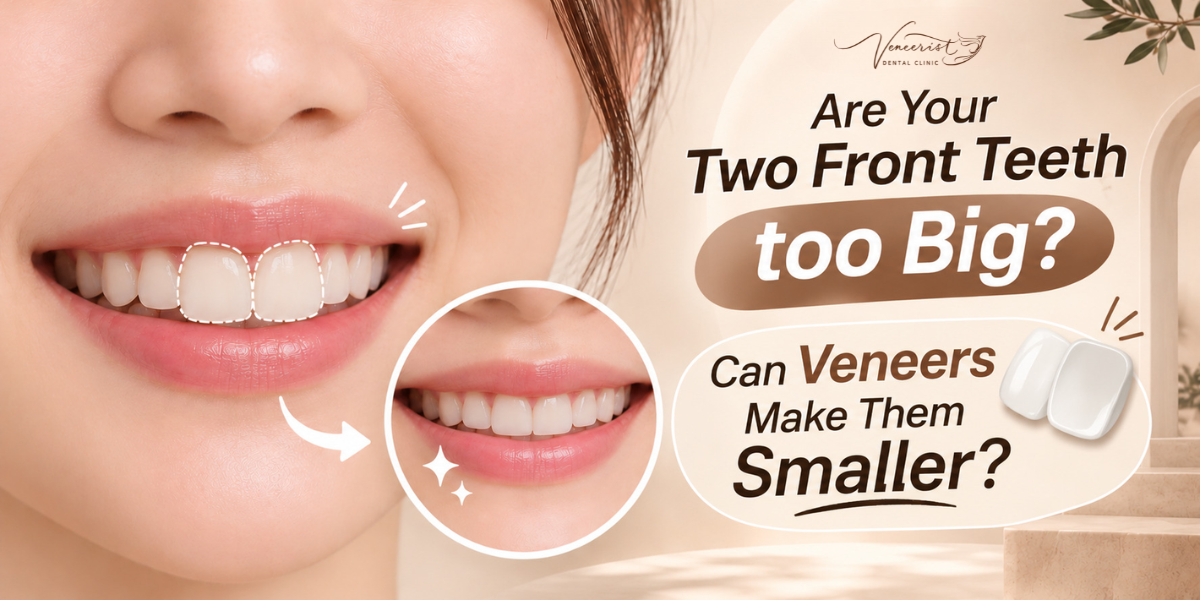
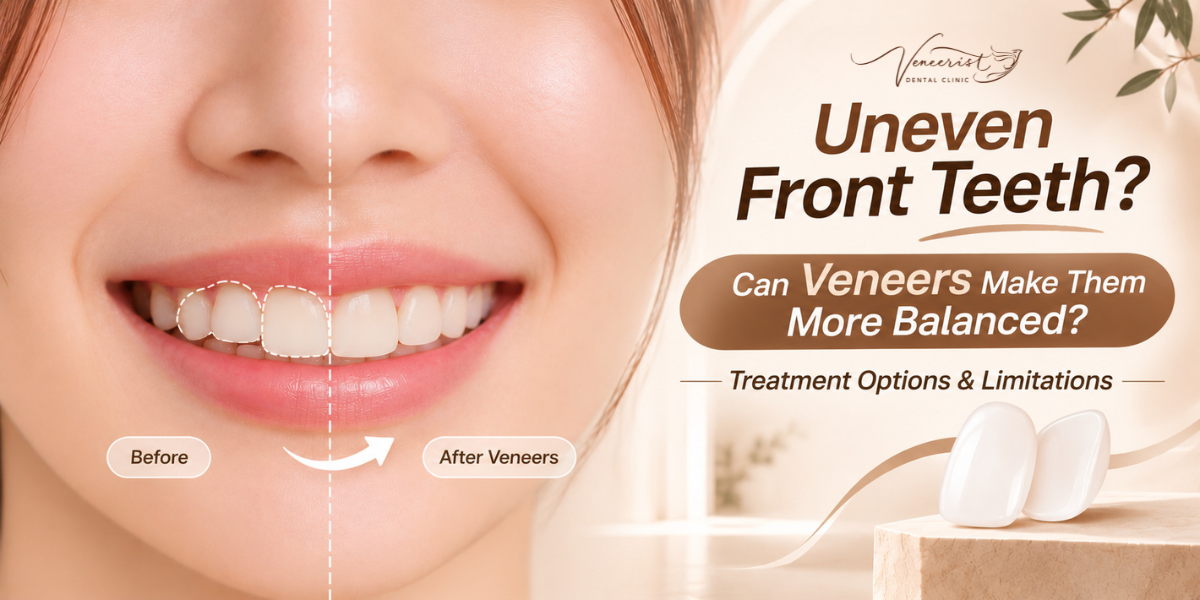
Uneven front teeth can sometimes be improved with dental veneers, particularly when the difference involves tooth shape, length or visible proportions. However, veneers are not always the most appropriate treatment. If the teeth appear uneven because of their position, bite alignment, tooth wear or gum levels, other dental treatments may be more suitable.
You might notice that one front tooth looks longer than the other, that the two teeth have different shapes, or that their biting edges do not line up. Even a small difference can become noticeable when you smile or speak.
The first step is to understand why the teeth look uneven. Not every difference requires treatment, and creating a balanced smile does not necessarily mean making both teeth identical.
Important note: This article provides general dental information only. It cannot diagnose an individual condition or determine which treatment is suitable for you. Tooth structure, alignment, bite and oral health vary between patients. An accurate diagnosis and personalised treatment recommendation require a clinical examination by a dentist.
What Do Uneven Front Teeth Look Like?
Uneven front teeth can describe several different concerns.
Common examples include:
- Different tooth lengths: One central incisor appears longer or shorter than the other.
- Different tooth widths: One front tooth looks wider or larger.
- Different tooth shapes: One tooth has squarer corners while the other looks more rounded.
- Uneven tooth positions: One tooth sits higher, lower or at a different angle.
- Uneven biting edges: A tooth may have worn down or chipped.
- Uneven gum levels: Differences in the gum line can make otherwise similar teeth appear different in length.
Minor differences between the two sides of the smile are common and do not necessarily indicate a dental problem.
However, if a tooth has recently changed shape, become shorter, moved position or developed pain, a dental examination is advisable.
Why Are My Two Front Teeth Uneven?
1. Natural Differences in Tooth Shape and Size
The two upper central incisors are not always perfectly identical.
One tooth may naturally be slightly wider, have a more rounded corner or have a different outline.
These variations may be harmless. If the teeth are healthy and functioning normally, treatment may not be necessary.
For patients who would like to improve their appearance, a dentist can explain whether conservative reshaping or restorative treatment is appropriate.
2. Uneven Tooth Wear
Tooth wear can gradually change the length and shape of the front teeth.
Possible contributing factors include teeth grinding, repeated contact between opposing teeth and habits that place excessive forces on the teeth.
If one tooth wears down more than the other, its biting edge may become shorter or flatter.
Simply adding restorative material may not provide a suitable long-term solution unless the cause of the wear is also assessed.
3. Chipped or Damaged Tooth Edges
A front tooth may become chipped following an accident, biting something hard or repeated mechanical stress.
When a small part of the biting edge is lost, the affected tooth can appear shorter or more irregular than its neighbour.
The appropriate treatment depends on the extent of the damage, whether a crack is present and how much healthy tooth structure remains.
A minor chip may be suitable for composite bonding rather than a veneer.
4. Teeth Positioned at Different Heights
Sometimes, two front teeth have similar natural dimensions but sit at different heights.
One tooth may be positioned slightly further towards the gum or towards the biting edge, creating an uneven appearance.
If tooth position is the underlying cause, orthodontic treatment may be considered because it can move teeth into different positions.
Veneers can change the visible outline of a tooth, but they cannot move the natural tooth itself.
5. Differences in Gum Levels
The gum line affects how much of each tooth is visible.
If one central incisor has a higher or lower gum margin, it may appear longer or shorter than the other.
Possible explanations include natural anatomical variation, tooth position or gum recession.
In some cases, treatment involving the gums may be considered. However, the cause must be established first, as gum contouring is not appropriate for every patient.
6. Previous Fillings or Dental Restorations
A tooth that has previously been repaired may have a slightly different outline from the neighbouring natural tooth.
An older filling may also become worn, chipped or discoloured.
Depending on the condition of the restoration, repairing or replacing it may be sufficient without placing a new veneer.
How Can Veneers Improve Uneven Front Teeth?
Dental veneers are restorations bonded to the visible surfaces of teeth to modify their appearance.
They may be used to improve tooth shape, colour, length and proportions in suitable cases.
For uneven front teeth, the main aim is usually to create better visual balance while preserving as much healthy natural tooth structure as possible.
Adjusting the Visible Length of a Tooth
If one front tooth is shorter because of its natural shape or limited loss of tooth structure, a veneer may sometimes be designed to extend its visible length.
However, increasing tooth length is not simply a cosmetic decision.
The dentist must consider how the new biting edge contacts the opposing teeth during biting, speaking and jaw movements.
An extension that receives excessive forces may be more vulnerable to chipping or fracture.
Improving Tooth Shape and Corners
Veneers may help when the two front teeth have noticeably different outlines.
For example, one tooth may have a square corner while the other has a more rounded shape.
In suitable cases, the restoration can be designed to create a more harmonious relationship between the two teeth.
Nevertheless, the final shape must remain compatible with the natural tooth structure and bite.
Improving Visible Tooth Proportions
The apparent width and length of a tooth are influenced by its outline, contours and surface characteristics.
A carefully planned veneer may improve how the two teeth relate visually.
However, veneers add restorative material. If the intention is to make a naturally wide tooth physically narrower, some tooth reduction may be required.
This is irreversible and must be limited by the available tooth structure and clinical considerations.
Veneers cannot safely produce every requested shape or dimension.
One Front Tooth Is Longer Than the Other: Should I Have Veneers or Tooth Contouring?
The answer depends on why the teeth are different lengths.
If one tooth is only slightly longer because of its biting-edge shape, limited enamel contouring may be considered.
If the other tooth is shorter because it has chipped or worn down, adding composite material may be preferable to removing healthy enamel from the longer tooth.
If the difference comes from the teeth sitting at different heights, orthodontic treatment may address the underlying cause more directly.
Making two biting edges appear level does not always require the same treatment for both teeth.
The dentist should consider conservative options before recommending irreversible changes to healthy tooth structure.
What Are the Alternatives to Veneers for Uneven Front Teeth?
Veneers are one of several possible approaches. The most appropriate option depends on the cause and extent of the difference.
1. Enameloplasty (Minor Tooth Contouring)
Enameloplasty involves carefully removing a limited amount of enamel to refine the shape of a tooth.
It may be considered for minor differences in tooth corners or biting edges.
However, the amount of adjustment is limited, and removed enamel does not grow back.
2. Composite Bonding
Composite bonding involves adding tooth-coloured resin to selected areas of a tooth.
It may be suitable for small chips, short biting edges or minor differences in shape.
In some cases, bonding can improve tooth proportions without the preparation required for a ceramic veneer.
However, composite can wear, stain or chip over time and may require maintenance or repair.
3. Orthodontic Treatment
When teeth appear uneven because of their position, orthodontics may be an appropriate option.
Orthodontic treatment can move teeth and improve their alignment, but it does not directly change the natural dimensions of the tooth crowns.
Patients can read more about the available approaches on our orthodontic treatment page.
4. Gum-Related Treatment
If the visible difference is mainly caused by uneven gum margins, the dentist may assess whether treatment involving the gum tissues is appropriate.
The options depend on the underlying cause, the condition of the gums and the supporting tissues.
Not every uneven gum line requires or is suitable for a surgical procedure.
5. Composite or Ceramic Veneers
Both composite and ceramic veneers may be considered for selected changes to tooth shape and proportions.
The materials differ in their properties, preparation requirements, repair options and maintenance considerations.
Neither material is automatically the best choice for every patient.
You can learn more about the materials and their general applications on our veneers information page.
Comparing Treatments for Uneven Front Teeth
| Treatment | When It May Be Considered | Main Limitation |
|---|---|---|
| Enameloplasty | Minor differences in tooth edges or corners | Limited reshaping; enamel removal is permanent |
| Composite bonding | Small chips, shorter teeth or localised shape differences | May stain, wear or chip |
| Orthodontics | Teeth positioned at different heights or angles | Does not change natural tooth crown dimensions |
| Gum-related treatment | Differences in visible tooth length caused by gum levels | Requires assessment of gum health and anatomy |
| Dental veneers | Selected changes to tooth shape, length and proportions | May require preparation and future maintenance |
These options are provided for general comparison only. A clinical examination is necessary to determine whether any of them is appropriate.
Do I Need Veneers on Both Front Teeth?
Not necessarily.
If one front tooth already has a suitable shape and the other has a small chip or a shorter edge, treatment may be possible on the affected tooth alone.
However, matching a single restoration to a neighbouring natural tooth can be challenging.
The dentist needs to consider colour, translucency, surface texture, shape and the way light interacts with both teeth.
In some cases, treating both central incisors may be discussed, but this does not mean two veneers are automatically better than one.
The number of teeth treated should depend on clinical need and the desired outcome, rather than a fixed cosmetic rule.
Can Veneers Help if My Front Teeth Are Uneven Because of Wear?
Veneers may be considered for worn front teeth in selected circumstances, but the cause and severity of the wear must be assessed first.
If the wear is associated with grinding or excessive bite forces, new restorations may be at greater risk of chipping, fracturing or becoming detached.
Significant tooth wear may also reduce the amount of enamel available for bonding.
For these reasons, a dentist may recommend addressing contributing factors or considering another type of restoration.
If your front teeth are becoming progressively shorter, particularly with sensitivity or discomfort, it is advisable to arrange a dental examination.
What Should a Dentist Assess Before Treating Uneven Front Teeth?
A dental assessment helps distinguish differences in tooth shape from problems involving alignment, wear or gum levels.
The dentist may consider:
- Tooth dimensions and contours: Whether the difference involves the natural tooth shape.
- Tooth position: Whether one tooth sits higher, lower or at a different angle.
- Tooth wear and damage: Whether enamel or other tooth structure has been lost.
- Existing restorations: Whether fillings or previous dental work affect the appearance.
- Bite alignment: Whether opposing teeth place excessive forces on the front teeth.
- Gum health: Whether the visible tooth lengths are influenced by gum levels.
- Patient expectations: Which differences are of concern and what changes may realistically be achieved.
Where indicated, dental photographs, impressions, digital scans or radiographs may support the assessment.
Two patients with similar-looking uneven front teeth may need entirely different treatments.
What Are the Risks and Limitations of Veneers for Uneven Front Teeth?
Although veneers can improve tooth proportions in suitable cases, they have important limitations.
Irreversible Tooth Preparation
Some veneers require the removal of enamel or other tooth structure to provide space for the restoration.
This cannot be reversed. Excessive preparation may increase sensitivity or compromise the conditions needed for bonding.
Bite-Related Problems
Extending the length of a front tooth can alter how it contacts the opposing teeth.
If the restoration is exposed to excessive forces, the risk of damage may increase.
Difficulty Matching a Single Tooth
When only one tooth is restored, achieving a close match with the neighbouring natural tooth may be difficult.
Colour, translucency and surface characteristics may differ, even with careful planning.
Veneers Cannot Reposition Teeth
A veneer may disguise a minor visible irregularity, but it cannot correct the actual position of a tooth.
If alignment is the main concern, orthodontic treatment may be more appropriate.
Maintenance and Possible Replacement
Composite and ceramic veneers can become chipped, fractured or detached.
They are not guaranteed to last indefinitely and may require repair or replacement in the future.
The aim should be to balance appearance with function, oral health and the preservation of natural tooth structure.
How Should You Care for Veneers?
If veneers are placed, maintaining good oral hygiene and avoiding unnecessary forces can help protect the restorations and surrounding teeth.
General recommendations include:
- Brush twice daily using a soft-bristled toothbrush and suitable toothpaste.
- Clean between your teeth regularly with floss or other recommended interdental aids.
- Avoid using your front teeth to open packaging or bite hard objects.
- Tell your dentist if you grind or clench your teeth.
- Use a protective appliance if your dentist recommends one.
- Attend dental examinations and follow-up appointments as advised.
If a veneer chips, becomes loose, causes discomfort or affects your bite, contact a dentist for assessment.
Frequently Asked Questions About Uneven Front Teeth
Can veneers make my two front teeth look the same length?
Veneers may improve the visible length of front teeth in suitable cases. However, the result depends on the original tooth structure, bite and reason for the difference. Identical tooth lengths cannot be guaranteed.
Does one longer front tooth need to be shaved down?
Not always. Minor enamel contouring may be possible, but if the neighbouring tooth is shorter because of damage or wear, adding restorative material may be more appropriate.
Can veneers fix front teeth that sit at different heights?
Veneers may improve their appearance to a limited extent, but they cannot move the teeth. Orthodontic treatment may be preferable if tooth position is the main cause.
Do I need veneers for a small chip in my front tooth?
Not necessarily. Minor chips can sometimes be repaired with composite bonding. The choice depends on the size of the chip, remaining tooth structure and bite.
Can I have a veneer on just one front tooth?
Yes, in suitable cases. However, matching a single veneer to the neighbouring natural tooth can be challenging, particularly in terms of colour and translucency.
Can veneers correct uneven front teeth caused by different gum levels?
Not always. If the visible difference is mainly related to the gum line, the dentist needs to assess the gum tissues and underlying cause before recommending treatment.
Are composite or ceramic veneers better for uneven front teeth?
Both may be suitable in different situations. The decision depends on tooth structure, the extent of the proposed change, bite forces, maintenance considerations and individual treatment goals.
Can veneers restore front teeth that have worn down unevenly?
They may be considered in some cases, but the cause of the wear must be assessed. Significant wear or excessive bite forces may make another approach more appropriate.
Is it necessary to treat slightly uneven front teeth?
No. Small differences are common and may not affect oral health or function. Treatment may be unnecessary if the teeth are healthy and the appearance does not concern you.
How much does it cost to fix uneven front teeth with veneers?
The cost depends on the material, the number of teeth requiring treatment and whether other dental care is needed. A clinical examination is necessary to discuss suitable options and obtain an individual estimate.
Conclusion: Can Veneers Improve Uneven Front Teeth?
Dental veneers may help improve the visible shape, length and proportions of uneven front teeth in suitable cases. They can be an option when the difference is primarily related to the shape of the tooth itself.
However, if the teeth appear uneven because of alignment, tooth wear, bite problems or gum levels, other treatments may be more appropriate.
Not every patient needs veneers, and achieving a balanced smile does not require both front teeth to look perfectly identical.
This article is intended for general dental education only. It cannot establish a diagnosis or confirm which treatment is suitable for an individual patient. A dentist must examine the teeth, gums and bite before recommending veneers, composite bonding, enamel contouring, orthodontics or another approach.
The priority should be to select an appropriate treatment while preserving healthy natural tooth structure wherever possible.
Consult Veneerist Dental Clinic Krabi About Uneven Front Teeth
If your two front teeth look different in length, shape or position, a dental consultation can help identify the possible causes and explain the treatment options available.
At Veneerist Dental Clinic Krabi, we provide composite and ceramic veneer treatments, as well as other dental services that may be relevant to concerns about tooth shape and alignment.
Treatment recommendations are based on your oral health, natural tooth structure, bite and individual needs. Veneers are not necessarily required in every case.
You can explore our dental veneer treatments or learn about orthodontic options before arranging a consultation.
Veneerist Dental Clinic Krabi — Crafting Your Shine
999/9 Maharat Road, Pak Nam, Mueang Krabi, Krabi 81000, Thailand
Google Maps: https://maps.app.goo.gl/AK68wpVnHo4Q5Auw7?g_st=ac
Please contact the clinic in advance to arrange a dental examination and consultation.