How to Get Whiter Teeth: What’s the Difference Between Teeth Whitening and Scaling?
Want whiter teeth but not sure whether you should start with professional teeth cleaning or teeth whitening?
Many people notice that their teeth have become yellow, stained by tea or coffee, or less bright than before. Some assume that scaling will make their teeth whiter, while others consider whitening without knowing what is causing the discolouration.
In fact, teeth scaling and teeth whitening serve different purposes, although both may contribute to a cleaner, fresher-looking smile.
Scaling removes plaque and hardened tartar from the teeth, while teeth whitening uses bleaching agents to lighten the colour of natural teeth.
If you would like a cleaner and brighter smile, understanding the cause of tooth discolouration is an important first step towards choosing the most appropriate treatment.
1. Why Do Teeth Become Yellow Even If You Brush Every Day?
Yellow teeth do not necessarily mean that someone has poor oral hygiene.
Tooth colour can change for several reasons, including surface stains, natural tooth structure and changes within the teeth.
Stains from Food and Drinks
Tea, coffee, red wine and certain strongly coloured foods can contribute to stains on the surfaces of teeth, particularly when consumed regularly.
These are known as extrinsic stains, meaning stains that develop on the outer surfaces of teeth.
Some surface stains can be reduced through professional dental cleaning, polishing or AirFlow treatment, depending on their characteristics.
Plaque and Tartar Build-Up
Dental plaque is a sticky biofilm that forms on teeth.
When plaque is not adequately removed, it can harden into tartar, also called dental calculus.
Tartar may appear yellow or brown and can accumulate additional stains, making the teeth look less clean.
Once tartar has hardened, ordinary toothbrushing cannot remove it effectively. Professional scaling is required.
Natural Tooth Colour
Everyone has a slightly different natural tooth shade.
The colour of teeth is influenced by the structure and optical properties of enamel and dentine.
Some people naturally have a warmer or more yellowish tooth shade even when their teeth and gums are healthy.
Ageing and Internal Tooth Discolouration
Tooth colour may change with age because of changes in enamel and dentine.
Certain medications taken while teeth are developing, dental injuries and some structural conditions may also affect tooth colour.
Before choosing a whitening treatment, it is therefore important to identify whether the discolouration is mainly caused by external staining or factors within the teeth.
2. Does Teeth Scaling Make Your Teeth Whiter?
Scaling may make teeth appear cleaner and brighter if tartar or surface deposits were affecting their appearance. However, scaling does not bleach the natural underlying tooth colour.
Teeth scaling is a professional dental procedure that removes plaque and hardened tartar from tooth surfaces, including areas that may be difficult to clean with a toothbrush.
The main benefits of scaling include:
- Removing accumulated tartar.
- Supporting gum health by reducing deposits associated with gum inflammation and periodontal disease.
- Reducing areas where plaque can accumulate.
- Making daily oral hygiene easier.
- Improving the appearance of teeth when visible deposits are removed.
However, if your teeth have a naturally yellowish shade, they may remain the same colour after scaling.
For this reason, scaling alone should not be expected to lighten natural teeth by several shades.
3. What Is Teeth Whitening and How Does It Work?
Teeth whitening is a cosmetic dental treatment that uses bleaching agents, such as hydrogen peroxide or carbamide peroxide, to help lighten the colour of natural teeth.
These agents work by chemically altering compounds responsible for certain types of tooth discolouration.
There are several approaches to whitening, including:
- Professional in-clinic teeth whitening.
- Dentist-supervised home whitening using customised trays and whitening products.
- Certain over-the-counter whitening products used according to appropriate instructions.
Professional in-clinic whitening may involve a bleaching agent used with or without a light system, depending on the selected product and treatment protocol.
What Is LED Teeth Whitening?
LED teeth whitening is a form of professional whitening in which a bleaching agent is used alongside an LED light system according to the manufacturer’s treatment protocol.
It is important to understand that the bleaching agent is the main component responsible for changing tooth colour.
The addition of LED light does not necessarily produce better whitening results than treatments without light in every situation.
The outcome depends on factors such as the original tooth shade, the cause of discolouration, the whitening product and the individual’s response to treatment.
Temporary tooth sensitivity or gum irritation may occur, so a dental assessment is recommended before whitening.
4. Teeth Whitening vs Scaling: What’s the Difference?
Although both treatments are associated with dental care, they have different primary purposes.
| Feature | Teeth Scaling | Teeth Whitening |
|---|---|---|
| Main purpose | Removes plaque and tartar | Lightens natural tooth colour |
| Helps with yellow teeth | May improve appearance when deposits are present | May help depending on the cause of discolouration |
| Changes natural tooth shade | No | May lighten the shade |
| Uses bleaching agents | No | Yes |
| Supports gum health | Part of professional periodontal care | Does not treat gum disease |
| Expected result | Cleaner teeth following deposit removal | Potentially brighter natural teeth |
If you have accumulated tartar, appropriate professional cleaning may be needed.
Whitening should not be used as a substitute for scaling or treatment of gum disease.
On the other hand, if your teeth are already clean but you would like to lighten their natural colour, scaling alone may not achieve your cosmetic goal.
5. What Is AirFlow Teeth Cleaning and How Is It Different from Scaling?
If you regularly drink tea or coffee, you may have heard of AirFlow teeth cleaning as a way to address certain types of surface staining.
AirFlow is a professional dental cleaning system that uses a controlled combination of air, water and suitable cleaning powder to help remove biofilm and external stains from tooth surfaces.
It may be particularly useful for certain stains associated with food, drinks and lifestyle habits.
However, AirFlow and scaling do not perform exactly the same function.
Scaling is used to remove hardened tartar.
AirFlow helps remove biofilm and external staining where clinically appropriate, but it does not replace the removal of hardened calculus in every situation.
Importantly, AirFlow is not a tooth bleaching treatment.
Removing surface stains may reveal a cleaner-looking natural tooth colour, but it does not chemically lighten the underlying tooth shade by several levels.
6. Should You Have Scaling Before Teeth Whitening?
For patients with plaque, tartar or significant surface deposits, a dental examination and appropriate cleaning before whitening may be advisable.
A dentist should assess the health of the teeth and gums before beginning a whitening procedure.
This includes checking for untreated decay, gum inflammation, tooth sensitivity and other oral health concerns.
If tartar is present, scaling may be recommended to remove the deposits and allow a clearer assessment of the teeth.
However, not everyone needs scaling immediately before whitening, and both procedures do not necessarily have to take place during the same appointment.
If gum inflammation, sensitivity or another dental problem is present, the dentist may recommend treating that condition or allowing time for recovery before whitening.
The order and timing of treatment should therefore be based on an individual clinical assessment.
7. How Many Shades Whiter Can Your Teeth Become?
A common question is: “How many shades whiter will my teeth become after whitening?”
There is no specific number of shades that can be guaranteed for every patient.
The degree of colour change depends on several factors:
- Your original tooth shade.
- The cause of discolouration.
- Age and tooth structure.
- The whitening technique and product used.
- Individual response to the bleaching agent.
- Diet and lifestyle habits following treatment.
Some patients may notice a considerable improvement, while others experience a more subtle change.
It is also important to understand that dental crowns, veneers and fillings do not respond to whitening in the same way as natural teeth.
This means that whitening may create a visible shade difference between natural teeth and existing restorations.
If you have fillings or crowns on your front teeth, inform your dentist before whitening so that the possible colour differences can be discussed.
8. Want Cleaner and Brighter Teeth? Discover Premium Dental Spa
For patients interested in both professional cleaning and tooth whitening, a combined dental care package may be worth considering.
At Veneerist Dental Clinic Krabi, our Premium Dental Spa package brings together four dental services.
Scaling — Professional Tartar Removal
Scaling removes accumulated tartar and plaque deposits to support oral and gum health.
AirFlow — External Stain Removal
AirFlow helps remove biofilm and certain external stains, including those associated with tea and coffee, where clinically appropriate.
Fluoride Treatment — Additional Preventive Care
Topical fluoride treatment can help protect teeth against decay and may be recommended according to individual oral health needs.
LED Teeth Whitening — Professional Whitening
Professional whitening uses a bleaching agent alongside an LED light system according to the treatment protocol, with the aim of lightening the natural tooth colour.
Individual results may vary.
Premium Dental Spa at Veneerist
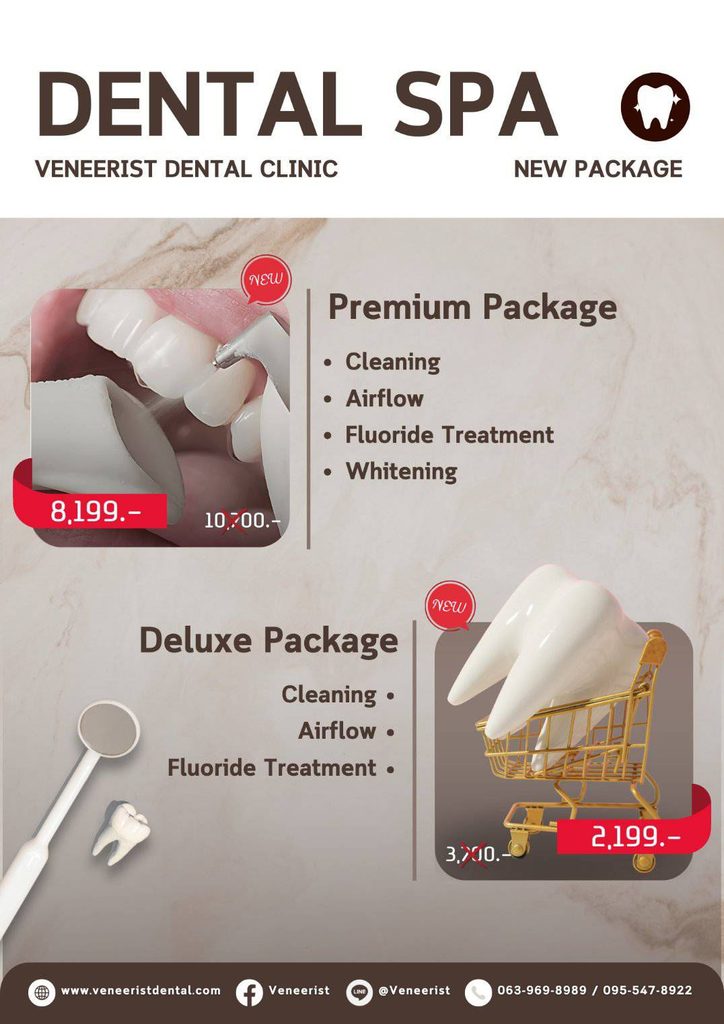
Regular price: THB 10,700
Promotional price: THB 8,199
Estimated treatment time: Approximately 2–3 hours
The actual appointment duration and suitability of each procedure depend on your oral health and the dentist’s assessment.
This package may appeal to people who are interested in both dental cleaning and whitening.
However, combining several services does not mean that every procedure is necessary for every patient, nor does it guarantee whiter results than whitening alone.
A clinical assessment helps determine whether the package is appropriate for your individual needs.
9. How Can You Help Maintain Whiter Teeth After Whitening?
Following whitening treatment, good oral hygiene and lifestyle habits can help reduce the build-up of new surface stains.
Recommended practices include:
- Brush twice daily using fluoride toothpaste.
- Clean between your teeth regularly.
- Reduce frequent exposure to stain-producing drinks such as tea and coffee.
- Avoid smoking.
- Attend dental examinations and professional cleaning appointments as recommended.
- Follow any specific post-whitening instructions provided by your dentist.
If you experience sensitivity following whitening, contact your dentist for advice.
Whitening results are not permanent.
How long your teeth remain brighter depends on factors such as your natural tooth characteristics, oral hygiene and exposure to staining substances.
Conclusion: Should You Choose Teeth Whitening or Scaling for Whiter Teeth?
If you want cleaner and whiter-looking teeth, the first step is understanding what is causing the discolouration.
Teeth scaling removes tartar and supports gum health. It may improve the appearance of teeth when visible deposits are removed.
AirFlow cleaning helps remove certain external stains and dental biofilm.
Teeth whitening uses bleaching agents to help lighten the natural colour of teeth.
These treatments serve different purposes and may be included in a combined treatment plan when clinically appropriate.
If you are considering professional teeth cleaning and whitening in Krabi, you can enquire about the Premium Dental Spa package at Veneerist Dental Clinic and arrange a consultation to discuss the most suitable approach for your smile.
Contact Veneerist Dental Clinic Krabi
Interested in professional teeth whitening, scaling or our Premium Dental Spa package?
Contact our team to enquire or arrange an appointment.
Maharat Road, Krabi Town, Thailand
Veneerist Dental Clinic Location
Disclaimer: The suitability of whitening, scaling and other dental procedures depends on individual oral health and clinical assessment. Whitening results vary between patients, and no particular shade improvement or duration can be guaranteed. Please enquire about current promotional terms and book an appointment in advance.
FAQ — Frequently Asked Questions
1. Should I choose teeth whitening or scaling if I want whiter teeth?
It depends on the cause of the discolouration. If tartar or surface deposits are present, professional cleaning may improve the appearance of your teeth. If you want to lighten the natural tooth shade, whitening may be considered after a dental assessment.
2. Does teeth scaling make your teeth whiter?
Scaling does not bleach the natural tooth colour. However, removing tartar and accumulated deposits may make teeth look cleaner and brighter.
3. Does LED teeth whitening really work?
Bleaching agents used in professional whitening can lighten natural teeth in many cases. However, results vary, and the use of LED light does not necessarily improve whitening outcomes compared with treatments without light.
4. Can AirFlow make teeth whiter?
AirFlow can remove certain external stains and make teeth look cleaner. It is not a bleaching treatment and does not chemically lighten the underlying natural tooth shade.
5. Can teeth whitening cause sensitivity?
Yes. Some patients experience temporary sensitivity or gum irritation. If you already have sensitive teeth, tell your dentist before treatment.
6. How many shades whiter can my teeth become?
There is no guaranteed number of shades. The result depends on your original tooth colour, the cause of staining and your individual response to treatment.
7. How long do teeth whitening results last?
Whitening results are not permanent. Their duration varies depending on oral hygiene, natural tooth characteristics and exposure to staining foods, drinks or tobacco.
8. What is included in the Premium Dental Spa package at Veneerist?
The package includes scaling, AirFlow cleaning, fluoride treatment and LED teeth whitening. The promotional price is THB 8,199, reduced from THB 10,700, subject to treatment suitability and promotional terms.