What Are Dental Implants Made Of? Titanium vs Zirconia Explained
What are dental implants made of? It is a common question among people considering replacing missing teeth, particularly when they learn that an implant is placed directly into the jawbone and may remain there for many years.
Understandably, patients want to know whether the material is safe, strong enough for everyday chewing and compatible with the human body.
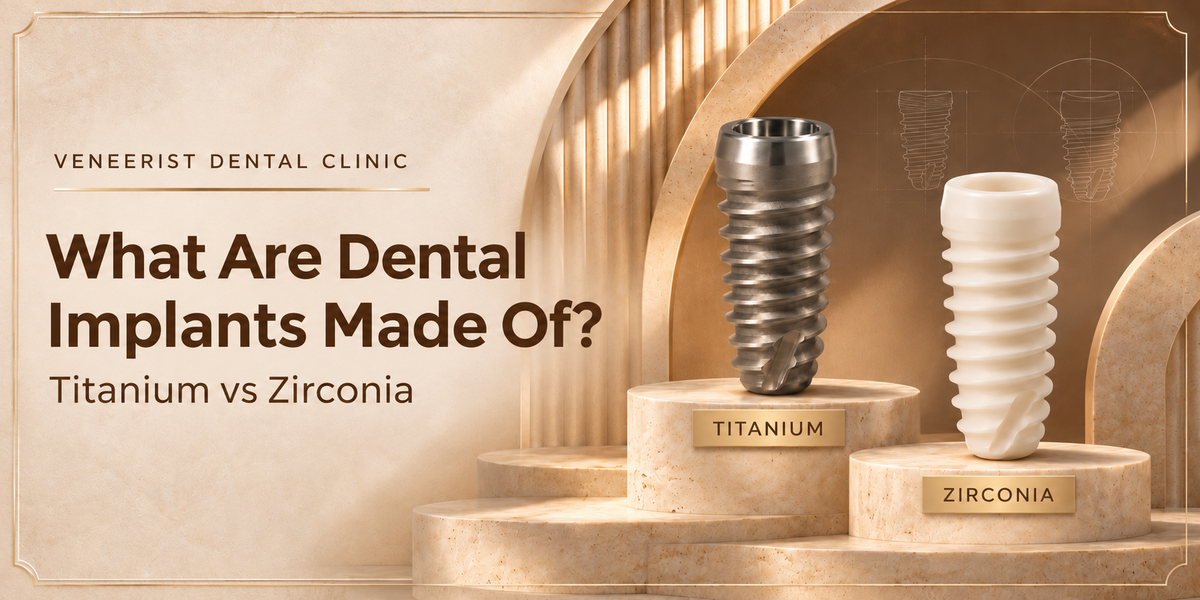
Today, the two main materials used to manufacture dental implant fixtures are titanium, a metal with a long history in medical and dental applications, and zirconia, a high-strength ceramic used in certain implant systems.
In this article, we explore how dental implants are constructed, the differences between titanium and zirconia, their advantages and limitations, and an unusual scientific question: Can dental implants survive cremation?
What Is a Dental Implant, and What Is It Made Of?
A dental implant is a medical device designed to replace the root of a missing tooth. It is surgically placed into the jawbone to provide support for a dental restoration, such as a crown, bridge or implant-supported denture.
A typical single-tooth implant restoration consists of three main components.
1. Implant Fixture
The implant fixture is the part inserted into the jawbone. It is usually shaped like a small screw and acts as the foundation for the replacement tooth.
Most implant fixtures are manufactured from titanium or titanium alloys, although zirconia implant systems are also available.
2. Abutment
The abutment connects the implant fixture to the crown or other dental restoration.
Depending on the implant system, an abutment may be made from titanium, zirconia or another suitable material.
Some implant designs combine the fixture and abutment into a single component.
3. Dental Crown
The dental crown is the visible part of the restoration above the gum. It is designed to resemble a natural tooth and help restore chewing function and appearance.
Implant-supported crowns may be made from zirconia, other dental ceramics or alternative restorative materials.
An important distinction is that the implant fixture and the dental crown do not have to be made from the same material.
For example, a titanium implant fixture can support a zirconia crown, depending on the implant system and treatment plan.
What Materials Are Dental Implants Made From?
Dental implant materials must have properties suitable for long-term use in the body. These include adequate mechanical strength, biological compatibility and the ability to support a stable connection with the surrounding bone.
Two important materials used in implant dentistry are titanium and zirconia.
Titanium Dental Implants
Titanium is a metal widely used in medical devices, including orthopaedic implants and dental implants.
Dental implant fixtures may be manufactured from commercially pure titanium or titanium alloys, depending on the design and specifications of the implant system.
Why Is Titanium Commonly Used for Dental Implants?
1. Good Biocompatibility
Titanium has been extensively studied for its compatibility with human tissues and has a long history of use in medical applications.
2. Ability to Integrate With Bone
After an implant has been placed, the surrounding bone may form a direct structural connection with its surface through a biological process known as osseointegration.
This process is essential for establishing the stability needed to support a dental restoration.
3. Suitable Mechanical Properties
Titanium combines strength with a degree of toughness, making it suitable for a wide range of dental implant designs.
4. High Corrosion Resistance
Titanium naturally forms a thin protective oxide layer on its surface, helping it resist corrosion under normal conditions.
5. Extensive Long-Term Clinical Evidence
Titanium dental implants have been studied and used clinically for several decades, providing substantial information about their performance, limitations and long-term outcomes.
However, the success of dental implant treatment depends on much more than the implant material itself. Bone condition, oral health, treatment planning and ongoing maintenance all play important roles.
Zirconia Dental Implants
Zirconia is a high-strength ceramic material used in several areas of restorative dentistry, including dental crowns and certain implant systems.
Unlike titanium, zirconia is not a metallic implant material. Its white or tooth-coloured appearance can be advantageous in selected aesthetic situations.
What Are the Characteristics of Zirconia Implants?
- They are made from a ceramic material rather than metal.
- Their light colour may be beneficial in certain cases involving thin gum tissue.
- Zirconia has demonstrated biocompatibility and the potential for osseointegration in studied implant systems.
- It offers high strength but has different mechanical properties from titanium.
However, zirconia is more brittle than titanium, and certain implant systems may have limitations concerning component design, angulation or restorative flexibility.
Long-term clinical evidence is also less extensive for some zirconia implant designs and indications than for established titanium systems.
Therefore, zirconia should not automatically be considered superior or more suitable for every patient.
Titanium vs Zirconia Dental Implants: What Is the Difference?
| Feature | Titanium | Zirconia |
|---|---|---|
| Material type | Metal or metal alloy | Ceramic |
| Colour | Silver-grey | White or light-coloured |
| Biocompatibility | Extensively studied | Supported by studies of specific systems |
| Osseointegration | Substantial long-term evidence | Supported by clinical evidence, with limitations for some indications |
| Mechanical properties | Strong and relatively tough | Strong but more brittle |
| Implant system options | Wide range of designs and components | Options depend on the particular system |
| Aesthetic considerations | Metal colour may influence appearance in some cases with thin gums | Light colour may be advantageous in selected cases |
Which Material Is Better?
There is no single implant material that is best for every patient.
Titanium has a long clinical history and extensive supporting evidence. Zirconia offers an alternative in selected situations, although its suitability depends on the specific system and clinical circumstances.
The appropriate choice depends on factors such as jawbone condition, tooth position, gum health, bite forces and the intended dental restoration.
Do Titanium Dental Implants Rust?
Because titanium is a metal, some patients wonder whether a dental implant can rust or deteriorate after spending years inside the mouth.
Titanium is highly resistant to corrosion because it forms a thin, protective titanium oxide layer on its surface.
As a result, it does not develop the familiar reddish-brown rust associated with ordinary iron.
However, this does not mean titanium is completely immune to corrosion or surface wear. Certain environmental and mechanical conditions may affect the material.
Choosing an appropriate implant system, maintaining good oral hygiene and attending regular dental reviews remain important.
Can Dental Implants Survive Cremation? The Science Behind Titanium
It may sound like an unusual question, but what happens to dental implants when someone who has received implant treatment passes away and is cremated?
The answer is that titanium dental implants may remain after cremation.
One reason is titanium’s exceptionally high melting point of approximately 1,668°C (3,034°F), which is higher than the temperatures typically used during cremation.
What Does Scientific Research Show?
A study published in Forensic Science International in 2011 examined changes in dental implants following exposure to temperatures of up to 1,125°C.
The researchers found that titanium and titanium-alloy implants could retain identifiable structural characteristics, including aspects of their shape and thread patterns, despite changes to their surfaces caused by oxidation.
Further forensic dental research has examined dental implants recovered after cremation and explored how their surviving characteristics may contribute to human identification.
Why Can Dental Implants Be Useful in Forensic Dentistry?
In circumstances where extreme heat has damaged natural teeth or dental restorations, an implant may retain certain recognisable characteristics.
These may include its shape, dimensions, thread configuration or other design features.
Forensic dental specialists may compare these findings with existing dental records and radiographs to assist in identifying a deceased person.
However, surviving cremation does not mean a dental implant remains completely unchanged.
High temperatures can alter the material’s surface, colour and other properties. An implant may also be damaged, fragmented or not recovered in a particular case.
This is an interesting example of titanium’s physical properties and their relevance to forensic science, rather than a measure of how long a dental implant will last in the mouth.
Further reading:
- Dental Implant Changes Following Incineration — Forensic Science International (2011)
- A Study of Osseointegrated Dental Implants Following Cremation — Australian Dental Journal (2014)
Are Titanium Dental Implants Safe? Can They Cause Allergic Reactions?
Titanium has good biocompatibility and has been widely used in medical and dental implant applications.
Nevertheless, dental implant treatment is a surgical procedure and involves potential risks and limitations.
Possible complications include infection, inflammation around the implant, failure to achieve or maintain osseointegration, and mechanical problems involving implant components or restorations.
Can Someone Be Allergic to Titanium?
Titanium hypersensitivity has been reported, although it appears to be uncommon and can be challenging to assess.
Patients with a suspected metal allergy, previous reactions to medical devices or relevant medical conditions should inform their dentist before treatment.
The dentist can review their medical history and determine whether further assessment is appropriate.
Patients should not choose or change implant materials solely on the basis of a suspected allergy without professional advice.
Are Zirconia Dental Implants the Same as Zirconia Crowns?
No. Although zirconia is used in both applications, the implant fixture and the crown serve different purposes.
The implant fixture is the component placed into the jawbone to support the replacement tooth.
A zirconia crown is the visible restoration above the gum, designed to replace the shape and function of a natural tooth.
Therefore, receiving a zirconia crown does not necessarily mean that the implant fixture beneath it is made from zirconia.
A titanium implant fixture may be combined with a zirconia crown when appropriate for the chosen system and treatment plan.
How Do Dentists Choose the Right Dental Implant System?
Selecting a dental implant involves more than choosing a material or brand.
A dentist must assess the patient’s oral health, anatomy and restorative needs before recommending a suitable implant system.
1. Jawbone Quantity and Quality
The available bone must be assessed to determine whether it can support the proposed implant.
Some patients may require bone grafting or another additional procedure before or during implant placement.
2. Position of the Missing Tooth
Front and back teeth have different functional and aesthetic requirements.
Implants in the front of the mouth may require particular attention to gum contours and appearance, while back teeth must withstand significant chewing forces.
3. Gum and Periodontal Health
Healthy surrounding tissues are important for implant treatment.
If active periodontal disease or uncontrolled inflammation is present, it may need to be managed before implant placement.
4. Bite and Chewing Forces
Patients with heavy bite forces or teeth-grinding habits may require additional consideration when planning implant placement and restoration design.
5. General Health
Certain medical conditions, medications, smoking and other health-related factors may influence healing and treatment planning.
6. The Planned Dental Restoration
The dentist must consider the intended position and design of the replacement tooth when planning implant placement.
This helps ensure that the implant and its restoration are appropriately aligned for function and maintenance.
Titanium Dental Implants at Veneerist Dental Clinic Krabi
At Veneerist Dental Clinic Krabi, we use titanium-based dental implant fixtures, a material with an established history of use in implant dentistry and extensive clinical evidence.
Our clinic works with several titanium implant systems, allowing the dentist to consider different options according to each patient’s clinical needs.
The choice of implant system is not based on brand name or price alone. It involves assessing factors such as:
- Jawbone quantity and quality
- Position of the missing tooth
- Gum and surrounding tissue health
- Bite alignment and chewing forces
- Medical history and general health
- The design of the planned dental restoration
Treatment begins with an examination and review of the patient’s oral and medical history.
The dentist may recommend diagnostic imaging, such as a panoramic X-ray (OPG) or cone-beam computed tomography (CBCT), when clinically indicated, to help assess the available bone and nearby anatomical structures.
The appropriate implant dimensions, design and titanium implant system are then considered as part of the individual treatment plan.
Before treatment, the dentist will explain the proposed procedure, expected treatment stages, approximate timescale, relevant risks and possible limitations.
Successful implant treatment depends not simply on the implant material or brand, but on careful diagnosis, appropriate treatment planning and long-term oral care.
How Should You Care for Dental Implants?
Although a dental implant fixture cannot develop tooth decay in the same way as a natural tooth, the surrounding gum and bone can still become inflamed or diseased.
Good oral hygiene and regular professional care are therefore essential.
Recommended care includes:
- Brush your teeth thoroughly twice a day.
- Clean around the implant and between the teeth using suitable interdental cleaning aids.
- Attend regular dental examinations and professional cleaning appointments.
- Avoid smoking.
- Contact your dentist if you notice swelling, bleeding, pain or movement of the crown or implant components.
- Follow the specific instructions provided during healing and after treatment.
Regular monitoring allows potential problems to be identified and managed appropriately.
Frequently Asked Questions About Dental Implant Materials
What are dental implants made of?
Most dental implant fixtures are manufactured from titanium or titanium alloys. Zirconia, a ceramic material, is also used in certain implant systems.
Are titanium dental implants safe?
Titanium has good biocompatibility and extensive clinical evidence supporting its use in implant dentistry. However, implant treatment still carries risks and requires an individual assessment by a qualified dentist.
Do titanium dental implants rust?
Titanium forms a protective oxide layer that helps resist corrosion, so it does not rust like ordinary iron. Nevertheless, corrosion and surface wear can occur under certain conditions.
Can dental implants survive cremation?
Titanium dental implants may remain after cremation because of the material’s high melting point. Forensic research has shown that implants can retain identifiable features after exposure to extreme heat, although changes or damage may occur.
Which is better, titanium or zirconia dental implants?
Neither material is automatically best for every patient. Titanium has extensive long-term clinical evidence, while zirconia may be considered in selected situations. The choice depends on the patient’s clinical needs and the implant system.
Is a zirconia crown the same as a zirconia implant?
No. A zirconia crown replaces the visible part of a tooth, while a dental implant fixture is placed into the jawbone. A zirconia crown can be supported by a titanium implant.
How long do titanium dental implants last?
Dental implants can function for many years, but their lifespan cannot be guaranteed. Long-term outcomes depend on factors such as bone health, oral hygiene, bite forces, general health and regular professional maintenance.
Conclusion: What Are Dental Implants Made Of, and Why Is Titanium Widely Used?
Most dental implant fixtures are made from titanium or titanium alloys, materials known for their biocompatibility, suitable mechanical properties and extensive clinical history.
Zirconia is another material used in certain implant systems, with its own advantages and limitations.
Titanium also has interesting physical properties, including high corrosion resistance and an exceptionally high melting point. These characteristics have led researchers to investigate how dental implants behave after exposure to the extreme temperatures associated with cremation.
However, choosing the right dental implant involves more than understanding its material.
Jawbone condition, oral health, tooth position, bite forces and individual treatment requirements all influence the treatment plan.
If you are considering dental implants in Krabi, you can arrange a consultation at Veneerist Dental Clinic Krabi to discuss your options and receive an individual dental assessment.
Contact Veneerist Dental Clinic Krabi
Veneerist Dental Clinic — Crafting Your Shine
Maharat Road, Pak Nam, Mueang Krabi, Krabi, Thailand
Google Maps: https://share.google/KdNUhHfNUknISCF1X
Opening Hours: Monday–Sunday, 10:00 am–8:00 pm (hours may vary; advance appointments are recommended).
References
- U.S. Food and Drug Administration. Dental Implants: What You Should Know.
https://www.fda.gov/medical-devices/dental-devices/dental-implants-what-you-should-know - Berketa J, James H, Marino V. Dental implant changes following incineration. Forensic Science International. 2011;207(1–3):50–54.
https://doi.org/10.1016/j.forsciint.2010.08.025 - Berketa JW, James H, Langlois NEI, Richards LC. A study of osseointegrated dental implants following cremation. Australian Dental Journal. 2014;59(2):149–155.
https://doi.org/10.1111/adj.12170 - Berketa J, James H, Marino V. A pilot study in the recovery and recognition of non-osseointegrated dental implants following cremation. Journal of Forensic Odonto-Stomatology. 2011;29(2):38–44.
https://pmc.ncbi.nlm.nih.gov/articles/PMC5734856/
Medical Disclaimer: This article is intended for general educational purposes and does not replace an individual dental examination, diagnosis or professional advice. The suitability of implant materials, systems and procedures depends on each patient’s oral health, medical history and clinical circumstances. Treatment outcomes and timescales may vary.