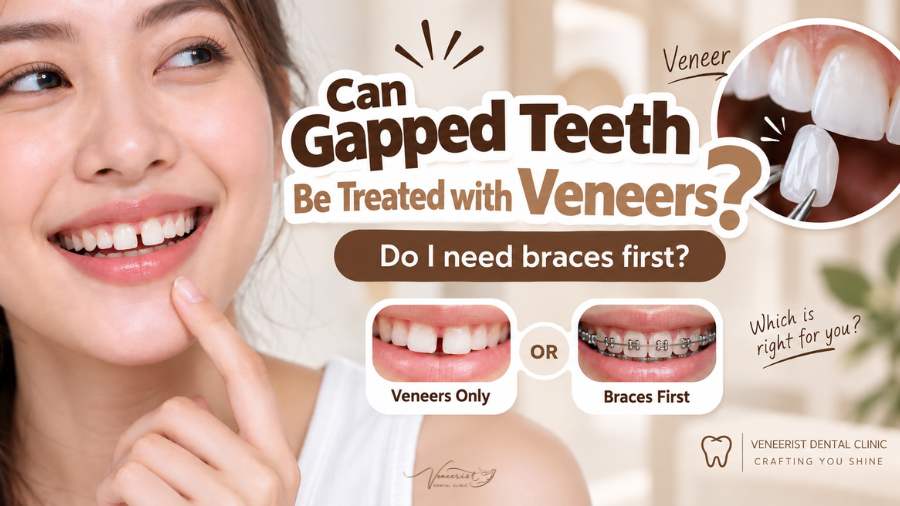
If you have gaps between your teeth, especially between the front teeth, you may wonder whether Ceramic Veneers can close the gaps or whether you need braces or orthodontic treatment first.
The answer is: some cases of gapped teeth can be treated with Ceramic Veneers without orthodontic treatment first.
However, veneers are not automatically the right solution for every gap. Before recommending treatment, the dentist needs to consider the size of the gap, tooth proportions, tooth position, your bite, and the underlying reason for the spacing.
The goal is not simply to close the space. The final teeth should also have appropriate proportions and look balanced within the overall smile.
How Can Ceramic Veneers Close Gaps Between Teeth?
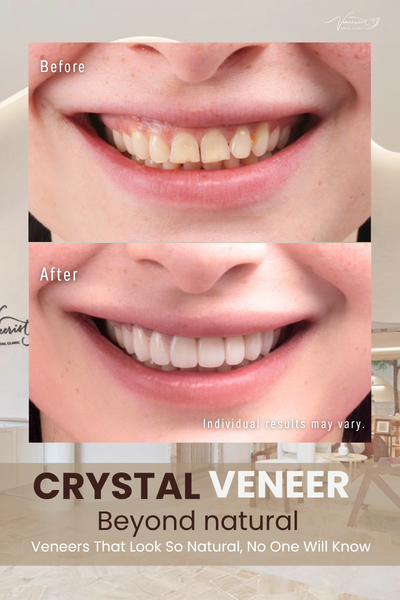
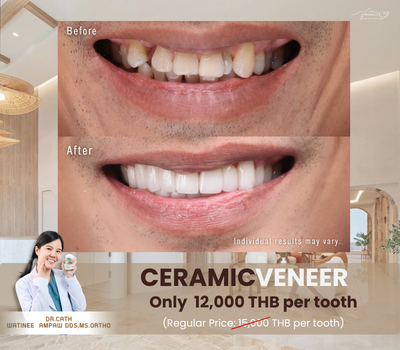
Ceramic Veneers are custom-made restorations bonded to natural teeth. They can be designed to change the visible shape, width, length, and proportions of the teeth.
When a patient has spaces between the teeth, veneers may be designed to slightly change the proportions of the surrounding teeth, helping to reduce or close the visible gaps while improving the overall appearance of the smile.
However, closing a gap with veneers is not simply a matter of “making the teeth wider until the space disappears.”
The dentist must consider the shape, proportions, symmetry, and relationship between neighboring teeth so that closing the gap does not result in teeth that look unnaturally wide.
What Types of Gapped Teeth May Be Suitable for Veneers?
Ceramic Veneers may be considered when the spacing is manageable and the overall tooth positions and bite are suitable.
For example, a patient may have a small gap between the front teeth, or the natural teeth may be relatively small compared with the available space in the smile.
In these situations, carefully adjusting the proportions of the teeth may help close the gaps while also improving the overall balance of the smile.
However, the size of the gap alone cannot determine whether veneers are suitable.
The dentist also needs to assess the position of the teeth, their proportions, the bite, and the overall treatment goal.
What If the Gap Is Large?
Larger gaps require more careful planning.
If a wide space is closed entirely by increasing the width of the teeth with Ceramic Veneers, the final teeth may become too wide in relation to their height or to the neighboring teeth.
For this reason, the dentist needs to evaluate how the available space can be distributed between the teeth and whether the final tooth proportions will still look balanced.
If closing the entire space with veneers would compromise the proportions of the teeth, orthodontic treatment may be considered first to move the teeth or redistribute the spaces before restorative treatment.
Do You Need Braces Before Getting Veneers for Gapped Teeth?
Not everyone with gapped teeth needs braces before veneers.
If the teeth are already in suitable positions, the bite is appropriate, and the gap can be closed by modifying tooth shape without creating unnatural proportions, Ceramic Veneers may be an option without orthodontic treatment first.
However, if the spacing is associated with tooth-position problems—such as rotated, tilted, or significantly misaligned teeth—attempting to correct everything with veneers alone may require excessive changes to the visible tooth shape.
In these situations, orthodontic treatment may be considered first to improve the position of the natural teeth.
The important difference is that orthodontics moves the actual teeth, while Ceramic Veneers change the visible shape and proportions of the teeth.
This is why the most appropriate approach depends on what is actually causing the gap.
Why Is It Important to Find the Cause of Gapped Teeth?
Gaps between teeth do not all develop for the same reason.
Some people naturally have relatively small teeth compared with the available space in the jaw. Others may have tooth positions or alignment that create spaces between the teeth. There may also be other oral factors contributing to the spacing.
If a gap has recently appeared or has become wider over time, it is particularly important to have it evaluated by a dentist.
Changes in tooth position can sometimes be associated with problems involving the teeth, gums, or supporting tissues.
Simply closing the visible gap without identifying the underlying cause may improve the appearance while leaving the original problem unaddressed.
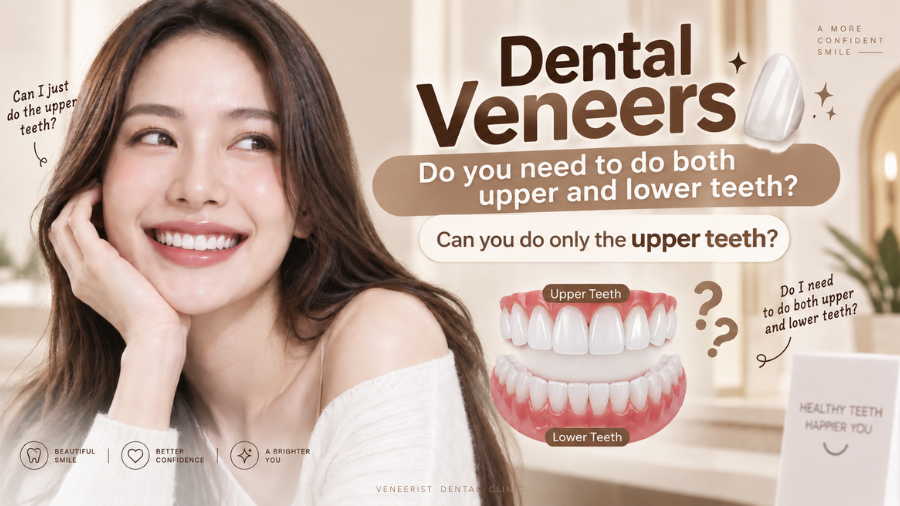
If I Only Have a Gap Between My Two Front Teeth, Can I Get Just Two Veneers?
Possibly, but this cannot be decided based on the gap alone.
If only the two front teeth are made wider to close the space, the dentist needs to determine whether those teeth will still have appropriate proportions compared with the neighboring teeth.
For some smiles, treating only the teeth around the gap may work well.
In other cases, several teeth may need to be considered together so that the available space can be distributed more naturally and the overall smile remains balanced.
Therefore, the number of veneers should be based on the overall smile design rather than simply the number of teeth next to the gap.
Why Is Smile Design Important for Gapped Teeth?
Smile Design can be particularly useful when planning veneers for gapped teeth because it allows the dentist to evaluate what the teeth may look like after the spaces are closed.
At Veneerist Dental Clinic, the necessary clinical information is collected before Ceramic Veneer treatment. Depending on the individual case, this may include photographs, X-rays, dental impressions, or an intraoral scan.
This information is used for planning together with the Dental Laboratory.
A 3D Smile Design is created to plan the shape, size, proportions, alignment, and details of the Ceramic Veneers before treatment begins.
For patients with gaps between their teeth, this helps evaluate whether closing the space would make certain teeth too wide, whether the proportions between neighboring teeth remain balanced, and how the final smile may look as a whole.
The question is therefore not only:
“Can we close the gap?”
It is also:
“Will the teeth still have appropriate proportions after the gap is closed?”
Should You Choose Orthodontics or Veneers for Gapped Teeth?
The two treatments have different purposes.
If the main problem is tooth position, orthodontic treatment can move the natural teeth and change their positions.
If the teeth are already in suitable positions but the patient would like to improve the spacing, tooth shape, size, proportions, or color, Ceramic Veneers may be one treatment option to consider.
In some cases, the two approaches may also be combined. Orthodontic treatment can first improve the position or spacing of the teeth, followed by Ceramic Veneers to refine tooth shape or proportions if needed.
The appropriate treatment therefore depends on the cause of the spacing, the condition and position of the teeth, the bite, and the desired result.
Summary: Can Veneers Fix Gapped Teeth?
Yes, in selected cases. And not everyone needs braces first.
Ceramic Veneers may be used to close spaces between teeth while also adjusting tooth shape and proportions, particularly when the overall tooth positions and bite are already suitable.
However, if the gap is large, the teeth are rotated or tilted, or closing the space with veneers alone would create teeth that are disproportionately wide, orthodontic treatment may be considered first.
The important question is not simply “Can veneers close the gap?”
The dentist also needs to consider whether the final tooth position, proportions, bite, and overall smile will remain balanced after the space is closed.