The word “veneers” seems to come up everywhere when people talk about smile makeovers.
But what exactly are veneers?
Some people think veneers simply make teeth whiter. Others think they are the same as dental crowns, while some may have seen dramatic tooth preparation videos online and assume that all veneer treatments involve shaving the teeth down significantly.
So, what are veneers, and what do they actually do to your natural teeth?
What Are Veneers?
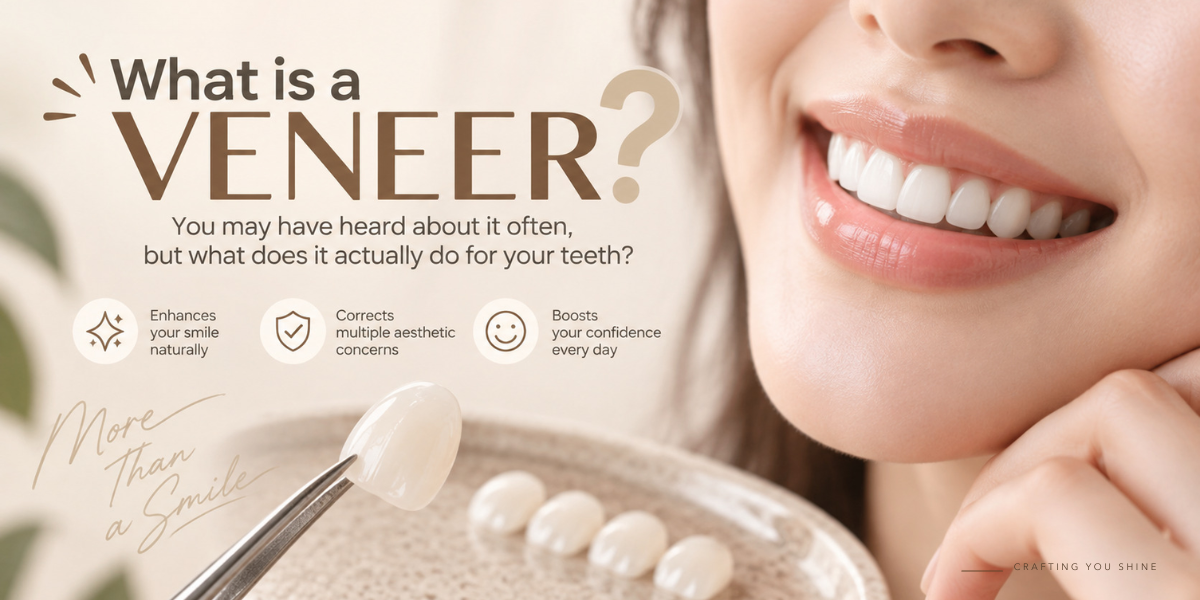
A veneer is a restoration designed to cover the visible front surface of a natural tooth and improve its appearance.
Rather than replacing the entire natural tooth, veneers are designed around the existing teeth and can be used to modify several visible characteristics, including:
- Tooth color
- Tooth shape
- Width and length
- Tooth proportions
- Worn or chipped edges
- Certain small spaces between teeth
- Selected minor irregularities in tooth appearance
In simple terms, veneers allow the dentist to redesign certain aspects of the teeth that are visible when you smile.
However, veneers cannot change every dental problem without limitations. The condition of the natural teeth, tooth position, bite, and overall oral health still need to be considered.
What Happens to Your Natural Teeth When You Get Veneers?
One common misunderstanding is that getting veneers means removing the natural teeth and replacing them with artificial ones.
Your natural teeth remain in place.
The dentist evaluates each tooth and prepares it according to the individual treatment plan. The veneer is then bonded to the prepared natural tooth.
A simple way to understand it is:
Natural tooth = the underlying tooth structure
Veneer = the restoration designed to modify the visible surface
The natural tooth underneath is still your tooth.
This is also why oral hygiene and the health of the natural teeth and gums remain important even after veneer treatment.
Are Veneers Just Thin “Covers” Placed Over the Teeth?
Describing veneers as thin restorations placed over the front of the teeth can be useful for understanding the basic idea.
However, in reality, veneers are more than simply thin pieces placed over existing teeth.
Each restoration needs to be designed in relation to the original tooth, including its:
- Shape
- Size
- Thickness
- Position
- Margins
- Relationship with the surrounding teeth
- Bite
Simply adding material to the front of a tooth without appropriate planning could make the tooth appear too thick, bulky, or prominent.
This is why veneer treatment involves clinical assessment, smile design, and appropriate tooth preparation rather than simply attaching a new surface to the tooth.
What Are Veneers Made Of?
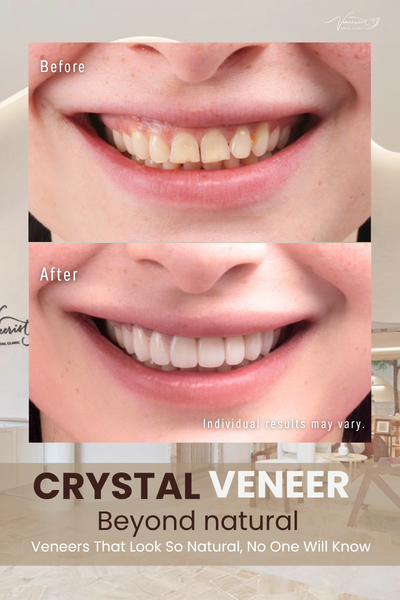
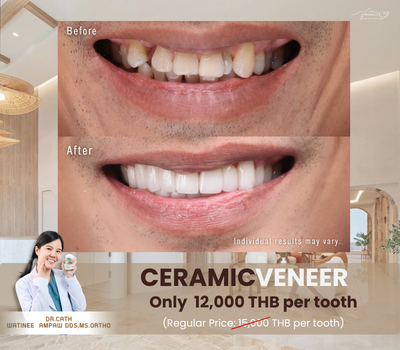
Veneers can be made from different materials, but two of the most common types are Ceramic Veneers and Composite Veneers.
Ceramic Veneers
Ceramic Veneers are individually fabricated restorations designed for each tooth.
The dentist works together with a Dental Laboratory to plan details such as:
- Color
- Translucency
- Shape
- Size
- Proportions
- Edge characteristics
- Surface details
Ceramic provides good color stability and allows detailed control of optical characteristics, making it commonly used when the treatment requires precise aesthetic planning.
Composite Veneers
Composite Veneers are made using composite resin, a tooth-colored material also commonly used for dental fillings.
The material can be shaped to modify the appearance of the tooth.
Compared with ceramic, composite has different characteristics and limitations. It may stain or discolor more easily, generally has less translucency and surface gloss, can be more susceptible to wear or chipping, and may require periodic polishing or repair.
Both can be called “veneers,” but their materials, properties, treatment processes, and long-term maintenance are different.
Why Can Veneers Change the Appearance of a Smile?
When we look at a smile, we do not see tooth color alone.
We see several elements at the same time, including tooth length, width, shape, edges, symmetry, spacing, and the relationship between neighboring teeth.
Because veneers can be designed to modify several of these visible characteristics, they can change the overall appearance of a smile rather than simply making the teeth look whiter.
For example, one person may already be happy with their tooth color but want to improve worn or uneven edges.
Another person may not want significantly whiter teeth at all, but may want to improve the proportions and shapes of their front teeth.
Therefore, the purpose of veneer treatment can be different for each person.
Are Veneers and Dental Crowns the Same Thing?
No.
Although both are dental restorations, veneers and crowns have different designs and may be used for different clinical situations.
A Veneer primarily covers and modifies the visible front surface of the tooth while relying on the natural tooth as the underlying structure.
A Dental Crown covers more of the tooth and may be used when a tooth requires more extensive restoration or protection, such as when a significant amount of tooth structure has been lost.
This is also why some dramatic images or videos showing teeth prepared into very small shapes on social media may actually show crown preparation rather than veneer preparation.
The appropriate restoration depends on the condition and structure of each individual tooth.
So, What Exactly Is a Veneer?
The simplest explanation is:
A veneer is a restoration bonded to the visible front surface of a natural tooth to modify characteristics such as its color, shape, size, and proportions.
Your natural tooth remains underneath, and a veneer is not simply a way to make teeth whiter. It is a restoration designed to modify the visible appearance of the tooth as part of the overall smile.
So before asking:
“Will veneers make my smile look better?”
It can be more useful to first understand what you would like to change about your existing teeth and how much change is actually needed.
At Veneerist Dental Clinic in Krabi, Thailand, veneer treatment is planned by considering the characteristics of each individual tooth together with the overall smile, with the aim of creating a result that is appropriate, harmonious, and individualized.