What Is Bone Grafting for Dental Implants? Is It Necessary for Everyone?
In several of Veneerist Dental Clinic’s articles about dental implant treatment, we have mentioned bone grafting as an additional procedure that may be necessary when there is insufficient jawbone to support a dental implant.
But what exactly is bone grafting? Does it involve taking bone from another part of the body and placing it in the jaw? How is the procedure performed? And does everyone who has lost a tooth need bone grafting before getting a dental implant?
In this article, we explain the fundamentals of dental bone grafting, including why it may be necessary, how the procedure is performed, and which patients may need it before dental implant placement.
What Is Bone Grafting, and Why Is It Needed?
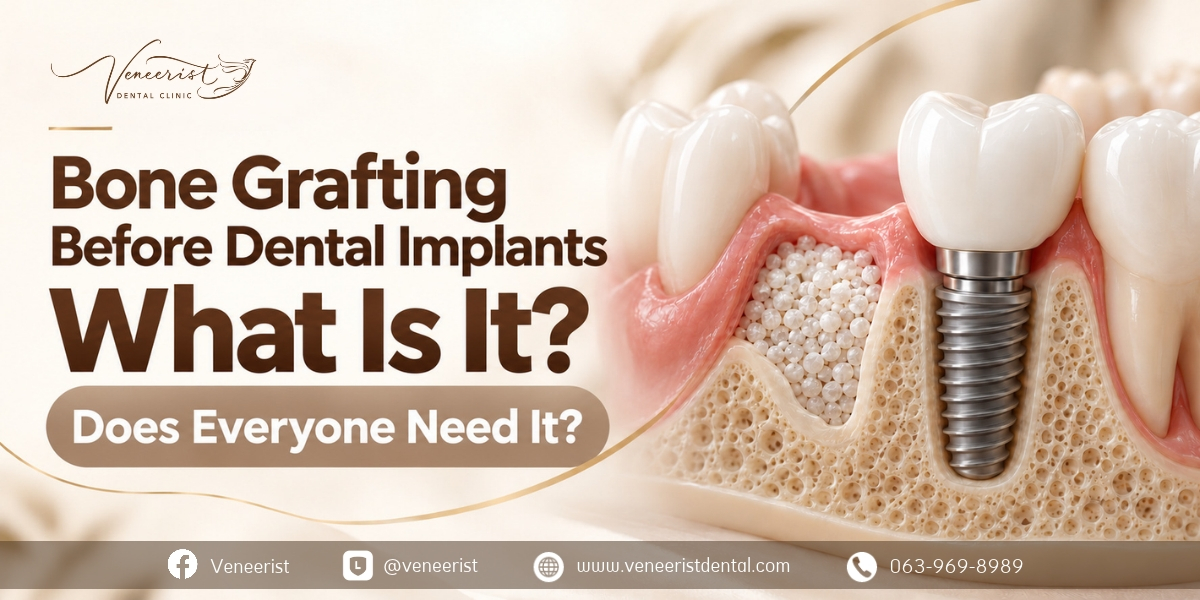
Bone grafting is a dental procedure used to increase or restore the amount of bone in the jaw when the existing bone has been lost or is insufficient.
This procedure may be necessary when a patient wants a dental implant but does not have enough bone height or width to support the implant in the planned position.
Bone graft materials provide a framework that supports the body’s natural bone-forming process, allowing new bone to develop in the treated area.
The goal is to restore sufficient bone volume to support the planned dental implant treatment.
Why Does Jawbone Volume Decrease?
The jawbone around a missing tooth can gradually shrink over time.
When a natural tooth is lost, the surrounding bone no longer receives the same stimulation from chewing forces that it previously received through the natural tooth root.
Other factors can also contribute to bone loss, including:
- Long-term tooth loss: The bone in an area without teeth may gradually shrink, reducing its width or height.
- Periodontal disease: Inflammation and infection affecting the tissues around the teeth can damage the supporting bone.
- Tooth extraction or infection around the tooth root: These conditions may result in bone loss around the extraction site.
- Accidents or injuries: Trauma may damage the jawbone or alter its natural structure.
When significant bone loss occurs, there may not be enough bone to place a dental implant in the appropriate position. In such cases, additional bone grafting may be considered.
Who Needs Bone Grafting Before Dental Implants?
Not everyone who receives a dental implant needs bone grafting.
The decision depends on the amount and quality of the existing bone at the planned implant site.
Examples of situations in which a dentist may recommend bone grafting include:
1. Patients Who Have Been Missing Teeth for a Long Time
The bone in an area without teeth may gradually shrink, reducing the available bone width or height needed to support a dental implant.
2. Patients with Significant Jawbone Resorption
Some patients have substantial bone loss in both the width and height of the jawbone. Additional bone may be needed before or during implant placement.
3. Patients with a History of Periodontal Disease or Severe Dental Infection
Infection and inflammation affecting the tissues around the teeth may damage the supporting bone, leaving insufficient bone for dental implant placement.
4. Patients with Insufficient Bone in the Upper Back Jaw
The upper back teeth are located close to the maxillary sinus, an air-filled space within the upper jaw.
If there is insufficient bone height in this area, the dentist may recommend a Sinus Lift or Sinus Augmentation procedure to increase the available bone height for dental implant placement.
However, having reduced bone volume does not automatically mean that bone grafting is necessary. Other treatment options may be considered depending on the patient’s bone anatomy and the location of the missing tooth.
How Is Bone Grafting Performed?
Although the term bone grafting may sound complicated, the general principle is to place bone graft material in an area where additional bone is needed, providing a framework for the body to develop new bone.
The procedure generally involves the following steps:
1. Examination and Treatment Planning
The dentist evaluates oral health, existing bone volume, and the area requiring bone augmentation. A three-dimensional dental scan (CBCT) may be used to assist with treatment planning.
2. Preparing the Treatment Area
Local anaesthesia is administered, and the gum tissue is carefully opened to access the area of bone requiring treatment.
3. Placing the Bone Graft Material
The selected bone graft material is placed in the area where additional bone volume is needed.
4. Covering the Graft and Closing the Wound
In some cases, a protective membrane is placed over the graft to help protect the area and support new bone formation. The gum tissue is then repositioned and sutured.
The exact procedure varies depending on the location, the amount of bone required, and the surgical technique selected by the dentist.
Each material has different properties and clinical applications. The dentist selects the appropriate material based on the size of the area requiring augmentation and the patient’s treatment plan.
How Long After Bone Grafting Can a Dental Implant Be Placed?
After bone grafting, the body needs time to develop and remodel new bone so that the area can adequately support a dental implant.
The healing period depends on several factors, including:
- The amount of bone being grafted
- The location of the graft
- The type of bone graft material used
- The surgical technique
- The patient’s individual healing response
When a substantial amount of bone needs to be rebuilt, the patient may need to wait approximately 4–12 months before dental implant placement.
In cases requiring only a smaller amount of bone augmentation, grafting may sometimes be performed at the same time as implant placement.
Therefore, the waiting period is not the same for every patient.
How Should You Care for Yourself After Bone Grafting?
After bone grafting, patients may experience swelling, tenderness, or bruising around the treated area. These are common post-surgical symptoms and generally improve during the first one to two weeks.
Proper aftercare is important for wound healing and successful bone regeneration.
Recommended care includes:
- Take prescribed medications and follow the dentist’s instructions.
- Eat soft foods during the initial healing period, as advised.
- Avoid disturbing or putting pressure on the grafted area.
- Maintain oral hygiene carefully.
- Avoid smoking, as it may negatively affect wound healing and bone graft outcomes.
- Attend all scheduled follow-up appointments.
If you experience increasing pain or swelling, pus, or fever, contact your dentist for an assessment.
Conclusion: Does Everyone Need Bone Grafting Before Dental Implants?
No. Bone grafting is not necessary for everyone.
It is a procedure used to increase or restore bone volume when the existing jawbone is insufficient to support the planned dental implant.
Patients with adequate bone volume and quality may be able to receive dental implants without additional bone grafting. Others may need bone augmentation before or at the same time as implant placement.
Whether bone grafting is necessary depends on the patient’s bone condition, the planned implant position, and the clinical judgment of the treating dentist.
Dental Implant Consultation at Veneerist Dental Clinic
If you have missing teeth and are considering dental implants, but are unsure whether your jawbone is sufficient or whether additional bone grafting may be necessary, you can arrange a consultation at Veneerist Dental Clinic in Krabi, Thailand.
Our dental team will assess your oral health, jawbone condition, and surrounding tissues, then develop a treatment plan based on your individual needs.
View Our Dental Treatment Fees
This article is intended for general educational purposes and does not replace an individual dental examination, diagnosis, or treatment plan provided by a qualified dentist.
Frequently Asked Questions (FAQ)
1. Is bone grafting painful?
Bone grafting is performed under local anaesthesia. Patients may feel pressure or movement during the procedure. After surgery, some swelling, tenderness, or bruising may occur. These symptoms can be managed by following the dentist’s aftercare instructions.
2. Does everyone who has been missing teeth for a long time need bone grafting?
No. Although long-term tooth loss can lead to jawbone resorption, the amount of remaining bone varies from person to person. A dental examination is necessary to determine whether bone grafting is needed.
3. Can a dental implant be placed immediately after bone grafting?
In selected cases, bone grafting can be performed at the same time as dental implant placement, provided that the bone condition and initial implant stability are suitable. However, larger bone grafting procedures may require a healing period before implant placement.
4. Does everyone need bone grafting or gum grafting before dental implants?
No. These procedures are only recommended when the available bone or surrounding gum tissue requires additional treatment to support the planned implant restoration.
5. How long does it take to receive a dental implant after bone grafting?
The healing period depends on the amount of bone grafted, the location, and the surgical technique. In some cases, approximately 4–12 months may be required before implant placement.