Bad Breath After Veneers: What Causes It and When Should You See a Dentist?
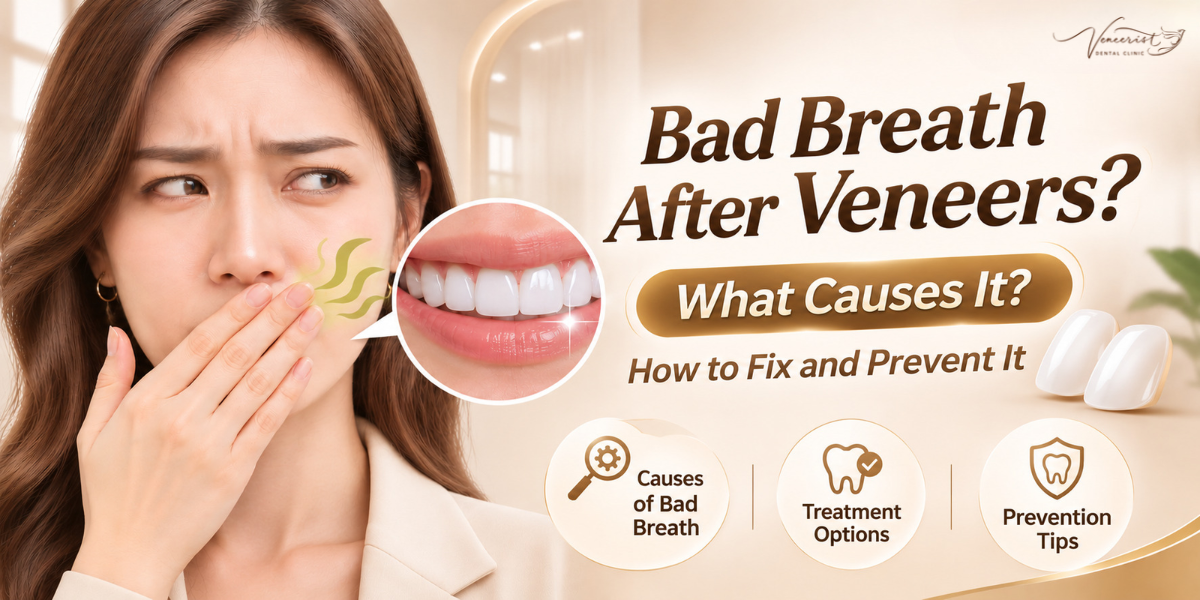
Bad breath after veneers should not be considered a normal consequence of having well-fitting, intact dental veneers. When veneers are properly designed, bonded and maintained, their presence alone should not cause an unusual or persistent change in your breath.
If you notice unpleasant breath after getting veneers, several factors may be involved, including plaque accumulation, gum inflammation or problems with the restorations themselves.
Poorly fitting veneer margins, gaps between the veneer and the natural tooth, or veneers that have become chipped, cracked or fractured during use may create areas where food particles and bacteria can accumulate.
However, bad breath does not necessarily mean there is a problem with your veneers. Other oral health conditions may also contribute to the issue.
If you experience persistent bad breath, particularly alongside signs of veneer damage, it is important to visit your treating dentist to identify the underlying cause.
Is Bad Breath After Veneers Normal?
Generally, well-designed and properly bonded dental veneers should not directly cause persistent bad breath.
Dental veneers are restorations bonded to the surfaces of natural teeth. They may be made from ceramic or composite resin. Although these restorative materials do not develop tooth decay in the same way as natural teeth, the underlying tooth structure and surrounding gums still require regular care.
If plaque accumulates around veneer margins or between the teeth, oral bacteria may produce unpleasant-smelling compounds, just as they can around teeth without veneers.
The important distinction is whether the bad breath is related to general oral health or a problem with the veneers that requires professional attention.
6 Possible Causes of Bad Breath After Veneers
1. Plaque Accumulation Around Veneer Margins
Even after getting veneers, the junction between the restoration and the natural tooth requires regular cleaning.
Inadequate brushing or interdental cleaning may allow plaque to accumulate around the veneer margins and along the gum line.
Certain oral bacteria break down organic matter and produce volatile sulphur compounds (VSCs), which are among the main contributors to bad breath, also known as halitosis.
Maintaining good oral hygiene around veneers is therefore just as important as caring for natural teeth.
2. Gum Inflammation Around Veneers
Gum inflammation, or gingivitis, may develop when plaque accumulates along the gum line or when certain areas become difficult to clean.
Common signs of gingivitis include red or swollen gums and bleeding during brushing or flossing.
If inflammation remains untreated, it may affect the health of the tissues surrounding the teeth. Some patients may also experience persistent bad breath.
Healthy gums are an important part of maintaining both the appearance and long-term function of dental veneers.
3. Poorly Fitting, Chipped or Fractured Veneers
Dental veneers in good condition should not cause an unusual change in your breath simply because they are present.
If you develop an unpleasant smell after getting veneers, particularly when food repeatedly becomes trapped around the same tooth, the condition of the restoration should be examined.
One possible cause is a poorly fitting veneer margin or a gap between the veneer and the natural tooth. These irregularities may create areas where plaque and food particles accumulate and become difficult to remove through routine brushing and flossing.
Veneers that become chipped, cracked or fractured during everyday use may also develop rough or irregular edges that retain food particles. This is particularly relevant when the damage affects the junction between the veneer and the underlying tooth.
As food debris and plaque accumulate, bacteria can break down organic matter and produce unpleasant-smelling compounds. These conditions may also increase the risk of gum inflammation or tooth decay around the restoration.
These problems should not be ignored. If you notice an unusual smell alongside persistent food trapping, rough veneer margins, chipping, fractures or looseness, you should arrange an appointment with your treating dentist as soon as possible.
If returning to your original dental clinic is not possible, another dentist can examine the affected area and assess the condition of the restoration.
It is important to understand that not every chipped veneer creates a gap between the restoration and the natural tooth. Bad breath alone cannot confirm that a veneer is poorly fitted or damaged. A professional dental examination is necessary to determine the cause.
4. Tooth Decay Around or Beneath Veneers
Ceramic and composite veneer materials do not develop dental caries in the same way as natural tooth structure. However, the natural teeth beneath and around the restorations can still develop decay.
Persistent plaque accumulation, particularly around areas that are difficult to clean, may increase the risk of tooth decay near veneer margins.
In some cases, decay may be associated with food trapping or bacterial accumulation, which can contribute to unpleasant breath.
However, bad breath alone is not sufficient to diagnose decay beneath a veneer. A dental examination and, where appropriate, additional diagnostic procedures may be required.
5. Dry Mouth or Reduced Saliva Flow
Saliva plays an important role in washing away food particles and maintaining a healthy oral environment.
When saliva flow is reduced, bacteria and odour-producing compounds may accumulate more easily.
Dry mouth may be associated with dehydration, mouth breathing, certain medications or other health conditions. These factors are not necessarily related to dental veneers.
Patients experiencing persistent dry mouth should seek professional advice to identify the underlying cause.
6. Bad Breath Originating Elsewhere in the Mouth
Sometimes, bad breath may have no direct connection to the teeth with veneers.
Other possible sources include tongue coating, tartar accumulation, gum disease, tooth decay elsewhere in the mouth and food trapped between natural teeth.
For this reason, investigating bad breath should involve an assessment of overall oral health rather than focusing exclusively on the veneers.
Do Veneers Need to Be Replaced If They Cause Bad Breath?
Not necessarily. The appropriate treatment depends on the underlying cause identified during a dental examination.
If the problem is associated with plaque accumulation or gum inflammation, professional dental cleaning and improvements in daily oral hygiene may help address the cause without replacing the veneers.
However, if the dentist identifies defective margins, a loose or damaged veneer, or tooth decay around the restoration, further treatment may be required.
Depending on the condition of the tooth and restoration, treatment may involve adjustment, repair or replacement.
In some cases, the damage may be too extensive for a suitable repair, making a new veneer necessary.
A veneer should not be removed or replaced solely because of bad breath without first assessing the restoration and the underlying natural tooth.
How to Reduce the Risk of Bad Breath After Veneers
Although veneers can improve tooth shape and colour, maintaining good oral hygiene remains essential.
Brush Your Teeth at Least Twice a Day
Use a soft-bristled toothbrush and fluoride toothpaste to clean all tooth surfaces, paying particular attention to the gum line and veneer margins.
Brush gently and avoid applying excessive pressure.
Clean Between Your Teeth Every Day
Brushing alone may not adequately remove plaque and food particles from between the teeth.
Dental floss or suitable interdental cleaning products can help clean areas that a toothbrush cannot easily reach.
If floss repeatedly catches or frays around the same veneer margin, ask your dentist to examine the area rather than forcing the floss through.
Clean Your Tongue
The surface of the tongue can harbour bacteria associated with bad breath.
Gently cleaning your tongue with a toothbrush or a suitable tongue cleaner may help reduce bacterial accumulation.
Manage Dry Mouth
Drink sufficient water throughout the day. If you experience persistent dry mouth, consult your dentist or healthcare professional to investigate the cause.
Mouthwash may be helpful in certain circumstances, but it should not be used simply to disguise unpleasant breath instead of addressing the underlying problem.
Attend Regular Dental Check-ups
Regular dental examinations and professional cleaning, at intervals recommended by your dentist, allow the condition of your gums, natural teeth and veneers to be monitored.
Identifying irregularities around veneer margins at an early stage may allow appropriate treatment before more extensive problems develop.
When Should You See a Dentist About Bad Breath After Veneers?
If you experience bad breath after getting veneers, arrange a dental examination if you notice any of the following signs:
- Persistent bad breath despite maintaining good oral hygiene.
- Red, swollen or frequently bleeding gums.
- Food repeatedly becoming trapped around veneer margins.
- Dental floss repeatedly catching or fraying in the same area.
- Loose veneers, sharp edges, visible cracks or chipped restorations.
- Unusual tooth sensitivity or dental pain.
If you notice a problem with your veneers, returning to your original treating dentist is advisable whenever possible. Your dentist may already have information about your treatment plan and the restorations placed, which can assist with the assessment.
However, if you are unable to return to your original dental clinic, another qualified dentist can examine the area.
If you experience significant swelling, pus, fever or severe dental pain, seek urgent dental assessment.
What Should You Consider Before Getting Veneers?
Maintaining good oral health before veneer treatment is just as important as caring for your veneers afterwards.
Before treatment begins, the dentist should assess the condition of your teeth and gums, including any existing decay, tartar accumulation or gum disease that may require treatment.
The design and contour of the veneers should also take into account their relationship with the surrounding gum tissue, the fit of the restoration margins and the patient’s ability to maintain effective oral hygiene.
Well-planned veneer treatment involves more than cosmetic appearance. Tooth structure, bite relationships, gum health and long-term maintenance are all important considerations.
Summary: What Should You Do If You Have Bad Breath After Veneers?
Well-fitting, intact dental veneers should not directly cause persistent or unusual bad breath.
If you notice a change in your breath after getting veneers, possible causes include plaque accumulation, gum inflammation, dry mouth, tooth decay or problems with the restorations themselves.
Poorly fitting veneer margins, gaps between the veneer and the natural tooth, or damage such as chipping and fractures may create areas where food particles and bacteria accumulate.
These problems should not be left unexamined.
If you notice persistent bad breath or signs of veneer damage, arrange an appointment with your treating dentist to identify the cause and discuss appropriate treatment.
Avoid relying solely on mouthwash to disguise the smell or assuming that your veneers must be replaced without a professional assessment.
Veneer Assessment and Oral Health Care at Veneerist Dental Clinic Krabi
If you have dental veneers and are experiencing persistent bad breath, gum inflammation or concerns about the condition of your restorations, a dental consultation can help identify the underlying problem.
At Veneerist Dental Clinic Krabi, we believe that a carefully designed smile should be considered alongside healthy teeth and gums.
Our approach to veneer treatment takes into account tooth shape, aesthetics, restoration margins, bite relationships and long-term oral health.
Whether you are considering dental veneers or would like an assessment of your existing restorations, our dental team can discuss appropriate options following a clinical examination.
Veneerist Dental Clinic Krabi — Crafting Your Shine
Maharat Road, Pak Nam, Mueang Krabi, Krabi, Thailand
Telephone / WhatsApp: +66 63 969 8989
Opening hours: Monday–Sunday, 10:00 am–8:00 pm (hours may vary; advance appointments are recommended).
Location: Find Veneerist Dental Clinic on Google Maps
For further information or to arrange a dental consultation, please contact our dental team.