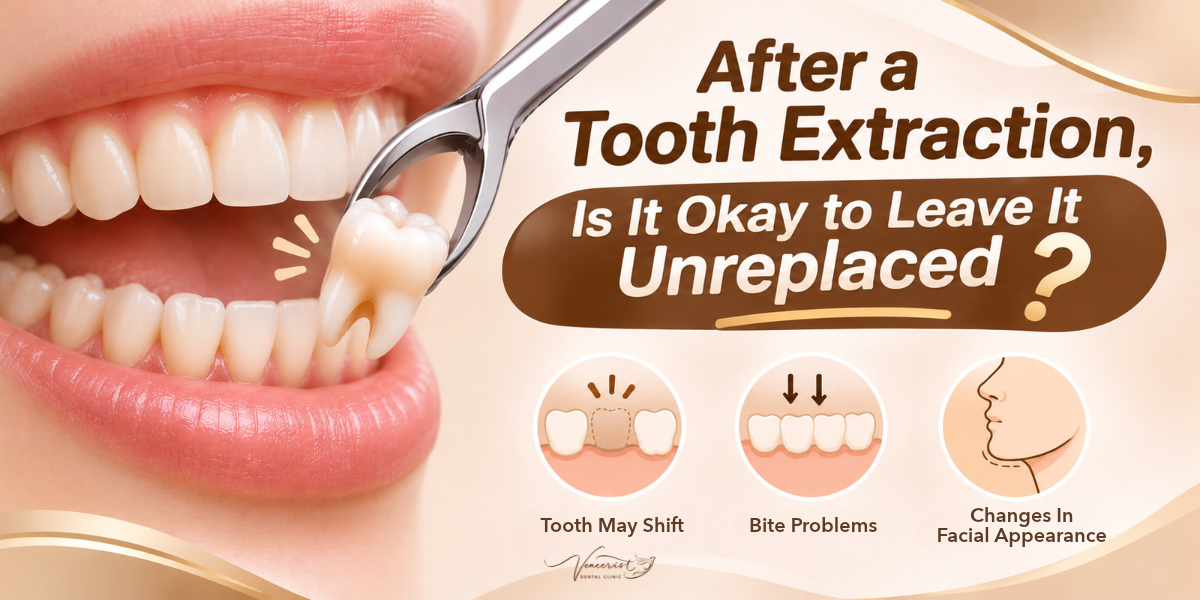
What Happens If You Don’t Replace a Missing Tooth? Do You Always Need a Replacement?
Do you always need to replace a missing tooth after an extraction? Not necessarily. Some gaps can be left without immediate replacement, depending on which tooth is missing and the condition of your remaining teeth. However, leaving a missing tooth untreated may sometimes affect neighbouring teeth, your bite, chewing function and the surrounding jawbone.
Understanding these possible changes can help you decide whether missing tooth replacement is something you should consider.
What Happens If You Leave a Missing Tooth Unreplaced?
After a tooth is extracted, the gum gradually heals and the bone around the extraction site begins to remodel. Over time, other changes may occur, although not everyone will experience the same effects.
1. Neighbouring Teeth May Shift Towards the Gap
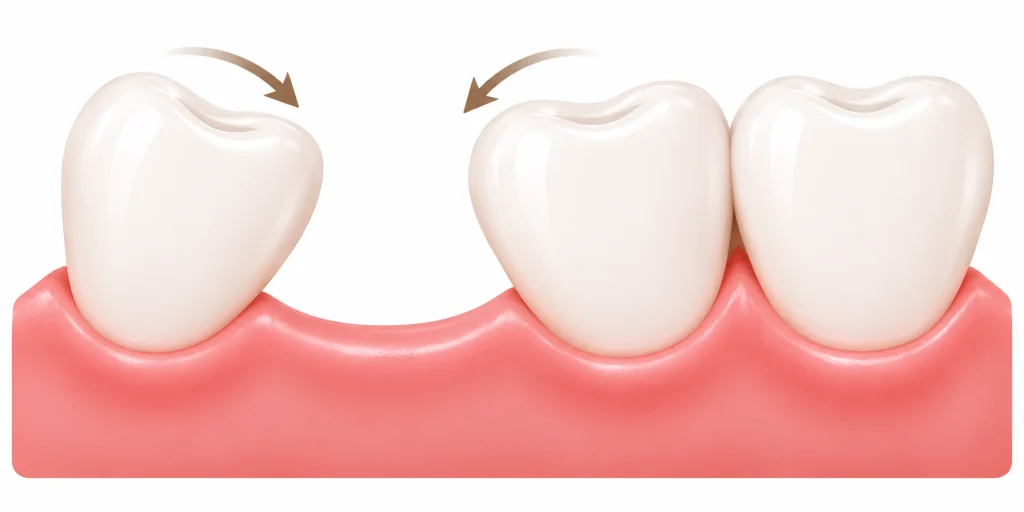
Teeth are not completely fixed in position throughout life.
When a tooth is lost, neighbouring teeth may gradually tilt or move towards the empty space. This can sometimes create areas that are more difficult to clean or make future tooth replacement more complicated.
However, losing a tooth does not automatically mean the surrounding teeth will shift.
2. The Opposing Tooth May Move Out of Position
The opposing tooth is the tooth in the opposite jaw that would normally make contact when you bite.
If a tooth no longer has its usual opposing contact, it may gradually move further into the space. This is known as supra-eruption.
In some cases, this can affect your bite or reduce the space available for a replacement tooth in the future.
3. The Jawbone May Change Over Time
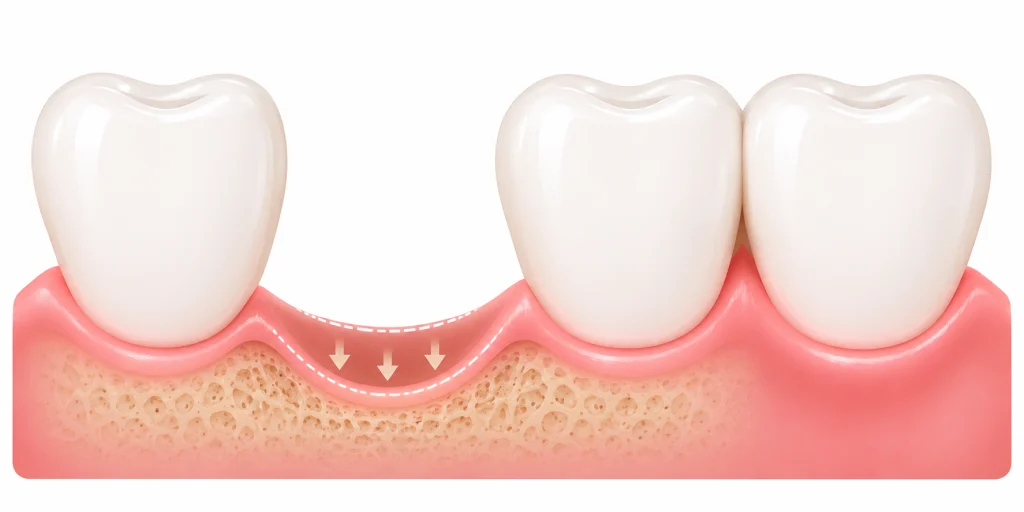
The bone surrounding a natural tooth root undergoes changes after the tooth is removed.
As the extraction site heals, the jawbone in that area may gradually lose some height and width. These changes can be particularly relevant if you are considering a dental implant later.
Some patients may require additional treatment, such as bone grafting, before implant placement. However, having a tooth missing for several years does not automatically mean bone grafting will be necessary.
4. Chewing May Become Less Comfortable
Missing teeth, particularly molars, can sometimes make chewing more difficult.
Some people begin chewing predominantly on one side or find certain foods less comfortable to eat.
The impact depends on the number and position of missing teeth, as well as how well the remaining teeth function together.
Does Every Missing Tooth Need to Be Replaced?
No. Not every missing tooth requires replacement.
For example, wisdom teeth are generally not replaced after extraction.
In other situations, a dentist may recommend monitoring the gap rather than replacing the tooth, particularly if the remaining teeth provide adequate chewing function and the bite is stable.
However, missing front teeth or teeth that play an important role in chewing may have a greater effect on appearance, comfort or function.
The decision should be based on an individual dental assessment rather than assuming that every gap must be filled.
Can You Replace a Tooth That Has Been Missing for Years?
Yes, replacing a tooth after several years may still be possible.
However, the treatment options depend on the condition of the surrounding teeth, the space available and the amount of jawbone remaining.
If neighbouring teeth have shifted or the opposing tooth has moved into the gap, additional treatment may be needed before a replacement can be fitted.
For patients considering dental implants, a dentist will assess the jawbone and nearby anatomical structures using a clinical examination and appropriate imaging where indicated.
You can learn more about dental implant treatment at Veneerist Dental Clinic Krabi.
What Are Your Options for Replacing a Missing Tooth?
There are several ways to replace a missing tooth. The most suitable option depends on your oral health, treatment preferences and clinical needs.
Dental Implants
A dental implant is a fixture placed into the jawbone to support a replacement tooth.
For a single missing tooth, an implant can generally provide support for a crown without requiring preparation of the neighbouring healthy teeth.
However, implant treatment involves surgery and requires suitable bone and oral health conditions.
Dental Bridges
A dental bridge is a fixed restoration used to replace one or more missing teeth.
A traditional bridge usually relies on neighbouring teeth for support. These teeth are typically prepared to accommodate crowns connected to the replacement tooth.
A bridge may be appropriate in certain cases, particularly when the supporting teeth already require crowns.
Removable Dentures
A removable denture is another option for replacing one or several missing teeth.
It can be taken out for cleaning and may be suitable for patients with different patterns of tooth loss.
Comfort, stability and chewing function depend on the denture design and the condition of the supporting teeth and gums.
For information about treatment costs, you can visit the Veneerist Dental Clinic website or contact our team to enquire about available treatment options and fees.
When Should You See a Dentist About a Missing Tooth?
If you are planning to have a tooth extracted, discussing replacement options beforehand can help you understand the possible treatments and their timing.
If you have already lost a tooth, consider arranging a dental assessment if you notice:
- Difficulty chewing certain foods
- Changes in how your teeth meet when biting
- Neighbouring teeth appearing to tilt towards the gap
- Discomfort or concerns about the missing tooth
Even if you have no symptoms, a dental examination can help determine whether replacement is advisable or whether monitoring the space is appropriate.
Conclusion: Is It Safe to Leave a Missing Tooth Unreplaced?
Leaving a missing tooth unreplaced does not necessarily cause problems for everyone.
However, in some cases, the surrounding teeth may shift, the opposing tooth may move out of position, or the jawbone may change over time.
Whether you need a replacement depends on the location of the missing tooth, your bite, the health of your remaining teeth and your individual treatment needs.
A dental assessment can help you understand your options before deciding whether to replace the tooth.
Missing Tooth Replacement Consultation at Veneerist Dental Clinic Krabi
If you have lost a tooth and are unsure whether it needs replacing, you can arrange a consultation to discuss your oral health and possible treatment options.
At Veneerist Dental Clinic Krabi, we focus on providing clear information and carefully planned dental care, helping patients understand the benefits, limitations and aftercare requirements of different treatments before making an informed decision.
Contact Veneerist Dental Clinic Krabi
Veneerist Dental Clinic — Crafting Your Shine
Maharat Road, Pak Nam, Mueang Krabi, Krabi, Thailand
View Our Location on Google Maps
Contact Our Dental Team to Arrange an Appointment
Telephone: +66 63 969 8989
Opening Hours: Daily, 10:00 am – 8:00 pm (Advance appointments are recommended. Opening hours may vary.)