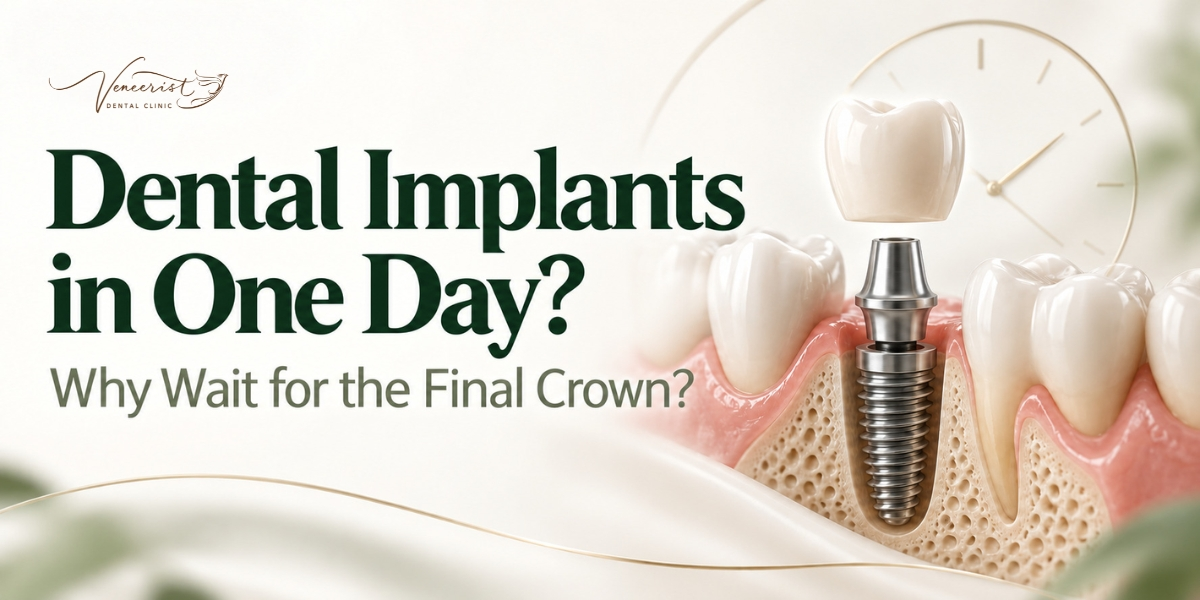
Can You Get a Dental Implant and Crown in One Day?
If you have a missing tooth, you may wonder whether it is possible to have a dental implant placed and a permanent crown fitted on the same day.
This is a common question, particularly among patients who have limited time for dental treatment or are visiting Thailand for dental care.
For most patients, completing the entire dental implant treatment in one day is not the standard approach.
Dental implant treatment involves more than placing an implant and attaching a crown. It requires an assessment of oral health, appropriate preparation of the jawbone and surrounding gum tissue, and time for the implant to establish a stable biological connection with the bone.
Although immediate tooth restoration is possible in carefully selected cases, it does not mean that the implant has fully healed or that the entire biological healing process is complete.
Why Can’t a Permanent Crown Usually Be Placed Immediately After Implant Surgery?
After a dental implant is surgically placed into the jawbone, the surrounding bone needs time to establish direct contact with the implant surface.
This biological process is called osseointegration.
Osseointegration is essential for providing the long-term support needed for the implant to function as a replacement for a natural tooth root.
An implant may feel stable immediately after surgery, but this initial stability is primarily mechanical. It does not mean that the bone has already integrated with the implant.
In conventional treatment, the healing period before the final restoration commonly takes approximately 2–6 months, although the actual timeline varies depending on bone quality, implant location, and individual clinical conditions.
The dentist must assess the implant’s stability and surrounding tissues before proceeding with the permanent crown according to the treatment plan.
What Preparations May Be Needed Before Dental Implant Surgery?
Not every patient can proceed directly to implant placement.
Before treatment, the dentist must evaluate the condition of the teeth, gums, jawbone, and surrounding tissues.
Depending on the findings, additional treatment may be necessary.
1. Oral Examination and Jawbone Assessment
The first step is a comprehensive dental examination.
The dentist will assess oral health, the condition of the gums, the position of the missing tooth, and the patient’s bite.
Dental X-rays are used to evaluate the available bone and surrounding anatomical structures.
In some cases, a cone-beam computed tomography (CBCT) scan may be recommended to provide a three-dimensional view of the jawbone and assist with implant planning.
This assessment helps determine whether implant placement is appropriate and whether additional procedures may be needed.
2. Dental Scaling and Periodontal Treatment
Healthy gums and good plaque control are important foundations for dental implant treatment.
If a patient has significant plaque or tartar buildup, gingivitis, or periodontal disease, the dentist may recommend professional dental cleaning or periodontal treatment before implant surgery.
The purpose is to control inflammation and improve oral health before placing the implant.
Untreated periodontal disease and poor plaque control may increase the risk of complications around dental implants.
However, not every patient requires scaling immediately before implant surgery. The need for cleaning or periodontal treatment depends on the findings of the dental examination.
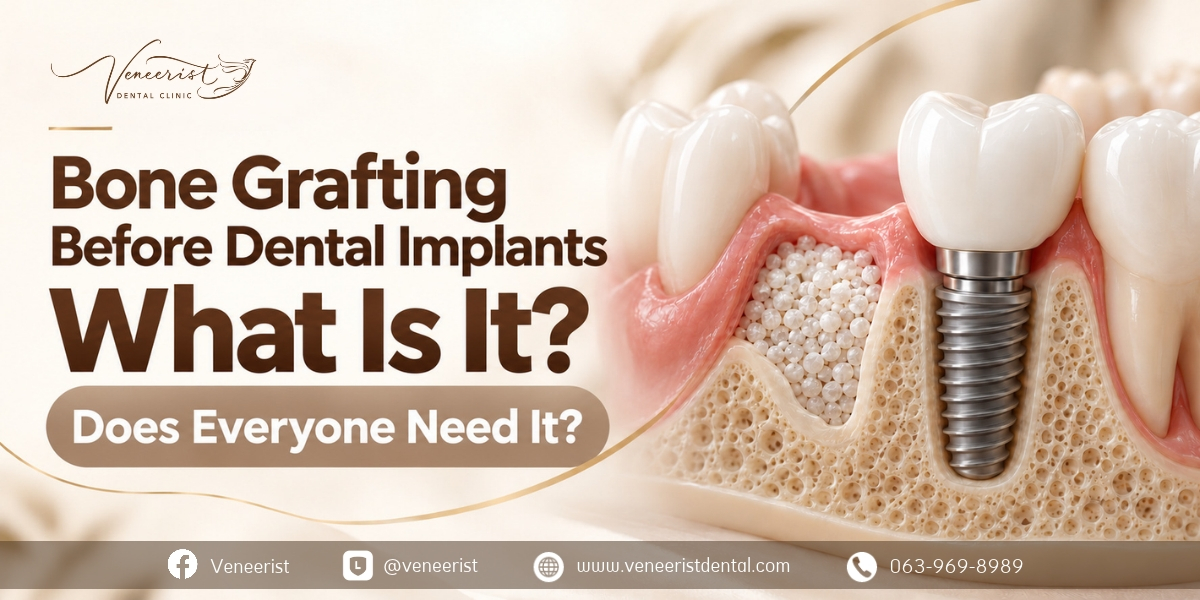
3. Bone Grafting When There Is Insufficient Jawbone
After a tooth is lost, the surrounding jawbone may gradually shrink or resorb.
Over time, this can reduce the height or width of the bone available to support a dental implant.
If there is insufficient bone for the planned implant placement, the dentist may recommend bone grafting to rebuild or increase the available bone volume.
Depending on the clinical situation, bone grafting may be performed:
- Before implant placement, followed by a healing period
- At the same time as implant placement, when conditions allow
When bone grafting must be completed before implant surgery, additional healing time may be required.
Not every patient needs a bone graft. The decision depends on the remaining bone anatomy and the proposed implant treatment plan.
4. Soft Tissue Grafting When Necessary
In addition to adequate bone support, the condition of the gum tissue surrounding a dental implant is important.
Some patients have thin gum tissue or an insufficient amount of suitable soft tissue around the proposed implant site.
In selected cases, the dentist may recommend soft tissue grafting to improve tissue thickness, increase the amount of suitable gum tissue, or support the long-term maintenance of the implant.
Soft tissue grafting may be performed before, during, or after implant placement, depending on the treatment requirements.
Bone grafting and soft tissue grafting are not routine requirements for every dental implant patient. They are recommended only when clinically indicated.
What Are the Steps from Dental Implant Placement to the Permanent Crown?
Conventional dental implant treatment generally involves several stages.
Step 1: Examination and Treatment Planning
The dentist examines the mouth, evaluates the jawbone and gums, and plans the position of the implant and final restoration.
Step 2: Oral Health Preparation
If necessary, treatment may include dental scaling, periodontal care, tooth extraction, bone grafting, or soft tissue grafting.
The required procedures vary from patient to patient.
Step 3: Dental Implant Surgery
The implant is surgically placed into the jawbone at the planned position.
Step 4: Healing and Osseointegration
The surrounding bone gradually establishes a biological connection with the implant surface.
This stage generally requires several months, although the healing period varies according to individual clinical conditions.
Step 5: Final Assessment and Crown Placement
Once the dentist determines that the implant and surrounding tissues are ready for restoration, the final restorative procedures can begin.
These may include taking an impression or digital scan, designing and fabricating the crown, and fitting the permanent restoration.
Some patients may require additional appointments or healing periods between stages.
For this reason, the complete dental implant treatment timeline cannot be the same for every patient.
What About Same-Day Dental Implants and Immediate Crowns?
You may have heard of treatments described as same-day dental implants or teeth in a day.
In implant dentistry, techniques such as immediate restoration and immediate loading allow a restoration to be attached shortly after implant placement in carefully selected patients.
These approaches differ in whether and how the restoration is placed into contact with the opposing teeth during biting.
Their suitability depends on several factors, including:
- The implant’s initial stability
- Available bone volume and quality
- Implant position
- Bite forces and functional demands
- The design of the planned restoration
In many cases, a tooth placed immediately after implant surgery is a temporary restoration, with the definitive crown provided later.
There are also selected clinical situations in which an early definitive restoration may be possible. However, this does not mean that osseointegration has finished or that all biological healing has been completed.
Having a tooth attached to an implant on the day of surgery is not the same as completing the entire implant treatment and healing process in one day.
Immediate restoration is not appropriate for every patient and should never be assumed to be available without a clinical examination and treatment plan.
How Long Does Dental Implant Treatment Take?
There is no single treatment timeline that applies to everyone.
For patients with adequate bone and healthy surrounding tissues, conventional implant treatment may progress from surgery to the permanent crown over several months.
Other patients may require additional preparation, such as periodontal treatment, bone grafting, or soft tissue grafting.
These procedures may extend the overall treatment period, particularly when healing is needed before the next stage can begin.
The exact timeline depends on the patient’s oral health, jawbone condition, implant stability, healing response, and the treating dentist’s clinical assessment.
Conclusion: Can Dental Implant Treatment Be Completed in One Day?
For most patients undergoing conventional dental implant treatment, implant placement and the final permanent crown are not completed as a single-day treatment.
The process begins with a thorough oral examination and treatment planning. Some patients may also need professional cleaning, periodontal treatment, bone grafting, or soft tissue grafting.
After implant placement, the jawbone requires time to integrate with the implant before the final restoration is provided according to the treatment plan.
Although immediate restoration techniques exist for selected cases, they do not mean that the implant has fully healed within one day.
The appropriate treatment stages and timeline depend on each patient’s oral health, jawbone condition, surrounding soft tissues, and the professional judgment of the treating dentist.
The priority is not simply to complete treatment as quickly as possible, but to choose a clinically appropriate approach that supports long-term implant function and oral health.
Dental Implant Consultation at Veneerist Dental Clinic
If you have missing teeth and are considering dental implants, you can arrange a consultation at Veneerist Dental Clinic in Krabi, Thailand.
Our dental team will assess your oral health, jawbone condition, and surrounding gum tissue, then explain the treatment options and expected timeline based on your individual clinical needs.
View Our Dental Treatment Fees
This article is intended for general educational purposes and does not replace an individual dental examination, diagnosis, or treatment plan provided by a qualified dentist.
Frequently Asked Questions (FAQ)
1. Can I get a dental implant and permanent crown on the same day?
In conventional implant treatment, the permanent crown is usually placed after an appropriate healing period. Immediate restoration may be possible in selected cases, but it requires careful clinical assessment and does not mean that bone integration is complete.
2. How long do I need to wait before getting a crown on my dental implant?
The healing period commonly takes approximately 2–6 months, although this varies depending on bone quality, implant location, and individual healing conditions. Your dentist will assess when the implant is ready for the final restoration.
3. Do I need dental scaling before getting an implant?
Not necessarily. Scaling or periodontal treatment may be recommended if there is significant tartar buildup, gum inflammation, or periodontal disease. The need for treatment depends on your oral health examination.
4. Does everyone need bone grafting or gum grafting before dental implants?
No. Bone grafting or soft tissue grafting is recommended only when the available bone or gum tissue requires additional treatment to support the planned implant restoration.
5. Will bone grafting make my dental implant treatment take longer?
It can. Some bone grafts can be performed during implant surgery, while others must be completed beforehand and allowed to heal before implant placement. The additional time depends on the type and extent of grafting required.
6. If I receive a temporary tooth on the same day, does that mean my implant has healed?
No. A temporary restoration may provide an immediate aesthetic replacement in selected cases, but the implant still requires time to integrate with the surrounding bone. Follow-up care and further restorative treatment may still be necessary.