Smooth Collar Dental Implants: What Are They and When Are They Used?
Not all dental implants are designed the same way. Although they share the primary purpose of replacing missing tooth roots, implant systems can differ in shape, thread design, surface characteristics, and the structure of the implant neck.
One design is the Smooth Collar Dental Implant, which features a relatively smooth surface around the implant neck. In certain systems, this smooth collar extends above the bone level, while the lower portion of the implant is designed to anchor within the jawbone.
Why are some dental implants designed this way, and when might dentists choose them?
What Is a Smooth Collar Dental Implant?
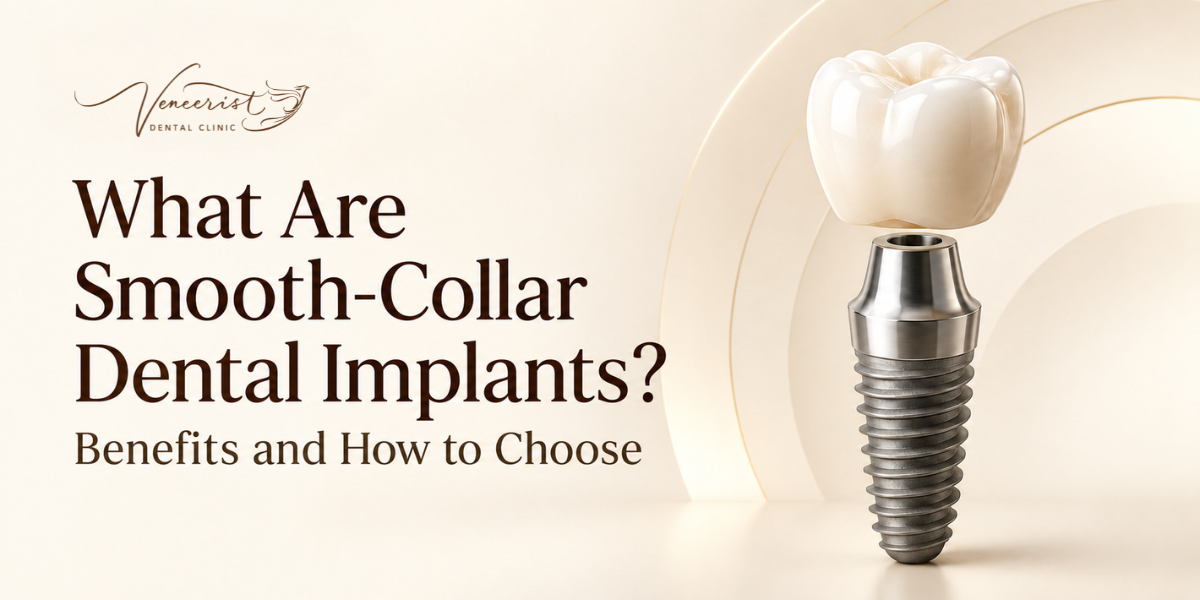
A smooth collar dental implant features a relatively smooth or low-roughness surface around its neck, known as the implant collar. Depending on the manufacturing process, this area may be described as a machined surface or polished surface.
This does not mean the entire implant has a smooth surface.
Dental implants generally have two important functional regions:
- The bone-contacting portion: Designed with specific threads and surface characteristics to support stability and osseointegration, the biological process through which bone establishes direct contact with the implant surface.
- The implant collar: Located near the junction between bone and gum tissue. Some implant systems feature a smooth collar designed to interact with the surrounding soft tissue.
These regions serve different purposes, and their design can influence how an implant is positioned and restored.
Why Do Some Dental Implants Have a Smooth Collar Above the Bone?
Dental implants interact with both the jawbone and the surrounding gum tissue. Each structure has different biological and functional requirements.
In certain implant systems, particularly tissue-level dental implants, the collar extends through the gum tissue, positioning the connection between the implant and the abutment above the bone level.
This design may offer several advantages.
1. Easier Plaque Management
A smoother surface may facilitate plaque removal compared with a highly roughened surface, particularly in areas that can be accessed for cleaning.
However, effective hygiene also depends on the shape of the final restoration and the patient’s ability to clean around it.
2. Soft Tissue Management
The implant collar is closely associated with the surrounding gum tissue.
An appropriately designed collar allows the dentist to consider how the soft tissue will interact with the implant and the final restoration.
3. Implant–Abutment Connection Position
In tissue-level implant systems, the connection between the implant and the abutment is positioned above the bone level.
Depending on the clinical situation, this may provide advantages in restorative planning, accessibility, and long-term maintenance.
Importantly, a smooth implant collar does not guarantee protection against peri-implant inflammation or bone loss. Long-term implant health depends on multiple factors, including oral hygiene, restoration design, tissue health, and regular professional maintenance.
When Might a Smooth Collar Dental Implant Be Used?
The suitability of a smooth collar implant depends on the specific implant system and its clinical indications.
Examples of situations in which a dentist may consider these designs include:
1. Certain posterior tooth replacements
Tissue-level implants may be suitable for selected cases involving missing back teeth, provided that the bone, gum tissue, and available restorative space are appropriate.
2. Cases where implant connection positioning is important
Positioning the implant–abutment connection above the bone may offer practical advantages for restoration design and maintenance in certain clinical situations.
3. Selected cases involving severe alveolar ridge resorption
Some specialized implant systems, such as ARi, combine a smooth collar with other structural features intended for particular cases involving significant bone loss.
However, not all smooth collar implants have the same indications, and they should not be considered interchangeable.
What Is an ARi Implant, and How Is It Different?
The ARi Implant by MegaGen is an example of a specialized implant system incorporating a smooth collar design.
It was developed for selected cases involving severe bone resorption in the anterior alveolar ridge, the part of the jawbone that supports the front teeth.
Its distinctive features extend beyond the smooth collar.
The system incorporates a design intended to achieve anchorage in deeper cortical bone where the patient’s anatomy allows, potentially supporting primary implant stability in challenging cases.
Other design features include:
- KnifeThread: A thread geometry designed to support implant anchorage and stability.
- XPEED Surface: A treated surface on the bone-contacting portion of the implant, intended to support osseointegration.
- Magic Cuff: A specially designed smooth collar associated with the surrounding soft tissue.
In selected patients, this type of implant design may provide an alternative treatment approach and could reduce the need for bone augmentation.
However, ARi implants do not eliminate the need for bone grafting in every case, nor are they suitable for all patients with reduced jawbone volume.
ARi is also not representative of every smooth collar implant system. Its indications depend on its complete design, rather than the collar surface alone.
Are There Any Limitations to Smooth Collar Implants?
Although smooth collar implants may offer certain design advantages, they are not suitable for every clinical situation.
Important considerations include:
- Tooth position and aesthetics: Particularly in the front teeth, where the shape of the restoration and the appearance of the gum line are important.
- Implant placement depth: The collar must be positioned according to the intended design and clinical requirements of the specific implant system.
- Bone and soft tissue conditions: Bone volume, tissue thickness, and anatomical characteristics can influence implant selection and placement.
- Long-term maintenance: Patients still require appropriate oral hygiene and regular professional examinations.
Clinical studies have also reported varying outcomes for different implant collar designs. Therefore, it cannot be concluded that smooth collars consistently perform better than other surface designs in every situation.
How Does a Dentist Choose the Right Dental Implant?
Dental implant systems differ in their design, surface characteristics, and clinical indications. No single implant type or brand is suitable for every patient.
The choice of implant depends on several factors, including:
- Overall oral health and periodontal condition
- Jawbone volume and quality
- Gum tissue characteristics
- Location of the missing tooth
- Bite alignment and chewing forces
- The planned final restoration
In some cases, a dentist may recommend a three-dimensional dental scan (CBCT) to evaluate the jawbone and surrounding anatomical structures before implant placement.
The selection of any dental implant type or brand is based on the patient’s individual oral health, anatomical conditions, and treatment requirements, together with the clinical assessment and professional judgment of the treating dentist.
The objective is not simply to select a particular brand or the newest implant design, but to choose an appropriate system for the patient’s specific clinical situation.
Conclusion: Are Smooth Collar Dental Implants Better Than Conventional Implants?
Smooth collar dental implants represent one approach to implant design, with particular attention to the relationship between the implant neck and the surrounding soft tissue.
In certain systems, the smooth collar extends above the bone level, potentially offering advantages related to plaque management, soft tissue considerations, and implant–abutment connection positioning.
Specialized systems such as ARi also incorporate additional structural features designed for selected cases with challenging bone conditions.
However, these characteristics do not mean that smooth collar implants are superior to other implant designs in every situation.
The most appropriate dental implant is not determined by its brand name alone, but by how well its design matches the patient’s oral health, anatomy, and individual treatment plan.
Dental Implant Consultation at Veneerist Dental Clinic
If you have missing teeth and are considering dental implants, you can arrange a consultation at Veneerist Dental Clinic in Krabi, Thailand.
Our dental team will assess your oral health, evaluate your jawbone condition, and discuss suitable treatment options based on your individual needs.
View Our Dental Treatment Fees
Frequently Asked Questions (FAQ)
Is a smooth collar implant the same as a tissue-level implant?
Not exactly. A smooth collar describes the surface characteristics of the implant neck, while a tissue-level implant refers to a design in which the implant–abutment connection is positioned at the soft tissue level, generally above the bone. Many tissue-level implants feature a smooth or machined collar, but the terms are not interchangeable.
Can smooth collar implants prevent peri-implantitis?
No implant collar design can completely prevent peri-implantitis. A smoother surface may facilitate plaque removal in accessible areas, but long-term peri-implant health also depends on oral hygiene, restoration design, patient-related risk factors, and regular dental maintenance.
Are ARi implants suitable for everyone with jawbone loss?
No. ARi implants are designed for selected anatomical conditions, particularly certain cases involving severe anterior ridge resorption. Their suitability depends on the remaining bone anatomy, the planned restoration, and the treating dentist’s clinical assessment.
Does the dental implant brand affect treatment success?
Implant design, material quality, clinical evidence, and system-specific indications are important considerations. However, successful treatment also depends on appropriate case selection, surgical planning, restoration design, and long-term maintenance. A particular brand alone does not guarantee a successful outcome.
This article is intended for general educational purposes and does not replace an individual clinical examination, diagnosis, or treatment plan provided by a qualified dentist.