Do Teeth Turn Yellow Again After Whitening? How to Keep Your Smile Whiter for Longer
If you are considering professional teeth whitening or have already had your teeth whitened, you may be wondering: “Do teeth turn yellow again after whitening?”
How long will your teeth stay whiter, and what can you do to help maintain the results?
The answer is yes, teeth can gradually become darker or more yellow again after whitening. Teeth whitening does not permanently prevent future staining or natural changes in tooth colour.
It is also important to understand that the colour you see immediately after treatment may not be exactly the same as the colour you see several days later.
At Veneerist Dental Clinic in Krabi, we want our patients to understand what happens after whitening, what can affect the results, and how to care for their teeth to help maintain a brighter smile.
Do Teeth Turn Yellow Again After Whitening?
Yes. Teeth can gradually become darker or more yellow again after whitening, but this does not necessarily mean that the treatment was unsuccessful.
Professional teeth whitening uses whitening agents to lighten the natural colour of teeth. However, it does not stop new stains from developing or prevent normal changes in tooth colour over time.
There are two different types of colour changes to understand.
Short-term colour changes: Immediately after whitening, teeth may appear temporarily brighter because of changes in tooth hydration. As the teeth return to their normal moisture level, the visible shade may settle slightly.
Long-term colour changes: Over the following months or years, teeth may gradually become darker again due to staining from food and drinks, smoking, ageing, and individual oral conditions.
This is why the shade seen immediately after whitening should not be considered a permanent final colour.
How Long Does Teeth Whitening Last?
Teeth whitening results may last for several months and, in some individuals, approximately 1–3 years. However, this varies considerably and should not be treated as a guaranteed duration.
Several factors can influence how long the results remain noticeable, including your original tooth shade, the type of staining, dietary habits, smoking, and oral hygiene.
Some people may notice their teeth becoming darker sooner, while others may maintain a visibly lighter shade for longer.
At Veneerist, we recommend assessing each patient’s tooth colour and oral condition individually rather than assuming everyone needs repeat whitening after the same period.
Why Can Teeth Look Different a Few Days After Whitening?
Immediately after whitening, teeth may experience temporary dehydration, which can make them appear brighter or whiter than they will once normal hydration returns.
As the teeth rehydrate, the visible shade may change slightly.
This does not necessarily mean that the teeth have become stained again.
It is therefore normal for the colour seen immediately after whitening to differ somewhat from the colour observed several days later.
However, if you experience significant tooth sensitivity, persistent pain, or gum irritation that does not improve, contact your dentist for an assessment.
Why Do Some Areas of the Teeth Look Whiter Than Others After Whitening?
Some patients notice that certain areas of their teeth appear noticeably whiter than surrounding areas after whitening.
This may be related to colour contrast, particularly in areas where differences in tooth colour were already present before treatment.
These differences may temporarily become more noticeable after whitening and may gradually appear less pronounced as the teeth return to their normal hydration level.
However, if the colour differences are related to the natural structure of the enamel, whitening may not make every area of the tooth completely uniform.
If you are concerned about uneven tooth colour, a dental examination can help identify the cause and determine whether any additional treatment is appropriate.
What Causes Teeth to Become Yellow Again After Whitening?
Even after professional whitening, everyday habits can contribute to new staining.
Coffee and tea contain pigments that may gradually build up on tooth surfaces, particularly with frequent consumption.
Dark-coloured foods and drinks, such as red wine and strongly coloured sauces, may also contribute to surface staining.
Smoking and tobacco use can lead to yellow or brown stains on teeth.
Inadequate oral hygiene may allow plaque and stains to accumulate, making teeth appear duller.
In addition, tooth colour can change naturally with age and changes in tooth structure, even when oral hygiene is maintained.
How Can You Keep Your Teeth Whiter for Longer?
Caring for your teeth after whitening can help reduce new staining and support long-term oral health.
At Veneerist, we recommend avoiding strongly coloured foods and drinks, such as coffee, tea, red wine, and dark sauces, during the first 48 hours after whitening, according to our post-treatment instructions.
After this initial period, you do not need to avoid these foods and drinks permanently. However, paying attention to how frequently you consume them and maintaining good oral hygiene may help reduce stain accumulation.
Brush your teeth twice daily with fluoride toothpaste, clean between your teeth regularly, and attend routine dental check-ups.
After consuming strongly coloured drinks, rinsing your mouth with water may help reduce the amount of staining substances remaining in your mouth.
Avoid using whitening products more frequently or for longer than recommended by your dentist, as excessive use may increase the risk of tooth sensitivity or gum irritation.
Can You Whiten Your Teeth Again If They Become Yellow?
Repeat whitening may be appropriate in some cases, but it is not always necessary whenever your teeth appear darker.
Before considering another whitening treatment, your dentist should assess your current tooth shade, gum health, sensitivity, and the time since your previous treatment.
Sometimes, a dull appearance may be caused by surface stains that can be addressed through professional cleaning or stain removal rather than another whitening session.
If further whitening is appropriate, your dentist can recommend a suitable method and treatment interval based on your individual condition.
Will Crowns, Veneers, or Fillings Become Whiter After Teeth Whitening?
No. Dental restorations do not whiten in the same way as natural teeth.
Whitening agents act on natural tooth structure but do not change the shade of ceramic crowns, veneers, or composite fillings.
If you have restorations on your front teeth, the difference between the colour of your natural teeth and the existing restorations may become more noticeable after whitening.
If you are planning to have crowns or veneers as well as teeth whitening, discuss the treatment sequence and shade selection with your dentist before starting.
What Teeth Whitening Options Are Available at Veneerist?
At Veneerist Dental Clinic in Krabi, we offer both in-clinic whitening and take-home whitening options.
Before treatment, our dentist assesses your teeth and gums to determine whether whitening is appropriate and discusses what you can reasonably expect from the treatment.
1. LED Cool Light Teeth Whitening
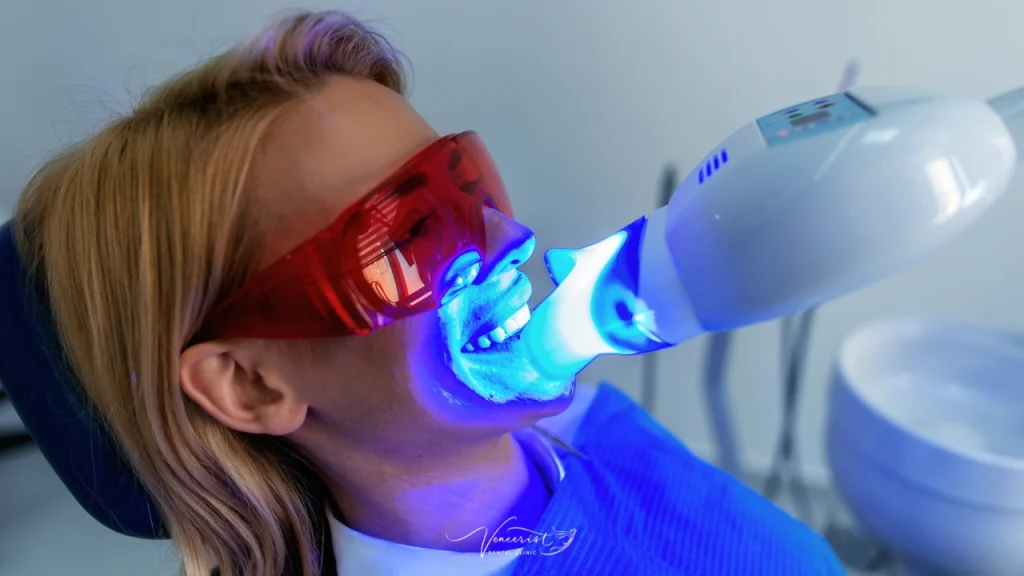
In-Clinic Teeth Whitening
Treatment takes approximately 1 hour and uses an LED Cool Light system together with a specially formulated whitening gel selected by Veneerist.
The treatment is carried out under professional dental supervision, with results depending on your original tooth shade and individual tooth condition.
Before whitening, our dentist will examine your oral condition. If significant plaque, calculus, or other dental concerns are present, cleaning or additional treatment may be recommended before whitening.
2. Premium Dental Spa
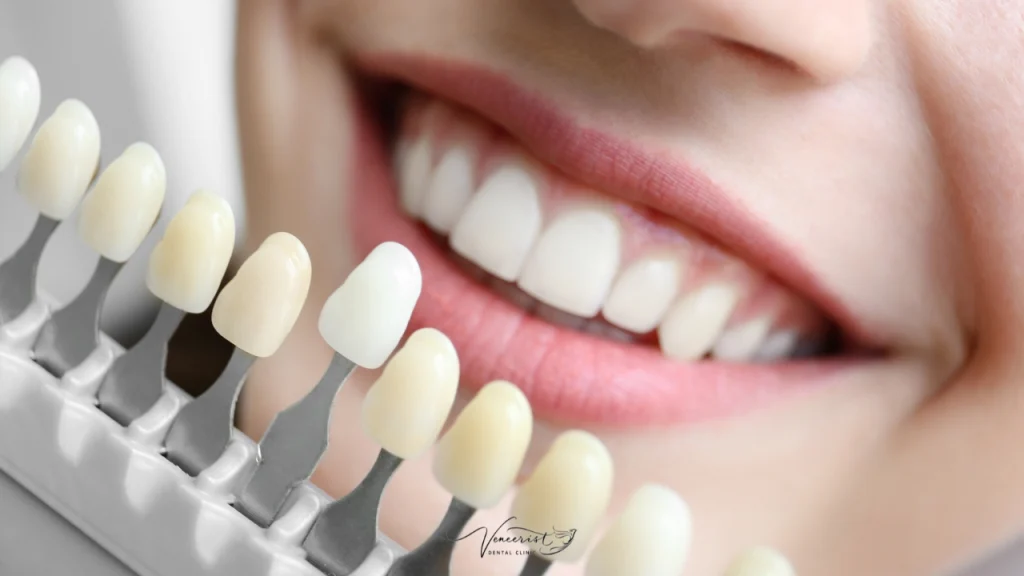
Premium Dental Spa Package
Includes professional scaling, AirFlow stain removal, fluoride application, and LED teeth whitening.
The complete appointment takes approximately 2–3 hours, depending on your oral condition and the procedures required.
This package is designed for patients who would like to combine professional dental cleaning and whitening during the same appointment, subject to the dentist’s assessment.
3. Home Whitening Kit
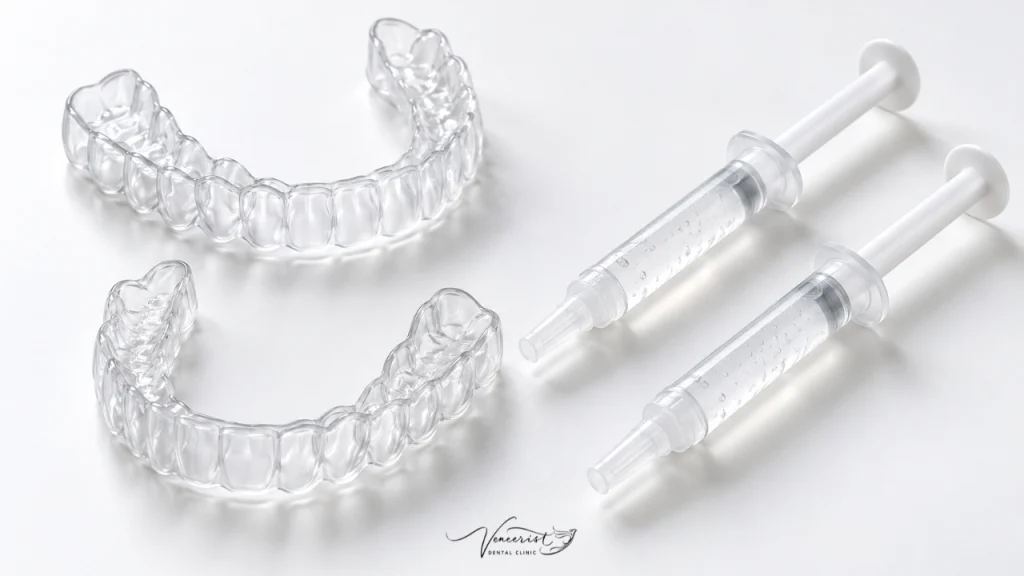
Take-Home Teeth Whitening
Includes custom-made whitening trays and two syringes of whitening gel for use at home according to the dentist’s instructions.
The treatment duration depends on the recommended whitening plan. Do not increase the amount of gel, frequency, or wearing time without professional advice.
For patients who already have suitable whitening trays, whitening gel refills are available at THB 1,500 for two syringes, subject to assessment of the trays and their suitability for continued use.
Should You Choose In-Clinic Whitening or Home Whitening?
Both options are intended to lighten the natural colour of your teeth, but the treatment experience is different.
In-clinic whitening may suit patients who prefer treatment under professional supervision during a scheduled appointment.
Home whitening may suit patients who prefer to follow a dentist-guided whitening routine at home using custom trays.
Neither method guarantees the same result for every patient. Your original tooth shade, dental condition, and individual response to whitening all affect the outcome.
At Veneerist, we recommend an oral examination before choosing the approach that best matches your dental condition and expectations.
Summary: Do Teeth Turn Yellow Again After Whitening?
Yes. Teeth can gradually become yellow or darker again after whitening, because the results are not permanent.
In the first few days after treatment, the visible tooth shade may change slightly as the teeth return to their normal hydration level. This is different from the gradual accumulation of new stains over time.
Long-term changes in tooth colour may be influenced by food and drinks, smoking, ageing, and oral hygiene habits.
To help maintain a brighter smile, focus on regular oral hygiene, reducing stain accumulation, and attending routine dental check-ups.
At Veneerist Dental Clinic in Krabi, we offer LED Cool Light Teeth Whitening, Premium Dental Spa, and dentist-guided Home Whitening Kits.
Our aim is to help you understand both the whitening process and how to care for your teeth afterwards, so you can make an informed decision about your smile.
FAQ — Frequently Asked Questions
Do teeth turn yellow again after whitening?
Yes. Teeth may gradually become darker or more yellow again because whitening does not permanently prevent new stains or natural colour changes.
How long does teeth whitening last?
Results may remain noticeable for several months and sometimes around 1–3 years, depending on the individual. Factors such as diet, smoking, original tooth shade, and oral hygiene can influence how long the effect lasts.
Why do my teeth look darker a few days after whitening?
Temporary dehydration can make teeth appear especially bright immediately after treatment. As normal hydration returns, the shade may settle slightly without indicating that new stains have already formed.
Why do some areas of my teeth look whiter than others?
Pre-existing colour differences may become more noticeable immediately after whitening. Some may become less visible as the teeth rehydrate, while differences caused by enamel structure may remain.
Can I drink coffee after teeth whitening?
At Veneerist, we recommend avoiding coffee, tea, and other strongly coloured foods or drinks during the first 48 hours after treatment. After that, you can return to your usual diet while maintaining good oral hygiene.
Can I have teeth whitening again if my teeth become yellow?
Repeat whitening may be appropriate, but your dentist should first assess your teeth, gums, sensitivity, and previous whitening history to determine whether it is necessary and suitable.
Will teeth whitening change the colour of my veneers or crowns?
No. Whitening products do not lighten ceramic veneers, crowns, or composite fillings in the same way as natural teeth.
How long does LED Cool Light whitening take at Veneerist?
Our in-clinic LED Cool Light Teeth Whitening appointment takes approximately 1 hour, depending on the individual treatment requirements.
How much does teeth whitening cost at Veneerist?
In-clinic LED Cool Light Teeth Whitening costs THB 7,000. Premium Dental Spa is THB 8,199, and our Home Whitening Kit is THB 6,500. Whitening gel refills are THB 1,500 for two syringes, subject to suitability.
Want a Brighter Smile but Not Sure Which Whitening Option Is Right for You? 🦷🤍
At Veneerist Dental Clinic in Krabi, we believe understanding your tooth colour, oral condition, and expected whitening results is an important part of treatment.
We offer LED Cool Light Teeth Whitening, Premium Dental Spa, and Home Whitening Kits, with our dentist assessing the suitability of each option for your individual needs.
Our goal is not simply to help your teeth look brighter on the day of treatment, but also to help you understand how tooth colour may change and how to care for your smile afterwards.
📍 Veneerist Dental Clinic, Maharaj Road, Mueang Krabi, Thailand
Contact our team to ask about teeth whitening or arrange a consultation.