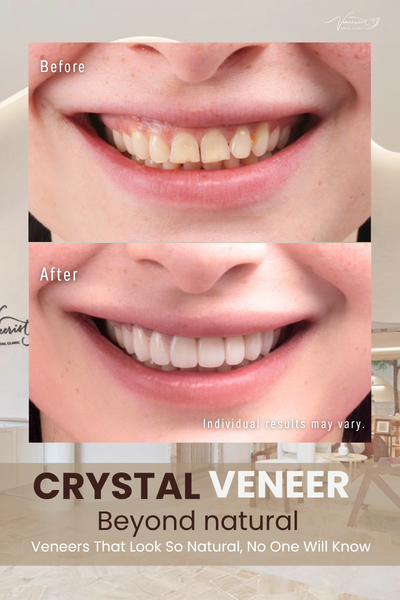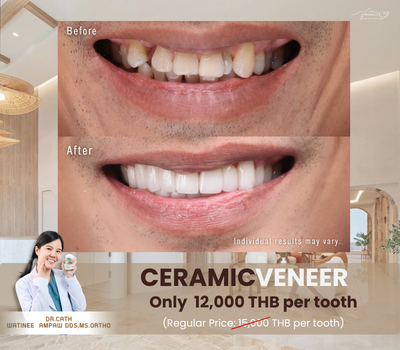

If you are searching for veneers in Phuket and comparing Ceramic Veneer treatment both in Phuket and nearby provinces, Krabi is another location you may want to consider.
Veneerist Dental Clinic is located in Krabi town. One aspect we consider when planning Ceramic Veneers is how the new smile relates to the patient’s existing teeth, bite, oral condition, and individual expectations.
For patients who prefer a natural-looking smile, the discussion goes beyond simply asking:
“How white should my teeth be?”
Details such as shade, translucency, surface texture, tooth shape, proportions, smile line, gum line, and bite can all influence how the final smile appears.
This article explains some of the elements involved in creating natural-looking Ceramic Veneers for people researching veneers in Phuket and those who may also be open to travelling to Krabi for a consultation.
Natural-Looking Ceramic Veneers Are About More Than Whiteness
Shade is often one of the first things people notice when looking at veneers.
However, natural teeth are not simply flat, opaque white surfaces with exactly the same appearance across the entire tooth.
Natural teeth have variations in brightness, translucency, surface characteristics, and the way different areas interact with light.
For this reason, discussing natural-looking Ceramic Veneers involves more than selecting how white the teeth should be.
It can also be useful to describe the overall appearance you prefer—for example, natural, bright, soft, or more defined.
Two patients may choose a similar shade but still have very different-looking smiles depending on the other design details.
Why Does Translucency Matter in Ceramic Veneers?
One feature that can contribute to the visual depth of Ceramic Veneers is translucency.
Natural teeth do not interact with light like completely opaque objects. This can be particularly noticeable toward the incisal edges, where the way light passes through and reflects from the tooth may differ from other areas.
Ceramic restorations can be designed with different levels of translucency according to the treatment plan and the desired appearance.
However, more translucency does not automatically mean a better or more natural result for every patient.
The underlying shade of the natural tooth and anything that needs to be masked must also be considered.
At Veneerist, translucency is therefore considered together with the underlying tooth shade, what the treatment needs to change, and the overall smile appearance, rather than as an isolated feature.
Ceramic Veneer Color Is More Than Choosing a Shade
When discussing tooth color, “shade” is often the most familiar term, but the way we perceive tooth color involves several characteristics.
These can include:
- Value — the relative brightness of the tooth
- Chroma — the intensity of the color
- Translucency — the degree to which light can pass through
- Surface characteristics and how they interact with light
Lighting conditions can also affect how tooth color is perceived.
Some patients prefer a brighter and more noticeable smile, while others prefer a softer appearance that remains closer to the character of natural teeth.
There is therefore no single shade that can be described as “the most natural shade for everyone.”
The more useful discussion is about the overall direction you would like your smile to have.
How Does Surface Texture Affect a Natural Appearance?
If you look closely at natural teeth, their surfaces are not completely flat and mirror-smooth.
Small surface details affect how light falls on and reflects from the tooth.
Surface texture in Ceramic Veneers can therefore contribute to the visual character and dimension of the restorations.
These details may not always be obvious from a distance, but under different lighting conditions and viewing angles, surface characteristics can influence how the smile is perceived.
Tooth Shape and Proportion Matter as Much as Color
Even when the shade is attractive, tooth shape and proportions can strongly influence the overall smile.
Ceramic Veneer design may consider:
width + length + contours + tooth angles + the relationship between neighboring teeth
Some people prefer softer, more rounded forms, while others prefer more defined lines.
There is no single “best” tooth shape for everyone.
The design should be considered in relation to the existing teeth, lips, smile line, gums, bite, and the character of the smile the patient would like.
Can You Bring Smile Reference Photos?
Yes. Reference photographs can be very useful when communicating what you like.
They can help explain preferences related to:
- Shade
- Tooth shape
- Length
- Rounded or more defined tooth corners
- Translucency
- Overall smile character
However, a reference image is best used as a communication tool rather than a template to copy exactly.
Each person’s facial structure, lips, gums, tooth position, and bite are different.
The goal is therefore to understand which elements of the reference you like and consider how those preferences relate to your own oral condition.
How Does the Smile Line Affect the Number of Veneers?
The number of Ceramic Veneers can also influence how the overall smile appears.
Some people show only a few front teeth when smiling, while others have a wider smile line and show more teeth toward the sides.
When veneers are placed on only some visible teeth, it is important to consider how the shade, shape, and surface characteristics of the treated teeth relate to the natural teeth that remain visible.
For this reason, the question:
“How many veneers should I have?”
should not necessarily be answered based on a package alone.
The smile line, existing teeth, concerns being addressed, and individual expectations all need to be considered.
The Gum Line Is Part of the Smile Too
When we look at a smile, we see more than the teeth.
The gum line can influence the visible length of the teeth, symmetry, and overall proportions of the smile.
In some cases, if the gum line affects the treatment plan, the dentist may need to assess whether any additional treatment should be considered before or alongside Ceramic Veneers.
Smile planning therefore involves looking at the teeth together with the surrounding structures rather than viewing veneers as simply a new surface placed on the front of a tooth.
Ceramic Veneers Should Work With Your Bite
Ceramic Veneers are not designed only to look attractive in photographs.
The teeth still need to function in everyday life, which means the dentist must also consider how the upper and lower teeth contact each other.
For example, if a patient would like longer teeth but there is insufficient space when the teeth come together, the desired design may need to be modified according to the bite.
At Veneerist, the teeth, gums, and bite are therefore considered as part of treatment planning before the final Ceramic Veneer design is established.
Natural-Looking Veneers Do Not Automatically Mean No Tooth Preparation
These are two separate considerations.
Natural-looking Veneers ≠ No-Prep Veneers
The amount of tooth preparation depends on several factors, including:
- Original tooth position
- Existing tooth shape and thickness
- Underlying tooth shade
- What the treatment is intended to change
- Space available for the ceramic
- The bite
The amount of preparation may therefore vary from one patient to another according to the treatment plan.
It should not be assumed that every Ceramic Veneer case can be completed with no tooth preparation before an oral examination has been performed.
How Can 3D Smile Design Be Used?
3D Smile Design may be used as part of treatment planning to help develop the direction of the tooth shape, proportions, and overall smile before later stages of treatment.
It is not necessarily required for every patient.
However, when several design elements need to be considered, or when Smile Design is included in the individual treatment plan, it can help establish a proposed direction before proceeding.
At Veneerist, when 3D Smile Design is included, the design process takes approximately 7 days.
For patients travelling from Phuket to Krabi, there is no need to remain in Krabi throughout this design period. You can return to Phuket and travel back for your next scheduled appointment.
What Role Does the Dental Laboratory Play in Natural-Looking Ceramic Veneers?
Ceramic Veneers involve collaboration between the dentist and the Dental Laboratory.
After the necessary records, impressions, or digital scans have been collected, the restorations are produced according to the treatment plan.
Details such as shape, proportions, shade, translucency, surface character, and other restoration characteristics form part of this process.
For approximately 8 Ceramic Veneers, laboratory production generally takes around 7–10 days.
If more veneers are required or the case involves additional complexity, production time may be longer.
Patients travelling from Phuket can return to Phuket during the Dental Laboratory period and come back to Krabi for the next scheduled appointment rather than remaining in Krabi throughout the laboratory stage.
Why Is Try-In Important Before Final Bonding?
Once the Ceramic Veneers have been produced, the restorations are tried in and evaluated according to the treatment plan before Final Bonding.
Details that may be evaluated include fit, shape, shade, the relationship with neighboring teeth, and the bite.
If an aspect requires adjustment, additional work with the Dental Laboratory may be appropriate.
The final restorations should therefore not be viewed simply as “the laboratory finishes them and they are immediately bonded” without an evaluation stage.
Natural-Looking Ceramic Veneers: Questions to Discuss With Your Dentist
If you prefer Ceramic Veneers with a natural-looking appearance, these questions can help make your consultation more specific:
- Is the shade I like appropriate for my underlying tooth color?
- What level of translucency may suit the treatment plan?
- Does the tooth shape and proportion I prefer work with my smile line?
- How many teeth should be considered based on what is visible when I smile?
- Does my gum line affect the treatment plan?
- Does my bite limit the tooth length or shape I would like?
- How much tooth preparation may be required?
- Is Smile Design appropriate for my treatment plan?
- How are the restorations evaluated before Final Bonding?
- What happens if something needs adjustment after Try-In?
There is no single correct answer to these questions for every patient.
Their purpose is to make the idea of “natural-looking veneers” more specific than simply asking for teeth that are “not too white.”
Travelling From Phuket to Krabi for Ceramic Veneers: Do You Need to Stay in Krabi Throughout Treatment?
No, not necessarily.
Veneerist Dental Clinic is located in Krabi town and does not have a branch in Phuket.
For patients travelling from Phuket, Ceramic Veneer treatment includes both clinical appointments and periods when the Dental Laboratory is working on the case.
If 3D Smile Design is included, you can return to Phuket during the approximately 7-day design period.
After tooth preparation, for approximately 8 Ceramic Veneers, laboratory production generally takes around 7–10 days, and you can also return to Phuket while the final restorations are being produced.
In some cases, one appointment may include several consecutive procedures—for example, examination, planning, clinical photographs, impressions or digital scans, oral preparation, and, when the oral condition and treatment plan allow and sufficient appointment time is available, tooth preparation, final impressions or scans, and Temporary Veneers.
However, the actual number of visits can only be confirmed after the dentist has examined your oral condition and established the treatment plan.
For a detailed explanation, continue here:
→ “How Many Days Do You Need in Krabi for Veneers? How Many Dental Visits Are Required?”
What Can You Prepare Before Travelling From Phuket to Veneerist?
If, after researching your options, you would like to travel from Phuket for a consultation in Krabi, we recommend booking your appointment in advance.
You can provide preliminary information such as:
- Where in Phuket you will be travelling from
- Your available dates
- Approximately how many teeth you are considering
- What you would like the veneers to improve
- Your expectations for your smile
- Photographs of your smile and teeth
- Previous dental X-rays, if available
- Reference images showing a shade, tooth shape, or smile style you like
This information can help the team prepare for your appointment, but it does not replace an in-person oral examination and does not constitute a final treatment plan.
To check your route before travelling:
→ Check your current route and travel time on Google Maps
Summary: Looking for Veneers in Phuket? Natural-Looking Ceramic Veneers Involve More Than Tooth Shade
If you are searching for veneers in Phuket and comparing Ceramic Veneer treatment in Phuket and nearby areas, a natural-looking smile involves more than simply selecting a tooth shade.
The overall appearance can involve value, chroma, translucency, surface texture, tooth shape, proportions, smile line, gum line, and the bite, together with the condition of the existing teeth.
Natural-looking Ceramic Veneers therefore do not follow one universal formula.
The treatment needs to consider the patient’s existing oral condition and individual expectations.
For patients in Phuket who are open to travelling to a nearby province, Veneerist Dental Clinic is located in Krabi town, where you can book an appointment for an oral examination, consultation, and individual treatment planning.
If Smile Design or Dental Laboratory production is required, you do not necessarily need to remain in Krabi throughout those periods and can return to Phuket between scheduled appointments.
If you are still learning about veneers:
→ “What Are Veneers? What Do They Actually Do to Your Teeth?”
For information about treatment at Veneerist:
→ Ceramic Veneers at Veneerist Dental Clinic
For treatment timing and visit information:
→ “How Many Days Do You Need in Krabi for Veneers? How Many Dental Visits Are Required?”
FAQ
I am looking for veneers in Phuket. What should I consider if I want a natural-looking result?
There is no single shade or design that is the most natural for everyone.
It can be useful to consider the underlying tooth shade, brightness, translucency, surface characteristics, tooth shape, proportions, smile line, gum line, and bite together with your individual expectations.
Do more translucent Ceramic Veneers always look more natural?
No.
The appropriate level of translucency depends on factors such as the underlying tooth shade, what needs to be masked or changed, and the overall treatment plan.
More translucency is not automatically appropriate for every case.
How is the shape of Ceramic Veneers chosen?
Tooth shape can be considered in relation to the existing teeth, lips, smile line, gums, bite, and the smile character you prefer.
Reference photographs can help communicate what you like, but they should not be treated as an exact template that can be copied to every patient.
Do natural-looking Ceramic Veneers require no tooth preparation?
Not necessarily.
The amount of tooth preparation depends on the original tooth position, shape, underlying shade, available space for ceramic, desired changes, and bite.
The appropriate amount can only be determined after an oral examination and treatment planning.
How many Ceramic Veneers are needed for a natural-looking smile?
There is no fixed number for everyone.
The number of teeth considered may depend on your smile line, how many teeth are visible when you smile, differences between treated and untreated teeth, your existing dental condition, and what you would like to change.
Is 3D Smile Design required for every patient?
No. It may be included according to the individual treatment plan.
At Veneerist, when 3D Smile Design is included, the design process takes approximately 7 days.
I live in Phuket. Can I travel to Veneerist for Ceramic Veneers?
Yes. However, Veneerist Dental Clinic is located in Krabi town and does not have a branch in Phuket.
You can book an appointment in advance for an oral examination, consultation, and individual treatment planning.
Do I need to stay in Krabi throughout treatment if I am travelling from Phuket?
Not necessarily.
If Smile Design is included, you can return to Phuket during the approximately 7-day design period.
For approximately 8 Ceramic Veneers, Dental Laboratory production generally takes around 7–10 days, and you can also return to Phuket during this period.
The actual number of visits depends on your individual treatment plan.
Can I send photographs or X-rays before travelling from Phuket?
Yes. Smile photographs, photographs of your teeth, previous X-rays, and reference images can provide useful preliminary information.
However, they do not replace an in-person oral examination and do not constitute a final treatment plan.
If you are looking for veneers in Phuket and are interested in Ceramic Veneers with a natural-looking appearance, the information in this guide can help you discuss details such as shade, translucency, tooth shape, proportions, smile line, bite, and treatment planning with your dentist.
If you are open to travelling to a nearby province, you can book an appointment in advance with Veneerist Dental Clinic in Krabi for an oral examination, consultation, and individual treatment planning.
Before your appointment, you can share where in Phuket you will be travelling from, your available dates, approximately how many teeth you are considering, what you would like the veneers to improve, and your expectations for your smile.
You may also provide smile photographs, photographs of your teeth, previous dental X-rays, or reference images showing a shade, tooth shape, translucency, or smile style you like.
However, information provided before your appointment does not replace an in-person oral examination and does not constitute a final treatment plan.
The final number of veneers, suitability for Ceramic Veneers, amount of tooth preparation, any additional dental treatment required, number of visits, and overall treatment timeline will be confirmed after the dentist has examined your teeth, gums, bite, and oral condition.