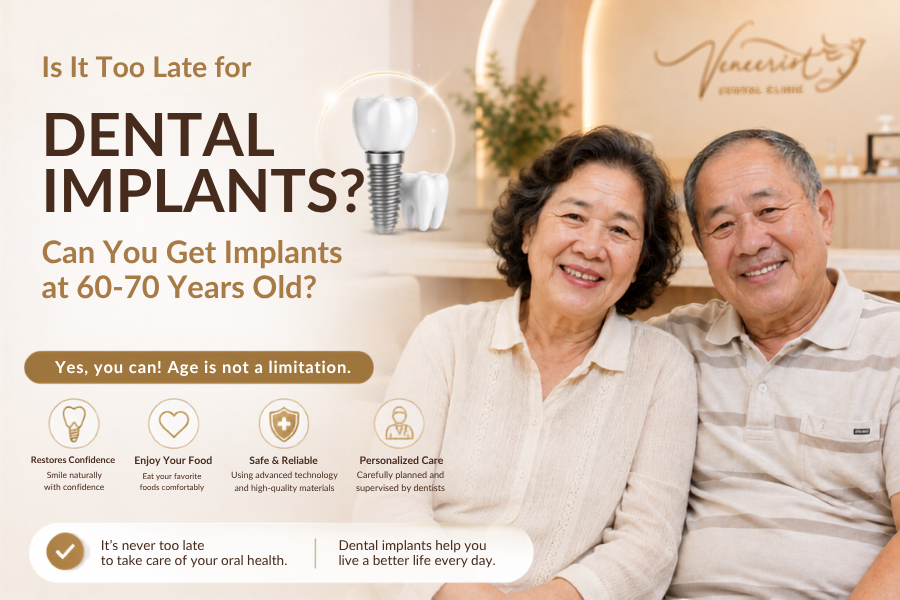
Many people who lose teeth later in life wonder, “Am I too old for dental implants?” or assume that dental implants are only suitable for younger patients.
In fact, age alone does not determine whether someone can receive dental implants. People in their 60s, 70s, or even older may still be suitable candidates if their overall health and oral condition are appropriate for treatment.
Can You Get Dental Implants in Your 60s or 70s?
In many cases, yes.
Rather than looking at age alone, the dentist will evaluate several important factors, including:
- Overall health and medical conditions
- Current medications
- Gum and oral health
- Amount and quality of jawbone
- Smoking habits
- Ability to maintain good oral hygiene
Having a medical condition such as diabetes, high blood pressure, or heart disease does not automatically mean that dental implant treatment is not possible.
However, it is important to provide your dentist with complete information about your medical history and medications so that your condition can be properly evaluated and treatment can be planned safely.
Missing Teeth for Years or Not Enough Bone — Are Dental Implants Still Possible?
When a tooth has been missing for a long time, the bone and soft tissue around the area may gradually change or shrink. In some cases, there may not be enough bone or soft tissue to support an implant in the ideal position.
However, this does not necessarily mean that dental implant treatment is impossible.
The dentist may recommend X-rays or a CBCT scan to evaluate the jawbone in three dimensions and determine the most appropriate treatment plan.
In some cases, additional procedures such as bone grafting or soft tissue grafting may be recommended to prepare the area for dental implant placement.
The need for these procedures varies from person to person and depends on the individual condition of the bone, gums, and implant site.
Why Do Older Adults Choose Dental Implants?
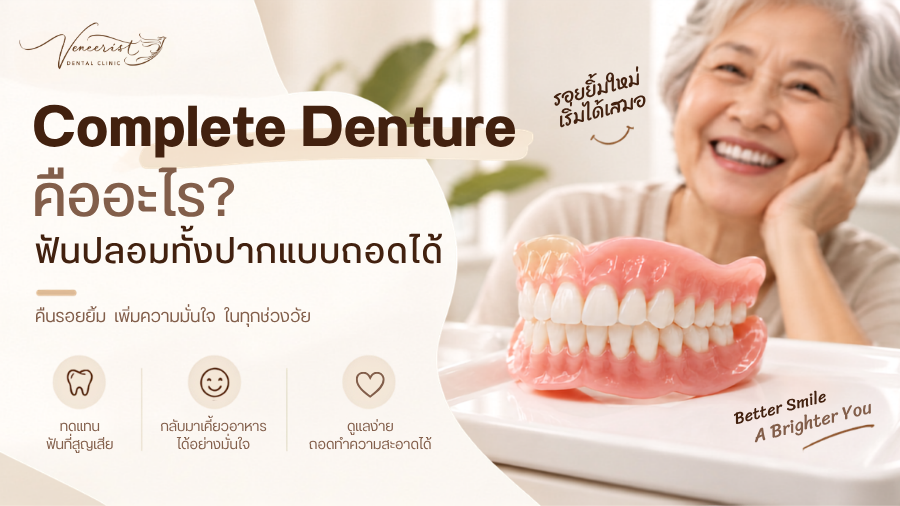
Missing teeth can affect more than just the appearance of your smile. They may also affect chewing, speaking, confidence, and everyday quality of life.
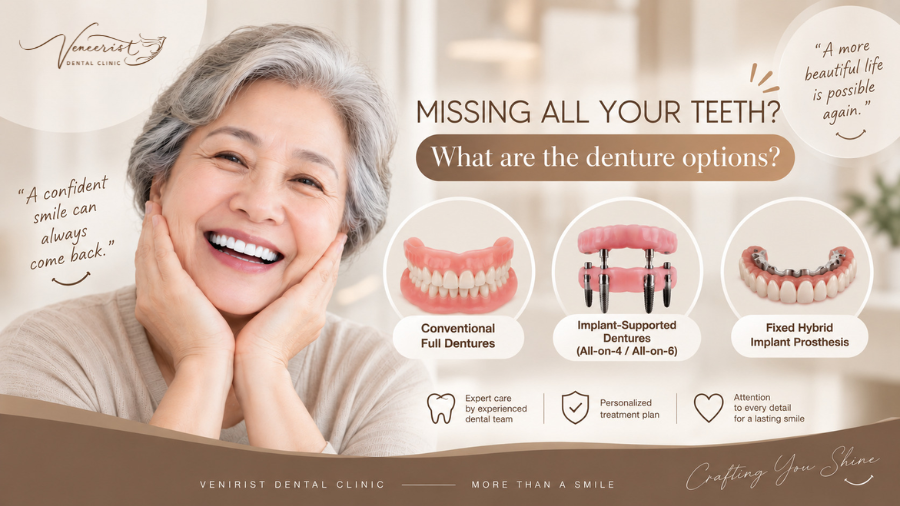
Dental implants can be used to replace a single missing tooth, multiple teeth, or support full-arch tooth replacement.
When several or all teeth are missing, it is not always necessary to place one implant for every missing tooth. The number and position of implants depend on the condition of the jawbone, bite, number of missing teeth, and the individual treatment plan.
Age Is Not the Most Important Factor
If you are in your 60s, 70s, or older and considering dental implants, your age itself may not be the most important concern.
Factors such as overall health, jawbone condition, gum tissue, oral health, and the ability to maintain good oral hygiene are often more important when determining whether dental implant treatment is appropriate.
A dental examination can help determine whether dental implants are suitable for you, whether additional procedures such as bone or soft tissue grafting may be required, and which treatment approach best suits your individual needs.
At Veneerist Dental Clinic in Krabi, Thailand, you can consult with our dentist for an evaluation of your oral condition and a personalized dental implant treatment plan.
Dental Implants at Veneerist 🤍