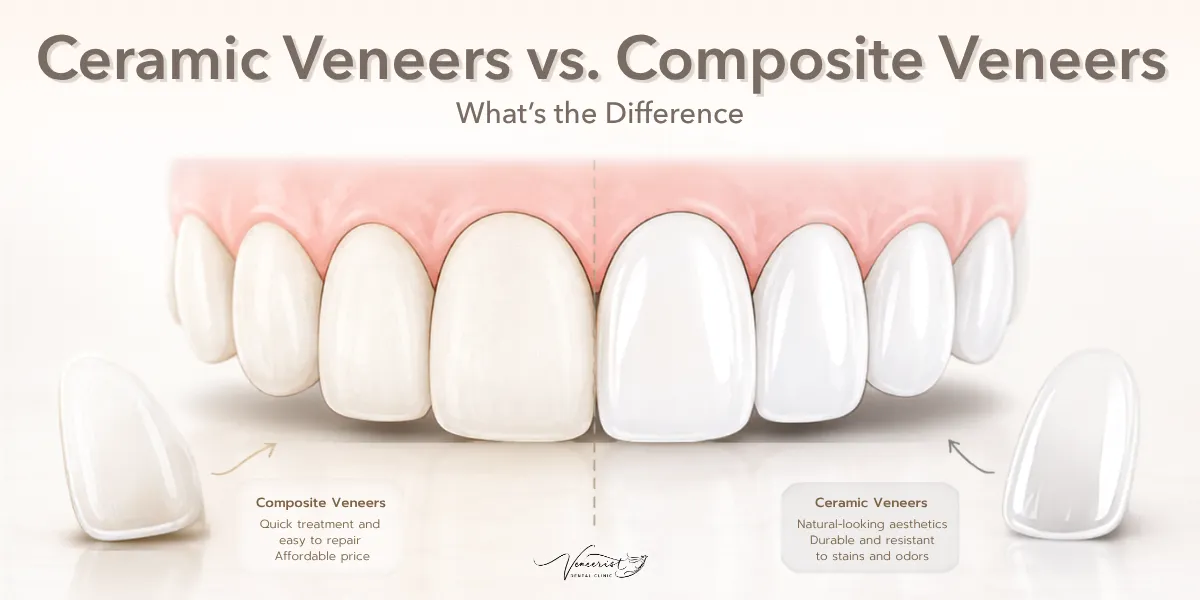
If you are considering veneers to improve your smile, one of the most common questions is: “What is the difference between ceramic veneers and composite veneers?” And more importantly, which type is the right choice for you?
Both ceramic veneers and composite veneers can improve the color, shape, size, and overall appearance of teeth. However, they differ significantly in terms of material, aesthetics, stain resistance, durability, treatment process, maintenance, and cost.
Choosing the right type of veneer should therefore be based not only on price, but also on your dental condition, aesthetic expectations, lifestyle, and long-term goals.
What Are Ceramic Veneers?
Ceramic veneers are thin, custom-made ceramic shells that are bonded to the front surface of the teeth.
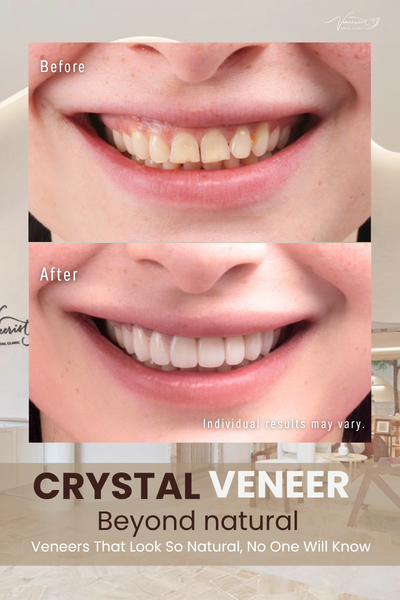
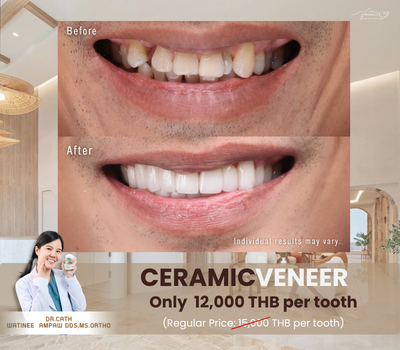
One of the key advantages of ceramic is its ability to reproduce the visual characteristics of natural teeth, including translucency, brightness, surface texture, and subtle variations in color.
Because each veneer can be individually designed, ceramic veneers are particularly suitable for patients who want a highly customized smile and place a strong emphasis on natural-looking aesthetics.
Ceramic veneers may be used to improve several cosmetic concerns, including:
- Uneven or undesirable tooth color
- Irregular tooth shape or proportions
- Chipped or worn front teeth
- Small gaps between certain teeth
- Teeth that appear too short or disproportionate
- A smile that could benefit from improved overall balance and harmony
Before treatment, the dentist should evaluate the condition of the teeth, gums, bite, and overall oral health to determine whether ceramic veneers are appropriate.
What Are Composite Veneers?
Composite veneers are created using tooth-colored composite resin, a material similar to that commonly used for dental fillings.
The material is applied and shaped directly onto the tooth to improve its color, contour, size, or overall appearance.
One of the main advantages of composite veneers is that treatment can often be completed relatively quickly. The initial cost is also generally lower than ceramic veneers, and composite material can often be repaired or modified more easily if necessary.
However, composite resin has different material properties from ceramic, particularly when it comes to long-term color stability, resistance to staining, wear resistance, and aesthetic detail.
Ceramic Veneers vs. Composite Veneers: Key Differences
| Comparison | Ceramic Veneers | Composite Veneers |
|---|---|---|
| Material | Dental ceramic | Composite resin |
| Natural appearance | Highly customizable in color, translucency and surface detail | Can provide good aesthetics, but has different optical properties from ceramic |
| Color stability | High color stability and stain resistance | More susceptible to staining and discoloration over time |
| Wear resistance | Higher when properly designed and maintained | More susceptible to wear, chipping and surface changes |
| Treatment process | Requires detailed planning and fabrication of custom veneers | Can often be completed more quickly |
| Repair | Significant damage may require replacement of the veneer | Often easier to repair or add material |
| Initial cost | Higher | Lower |
| Often suitable for | Patients prioritizing aesthetics, color stability and long-term results | Patients seeking cosmetic improvement with a lower initial budget |
Why Choose Ceramic Veneers for Smile Enhancement?
For patients who are planning to improve several visible teeth or who place a high priority on natural aesthetics and long-term appearance, ceramic veneers offer several important advantages.
1. Natural-Looking Aesthetics
Natural teeth are not simply one solid shade of white. They contain different levels of translucency, brightness, texture, and subtle color variation.
Ceramic allows these details to be carefully reproduced, helping veneers blend naturally with the surrounding teeth and the overall smile.
This is particularly important for front teeth, where even small differences in shape, proportion, or translucency can affect the appearance of the entire smile.
2. Excellent Color Stability
One of the most significant differences between ceramic veneers and composite veneers is their long-term color stability.
The surface of dental ceramic is highly resistant to staining compared with composite resin. This makes ceramic veneers particularly attractive for patients who want their selected tooth shade to remain more stable over time.
Good oral hygiene and regular dental care are still essential for maintaining both the veneers and the health of the surrounding teeth and gums.
3. Precise Control Over Tooth Shape and Proportion
A successful smile design involves much more than simply making the teeth whiter.
The dentist must consider the relationship between the teeth, gums, lips, smile line, facial features, and bite.
With ceramic veneers, the shape, width, length, contour, surface texture, and other details of individual teeth can be carefully planned to create a more balanced and harmonious smile.
4. A Strong Option for Long-Term Smile Design
Ceramic veneers generally have a higher initial cost than composite veneers. However, for patients who prioritize color stability, wear resistance, natural-looking aesthetics, and detailed smile design, ceramic veneers may offer greater value over the long term.
This is one reason why ceramic veneers are often considered for comprehensive smile makeovers involving multiple teeth.
Does This Mean Composite Veneers Are Not Good?
Not at all.
Composite veneers can be an appropriate treatment option in many situations, particularly for patients who want to make smaller cosmetic changes, have a limited initial budget, or have a dental condition that is suitable for composite treatment.
The important question is therefore not simply:
“Which type of veneer is better?”
Instead, it should be:
“Which type of veneer is more appropriate for my teeth and the result I want?”
For patients who want to enhance several teeth and prioritize natural aesthetics, long-term color stability, and detailed smile design, ceramic veneers are often the preferred option.
Who May Be Suitable for Ceramic Veneers?
Ceramic veneers may be considered for people who would like to improve concerns such as:
- Uneven tooth color
- Irregular tooth shape or size
- Chipped or worn teeth
- Small spaces between teeth
- Short-looking teeth
- Tooth proportions that do not harmonize with the smile
- Multiple cosmetic concerns affecting the visible teeth
However, veneers are not suitable for every dental condition.
Patients with significant bite problems, severe tooth misalignment, active gum disease, untreated tooth decay, or teeth grinding may require additional treatment or a different treatment plan before veneers are considered.
A dental examination is therefore an important first step.
Ceramic Veneers at Veneerist Dental Clinic
At Veneerist Dental Clinic, we believe that smile design is about more than simply choosing a whiter tooth shade.
Our approach considers the shape and proportion of each tooth, the smile line, gum appearance, facial features, bite, and the overall harmony of the smile.
Before beginning ceramic veneer treatment, the dentist evaluates your teeth and bite and discusses your aesthetic goals to develop an individualized treatment plan.
Because a beautiful smile does not need to look like someone else’s.
It should look natural, balanced, and uniquely yours.
Ceramic Veneers at Veneerist 🤍
Frequently Asked Questions About Ceramic and Composite Veneers
Which is better: ceramic veneers or composite veneers?
There is no single answer that applies to everyone.
The best choice depends on your dental condition, budget, aesthetic expectations, and long-term goals. If your priorities include natural-looking aesthetics, high color stability, wear resistance, and detailed smile design, ceramic veneers generally offer several advantages over composite veneers.
A dental examination is recommended before deciding which material is appropriate.
Do ceramic veneers stain from coffee or food?
Ceramic veneers are highly resistant to staining compared with composite resin.
However, maintaining good oral hygiene and attending regular dental check-ups are still important for protecting the natural teeth, gums, and the overall appearance of your smile.
Do teeth need to be shaved down for ceramic veneers?
The amount of tooth preparation required depends on the original position, shape, size, and condition of the teeth as well as the planned final result.
Some cases may require only minimal preparation, while others may require more adjustment.
The appropriate approach should therefore be determined individually by the dentist rather than assuming that every veneer case requires the same amount of tooth preparation.
How long do ceramic veneers last?
The lifespan of ceramic veneers varies between individuals and depends on several factors, including the bite, oral hygiene, lifestyle, habits such as teeth grinding, and regular dental maintenance.
Properly planned treatment and regular dental check-ups can help maintain both the veneers and the underlying natural teeth over the long term.
Considering Ceramic or Composite Veneers?
If you are deciding between ceramic veneers and composite veneers, a dental consultation can help determine which option is better suited to your teeth, smile goals, and long-term expectations.
At Veneerist Dental Clinic, each smile is individually evaluated before treatment to determine the appropriate shape, shade, proportions, and treatment approach.
Veneerist Dental Clinic | Dental Clinic in Krabi, Thailand
Personalized smile design with attention to natural aesthetics, function, and long-term dental health.
Ceramic Veneers at Veneerist 🤍