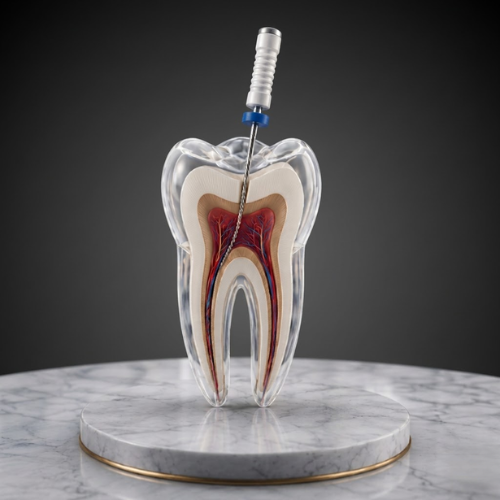
What Is Root Canal Treatment?
Persistent tooth pain, prolonged sensitivity to hot or cold foods and drinks, or swelling around a tooth may indicate inflammation or infection of the dental pulp. A dental examination is needed to identify the cause and determine the appropriate treatment.
Root canal treatment removes inflamed or infected pulp, cleans and disinfects the root canals, and seals them to help preserve the natural tooth. The tooth then requires an appropriate restoration to support its function.
At Veneerist Dental Clinic Krabi, our dental team assesses each case and explains the treatment options, expected appointments, and associated fees before treatment begins. We use local anesthesia and appropriate treatment techniques to help manage discomfort.
What Is the Dental Pulp?
The dental pulp is the soft tissue inside a tooth. It contains nerves, blood vessels, and connective tissue and supports tooth development.
Deep decay, cracks, or dental injuries can cause the pulp to become inflamed or infected. Symptoms may include spontaneous pain or sensitivity that persists after exposure to hot or cold temperatures. However, some affected teeth may have few or no symptoms, so a dental examination and appropriate imaging are needed for diagnosis.
Signs You May Need Root Canal Treatment
Root canal treatment may be recommended when the dental pulp is severely inflamed or infected. If left untreated, an infection may spread to the tissues surrounding the root. The following symptoms should be assessed by a dentist, although they do not always mean that root canal treatment is required.
Persistent or Spontaneous Tooth Pain: Intense discomfort that moves rhythmically with your pulse, particularly intensifying when lying flat or during the night.
Prolonged Temperature Sensitivity: Experiencing prolonged sensitivity to hot or cold fluids that lingers for several minutes even after the temperature stimulus is removed.
Pain When Biting or Chewing: Pain or discomfort triggered every time mechanical biting force or chewing pressure is applied to that specific tooth.
Gum Swelling, Abscess, or Drainage: The appearance of a small pus pocket on the gum tissue near the root tip, or drainage from the gum or persistent bad breath.
Tooth Discoloration: The tooth begins to take on a dull, dark grey, or black hue compared to neighboring healthy teeth—which may indicate previous trauma or changes within the dental pulp.
Localized Swelling Around the Tooth or Gums: Visible swelling, redness, or tenderness developing along the gumline, jaw, or facial structures which may be associated with dental infection.
Unusual Tooth Mobility: The tooth feels loose or shifts noticeably within its socket which may be related to infection or other periodontal conditions.
Preserving a Natural Tooth vs. Tooth Extraction
When a tooth can be restored, root canal treatment may help preserve it. Extraction may be recommended if the tooth cannot be predictably restored or has a poor prognosis. The table below outlines general differences between the two approaches. Your dentist will explain which option is appropriate for your condition.
Comparison: Preserving a Natural Tooth vs. Tooth Extraction
Types of Root Canal Treatment Available at Veneerist
Because root canal anatomy can exhibit complex variations, our clinical team implements targeted modalities to address your exact pathological stage:
Conventional Root Canal Treatment: Optimized for teeth experiencing initial, primary pulp infection. Our specialists open the access cavity, clean the canal networks, and seal them securely, designed to eliminate infection and preserve the natural tooth whenever possible.
Root Canal Retreatment: Root canal retreatment may be recommended when a previously treated tooth has persistent or recurrent infection. The dentist removes the existing root canal filling material, assesses the cause of the problem, and cleans, disinfects, and seals the canals again. Suitability depends on the condition of the tooth and surrounding tissues.
Apicoectomy: An apicoectomy is a surgical procedure that may be considered when infection persists around the root tip and conventional root canal treatment or retreatment is unsuitable or unsuccessful. The procedure involves accessing the root tip through the gum, removing the affected tissue and a small portion of the root tip, and placing a root-end filling when appropriate.
The Root Canal Treatment Process
Root canal treatment typically requires one to three appointments, although some cases may need additional visits. The number of appointments depends on the tooth’s anatomy, the presence of infection, and its response to treatment. The main steps are outlined below.
Examination and Diagnostic Imaging: We capture digital radiographs to carefully evaluate root length, map canal quantities, and evaluate the boundaries of the bone infection at the root tip.
Targeted Anesthesia & Rubber Dam Isolation: Local anesthesia is used to help manage discomfort. A rubber dam is placed around the tooth to isolate it from saliva, improve visibility, and help protect the patient from swallowing or inhaling instruments and treatment materials. Please tell your dentist if you feel discomfort during the procedure.
Precision Root Canal Debridement: Your specialist sculpts a conservative access cavity and utilizes endodontic instruments to carefully clear out all inflamed or necrotic pulp tissue throughout the canal network while gently reshaping the walls.
Chemical Disinfection & Intracanal Medication: The canals are cleaned using disinfecting solutions. If treatment requires more than one appointment, medication may be placed inside the canals when appropriate, and the tooth is sealed with a temporary filling between visits.
Permanent Hermetic Canal Obturation: Once the canal environment is verified to be adequately cleaned and prepared our specialist permanently seals the roots using world-standard bio-compatible Gutta-percha combined with advanced sealing cements to help reduce the risk of reinfection.
Why Are Posts, Cores, and Crowns Sometimes Recommended After Root Canal Treatment?
The restoration needed after root canal treatment depends on the tooth’s location, remaining tooth structure, and chewing forces. A crown or another restoration that protects the cusps may be recommended, particularly for back teeth or extensively damaged teeth.
A post may be needed when insufficient tooth structure remains to retain the core. Posts help retain the core; they do not strengthen the root and are not required for every root canal-treated tooth. Your dentist will recommend the appropriate restoration after assessment.
Preliminary Guidelines: Preparing for Your Endodontic Appointment
Consume a Proper Meal Prior to Your Visit: Because local anesthesia remains fully active for 2–3 hours post-treatment, dining immediately afterward can be difficult, presenting a risk of accidentally biting your lips or inner cheek.
Disclose Your Medical History and Medications: Inform our patient relations team regarding pre-existing conditions—particularly cardiovascular diseases, diabetes, hypertension, or if you are currently taking anticoagulant medications (blood thinners).
Ensure Adequate Rest: Arrive relaxed; Getting adequate rest before treatment may help you feel more comfortable during your appointment.
Aftercare Following Root Canal Treatment
Temporarily Avoid Chewing on the Treated Zone: While your tooth is protected by a temporary filling or awaiting its final permanent crown, redirect all chewing forces to the opposite side of your mouth to prevent accidental fractures.
Managing Transient Tender Sensations: Mild tenderness may occur for a few days after treatment, particularly when biting. Take any prescribed medication as directed. Contact the clinic if pain is severe, symptoms worsen, swelling develops, or your bite feels uneven.
Maintain Good Oral Hygiene: Continue brushing gently and incorporating daily interdental flossing around the treated tooth to safeguard the gingival margins against secondary decay.
Root Canal Treatment Fees
Why Choose Veneerist Dental Clinic Krabi
Experienced Endodontic Care: Our team provides root canal treatment with careful diagnosis, treatment planning, and attention to long-term tooth preservation.
Modern Technology: We utilize digital radiography and electronic apex locators to assist with diagnosis and improve treatment accuracy.
Strict Sterilization and Infection Control: All instruments are processed according to strict sterilization and infection control protocols to support patient safety.
Comprehensive Restorative Care: When additional treatment is required following root canal therapy, we can coordinate restorative procedures such as post-and-core restorations and ceramic crowns to help restore function and appearance.
Meet Our Elite Team of Highly Experienced Specialists